Space Shuttle
About the Space Shuttle
Space Shuttle
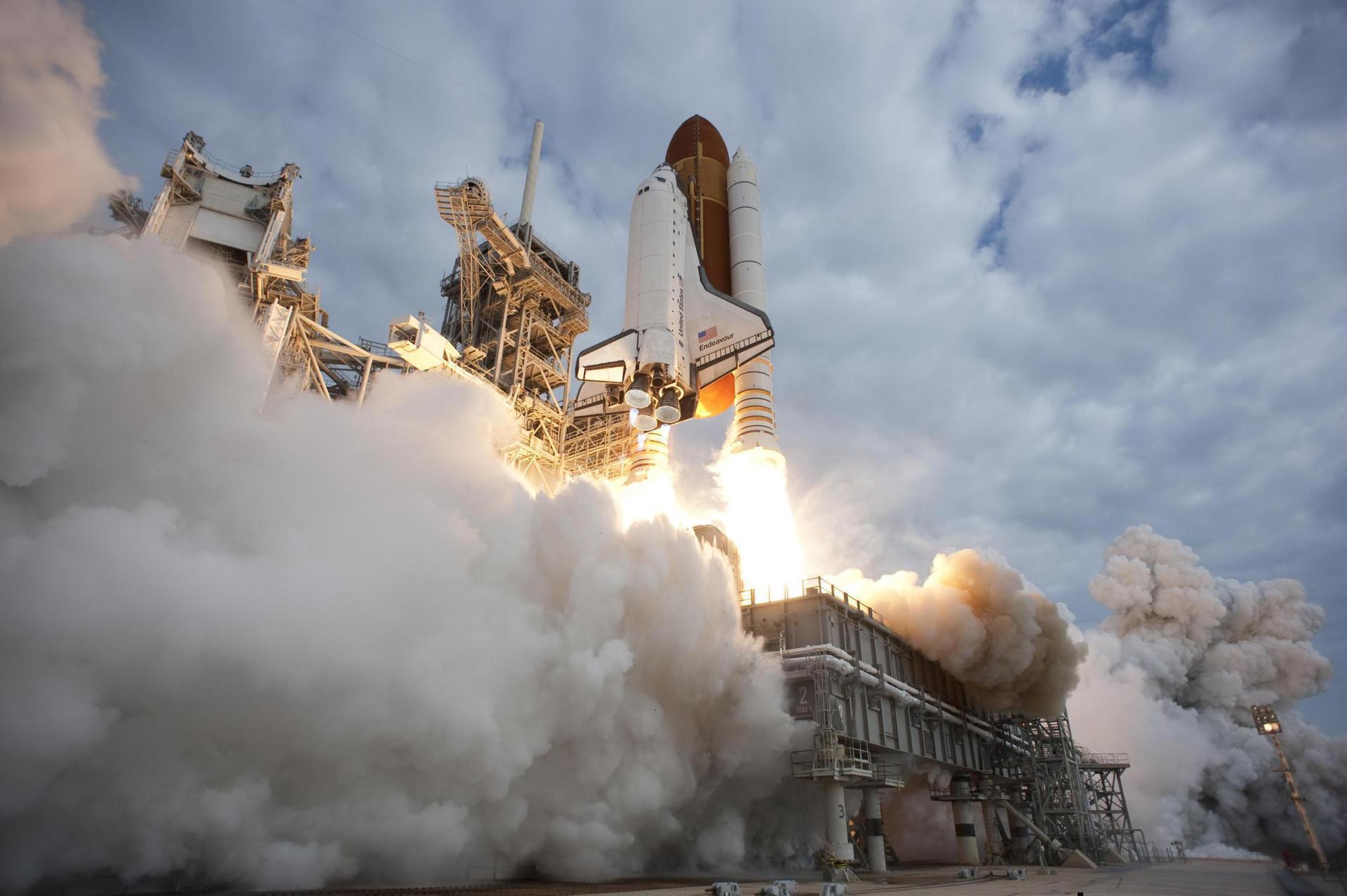
The Space Shuttle, formally known as the Space Transportation System (STS), was a partially reusable orbital launch vehicle operated by the National Aeronautics and Space Administration (NASA). Developed in the United States and flying from Kennedy Space Center in Florida and Vandenberg Air Force Base in California, it served as the backbone of American human spaceflight for three decades and remains one of the most complex and ambitious aerospace programs ever undertaken.
Design and Configuration
Standing 56.1 meters tall with a maximum diameter of 8 meters, the Shuttle system comprised three primary elements: the winged Orbiter, which carried crew and payload; a large External Tank that fed propellant to the Orbiter's main engines; and a pair of solid rocket boosters that provided additional thrust at liftoff. The Orbiter's payload bay was capable of delivering up to 27,500 kg to low Earth orbit, making it one of the most capable heavy-lift vehicles of its era. A defining feature of the program was its reusability — the Orbiter and solid rocket boosters were designed for recovery and reflight, a then-revolutionary concept intended to reduce the cost of access to space.
Operational History
Our flight records document 135 flights conducted between 1981 and 2011, of which 133 were fully successful. The program began with the maiden flight of Columbia in April 1981 and concluded with Atlantis's STS-135 mission in July 2011. Three Orbiters — Discovery (OV-103), Atlantis (OV-104), and Endeavour (OV-105) — carried out the majority of the program's later missions. Among the most recent flights tracked are STS-135 (Atlantis), STS-134 (Endeavour), STS-133 (Discovery), STS-132 (Atlantis), STS-131 (Discovery), and STS-130 (Endeavour).
The program's two failures — the losses of Challenger in 1986 and Columbia in 2003 — are recorded in the flight data and represent defining tragedies in the history of human spaceflight, each resulting in the deaths of all seven crew members aboard and significant stand-downs of the program.
Role and Customers
The Shuttle served an extraordinarily broad mission portfolio, including the deployment and servicing of satellites, construction and resupply of the International Space Station, and the launch of major scientific observatories. Key contracting and operations partners reflected in the flight record include Lockheed Space Operations Company, United Space Alliance, Lockheed Martin Space Operations, and Rockwell International, the latter having served as the Orbiter's original manufacturer. NASA itself appears prominently as both operator and customer across the manifest.
Legacy
The retirement of the Space Shuttle in 2011 marked the end of an era in American spaceflight and left the United States temporarily reliant on Russian Soyuz vehicles for crewed access to the ISS. Its legacy endures in the infrastructure, workforce, and engineering knowledge it produced, as well as in the Orbiters themselves, which are preserved on public display across the United States. The program's combination of human spaceflight, satellite deployment, and on-orbit servicing has not been replicated by any subsequent vehicle.
- Jul 08, 2011Space Shuttle Atlantis / OV-104 | STS-135Success
- May 16, 2011Space Shuttle Endeavour / OV-105 | STS-134Success
- Feb 24, 2011Space Shuttle Discovery / OV-103 | STS-133Success
- May 14, 2010Space Shuttle Atlantis / OV-104 | STS-132Success
- Apr 05, 2010Space Shuttle Discovery / OV-103 | STS-131Success
- Feb 08, 2010Space Shuttle Endeavour / OV-105 | STS-130Success
- Nov 16, 2009Space Shuttle Atlantis / OV-104 | STS-129Success
- Aug 29, 2009Space Shuttle Discovery / OV-103 | STS-128Success
- Jul 15, 2009Space Shuttle Endeavour / OV-105 | STS-127Success
- May 11, 2009Space Shuttle Atlantis / OV-104 | STS-125Success
- Mar 15, 2009Space Shuttle Discovery / OV-103 | STS-119Success
- Nov 15, 2008Space Shuttle Endeavour / OV-105 | STS-126Success
- May 31, 2008Space Shuttle Discovery / OV-103 | STS-124Success
- Mar 11, 2008Space Shuttle Endeavour / OV-105 | STS-123Success
- Feb 07, 2008Space Shuttle Atlantis / OV-104 | STS-122Success
- Oct 23, 2007Space Shuttle Discovery / OV-103 | STS-120Success
- Aug 08, 2007Space Shuttle Endeavour / OV-105 | STS-118Success
- Jun 08, 2007Space Shuttle Atlantis / OV-104 | STS-117Success
- Dec 10, 2006Space Shuttle Discovery / OV-103 | STS-116Success
- Sep 09, 2006Space Shuttle Atlantis / OV-104 | STS-115Success
- Jul 04, 2006Space Shuttle Discovery / OV-103 | STS-121Success
- Jul 26, 2005Space Shuttle Discovery / OV-103 | STS-114Success
- Jan 16, 2003Space Shuttle Columbia / OV-102 | STS-107Failure
- Nov 24, 2002Space Shuttle Endeavour / OV-105 | STS-113Success
- Oct 07, 2002Space Shuttle Atlantis / OV-104 | STS-112Success
- Jun 05, 2002Space Shuttle Endeavour / OV-105 | STS-111Success
- Apr 08, 2002Space Shuttle Atlantis / OV-104 | STS-110Success
- Mar 01, 2002Space Shuttle Columbia / OV-102 | STS-109Success
- Dec 05, 2001Space Shuttle Endeavour / OV-105 | STS-108Success
- Aug 10, 2001Space Shuttle Discovery / OV-103 | STS-105Success
- Jul 12, 2001Space Shuttle Atlantis / OV-104 | STS-104Success
- Apr 19, 2001Space Shuttle Endeavour / OV-105 | STS-100Success
- Mar 08, 2001Space Shuttle Discovery / OV-103 | STS-102Success
- Feb 07, 2001Space Shuttle Atlantis / OV-104 | STS-98Success
- Dec 01, 2000Space Shuttle Endeavour / OV-105 | STS-97Success
- Oct 11, 2000Space Shuttle Discovery / OV-103 | STS-92Success
- Sep 08, 2000Space Shuttle Atlantis / OV-104 | STS-106Success
- May 19, 2000Space Shuttle Atlantis / OV-104 | STS-101Success
- Feb 11, 2000Space Shuttle Endeavour / OV-105 | STS-99Success
- Dec 20, 1999Space Shuttle Discovery / OV-103 | STS-103Success
- Jul 23, 1999Space Shuttle Columbia OV-102 | STS-93Success
- May 27, 1999Space Shuttle Discovery / OV-103 | STS-96Success
- Dec 04, 1998Space Shuttle Endeavour / OV-105 | STS-88Success
- Oct 29, 1998Space Shuttle Discovery / OV-103 | STS-95Success
- Jun 02, 1998Space Shuttle Discovery / OV-103 | STS-91Success
- Apr 17, 1998Space Shuttle Columbia / OV-102 | STS-90Success
- Jan 23, 1998Space Shuttle Endeavour / OV-105 | STS-89Success
- Nov 19, 1997Space Shuttle Columbia / OV-102 | STS-87Success
- Sep 26, 1997Space Shuttle Atlantis / OV-104 | STS-86Success
- Aug 07, 1997Space Shuttle Discovery / OV-103 | STS-85Success
- Jul 01, 1997Space Shuttle Columbia / OV-102 | STS-94Success
- May 15, 1997Space Shuttle Columbia / OV-102 | STS-84Success
- Apr 04, 1997Space Shuttle Columbia / OV-102 | STS-83Success
- Feb 11, 1997Space Shuttle Discovery / OV-103 | STS-82Success
- Jan 12, 1997Space Shuttle Atlantis / OV-104 | STS-81Success
- Nov 19, 1996Space Shuttle Columbia / OV-102 | STS-80Success
- Sep 16, 1996Space Shuttle Atlantis / OV-104 | STS-79Success
- Jun 20, 1996Space Shuttle Columbia / OV-102 | STS-78Success
- May 19, 1996Space Shuttle Endeavour / OV-105 | STS-77Success
- Mar 22, 1996Space Shuttle Atlantis / OV-104 | STS-76Success
- Feb 22, 1996Space Shuttle Columbia / OV-102 | STS-75Success
- Jan 11, 1996Space Shuttle Endeavour / OV-105 | STS-72Success
- Nov 12, 1995Space Shuttle Atlantis / OV-104 | STS-74Success
- Oct 20, 1995Space Shuttle Columbia / OV-102 | STS-73Success
- Sep 07, 1995Space Shuttle Endeavour / OV-105 | STS-69Success
- Jul 13, 1995Space Shuttle Discovery / OV-103 | STS-70Success
- Jun 27, 1995Space Shuttle Atlantis / OV-104 | STS-71Success
- Mar 02, 1995Space Shuttle Endeavour / OV-105 | STS-67Success
- Feb 03, 1995Space Shuttle Discovery / OV-103 | STS-63Success
- Nov 03, 1994Space Shuttle Atlantis / OV-104 | STS-66Success
- Sep 30, 1994Space Shuttle Endeavour / OV-105 | STS-68Success
- Sep 09, 1994Space Shuttle Discovery / OV-103 | STS-64Success
- Jul 08, 1994Space Shuttle Columbia / OV-102 | STS-65Success
- Apr 09, 1994Space Shuttle Endeavour / OV-105 | STS-59Success
- Mar 04, 1994Space Shuttle Columbia / OV-102 | STS-62Success
- Feb 03, 1994Space Shuttle Discovery / OV-103 | STS-60Success
- Dec 02, 1993Space Shuttle Endeavour / OV-105 | STS-61Success
- Oct 18, 1993Space Shuttle Columbia / OV-102 | STS-58Success
- Sep 12, 1993Space Shuttle Discovery / OV-103 | STS-51Success
- Jun 21, 1993Space Shuttle Endeavour / OV-105 | STS-57Success
- Apr 26, 1993Space Shuttle Columbia / OV-102 | STS-55Success
- Apr 08, 1993Space Shuttle Discovery / OV-103 | STS-56Success
- Jan 13, 1993Space Shuttle Endeavour / OV-105 | STS-54Success
- Dec 02, 1992Space Shuttle Discovery / OV-103 | STS-53Success
- Oct 22, 1992Space Shuttle Columbia / OV-102 | STS-52Success
- Sep 12, 1992Space Shuttle Endeavour / OV-105 | STS-47Success
- Jul 31, 1992Space Shuttle Atlantis / OV-104 | STS-46Success
- Jun 25, 1992Space Shuttle Columbia / OV-102 | STS-50Success
- May 07, 1992Space Shuttle Endeavour / OV-105 | STS-49Success
- Mar 24, 1992Space Shuttle Atlantis / OV-104 | STS-45Success
- Jan 22, 1992Space Shuttle Discovery / OV-103 | STS-42Success
- Nov 24, 1991Space Shuttle Atlantis / OV-104 | STS-44Success
- Sep 12, 1991Space Shuttle Discovery / OV-103 | STS-48Success
- Aug 02, 1991Space Shuttle Atlantis / OV-104 | STS-43Success
- Jun 05, 1991Space Shuttle Columbia / OV-102 | STS-40Success
- Apr 28, 1991Space Shuttle Discovery / OV-103 | STS-39Success
- Apr 05, 1991Space Shuttle Atlantis / OV-104 | STS-37Success
- Dec 02, 1990Space Shuttle Columbia / OV-102 | STS-35Success
- Nov 15, 1990Space Shuttle Atlantis / OV-104 | STS-38Success
- Oct 06, 1990Space Shuttle Discovery / OV-103 | STS-41Success
- Apr 24, 1990Space Shuttle Discovery / OV-103 | STS-31 (Hubble)Success
- Feb 28, 1990Space Shuttle Atlantis / OV-104 | STS-36Success
- Jan 09, 1990Space Shuttle Columbia / OV-102 | STS-32Success
- Nov 23, 1989Space Shuttle Discovery / OV-103 | STS-33Success
- Oct 18, 1989Space Shuttle Atlantis / OV-104 | STS-34Success
- Aug 08, 1989Space Shuttle Columbia / OV-102 | STS-28Success
- May 04, 1989Space Shuttle Atlantis / OV-104 | STS-30Success
- Mar 13, 1989Space Shuttle Discovery / OV-103 | STS-29Success
- Dec 02, 1988Space Shuttle Atlantis / OV-104 | STS-27Success
- Sep 29, 1988Space Shuttle Discovery / OV-103 | STS-26Success
- Jan 28, 1986Space Shuttle Challenger / OV-099 | STS-51-LFailure
- Jan 12, 1986Space Shuttle Columbia / OV-102 | STS-61-CSuccess
- Nov 27, 1985Space Shuttle Atlantis / OV-104 | STS-61-BSuccess
- Oct 30, 1985Space Shuttle Challenger / OV-099 | STS-61-ASuccess
- Oct 03, 1985Space Shuttle Atlantis / OV-104 | STS-51-JSuccess
- Aug 27, 1985Space Shuttle Discovery / OV-103 | STS-51-ISuccess
- Jul 29, 1985Space Shuttle Challenger / OV-099 | STS-51-FSuccess
- Jun 17, 1985Space Shuttle Discovery / OV-103 | STS-51-GSuccess
- Apr 29, 1985Space Shuttle Challenger / OV-099 | STS-51-BSuccess
- Apr 12, 1985Space Shuttle Discovery / OV-103 | STS-51-DSuccess
- Jan 24, 1985Space Shuttle Discovery / OV-103 | STS-51-CSuccess
- Nov 08, 1984Space Shuttle Discovery / OV-103 | STS-51-ASuccess
- Oct 05, 1984Space Shuttle Challenger / OV-099 | STS-41-GSuccess
- Aug 30, 1984Space Shuttle Discovery / OV-103 | STS-41-DSuccess
- Apr 06, 1984Space Shuttle Challenger OV-099 | STS-41-CSuccess
- Feb 03, 1984Space Shuttle Challenger / OV-099 | STS-41-BSuccess
- Nov 28, 1983Space Shuttle Columbia / OV-102 | STS-9Success
- Aug 30, 1983Space Shuttle Challenger / OV-099 | STS-8Success
- Jun 18, 1983Space Shuttle Challenger / OV-099 | STS-7Success
- Apr 04, 1983Space Shuttle Challenger / OV-099 | STS-6Success
- Nov 11, 1982Space Shuttle Columbia / OV-102 | STS-5Success
- Jun 27, 1982Space Shuttle Columbia / OV-102 | STS-4Success
- Mar 22, 1982Space Shuttle Columbia / OV-102 | STS-3Success
- Nov 12, 1981Space Shuttle Columbia / OV-102 | STS-2Success
- Apr 12, 1981Space Shuttle Columbia / OV-102 | STS-1Success