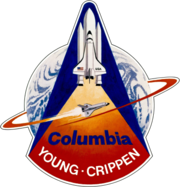
Space Shuttle Columbia / OV-102 | STS-1
Columbia — the Space Shuttle's first flight.
About this launch
Background
Few moments in the history of human spaceflight have carried the weight of expectation that accompanied the maiden flight of the Space Shuttle. By the time the program reached the launch pad, NASA had spent the better part of a decade designing, arguing over, and constructing what it hoped would be a revolutionary step forward: a reusable spacecraft that could carry crews and cargo to low Earth orbit on a routine basis, then return to land like an aircraft and fly again. The ambition was audacious. The engineering challenges were immense. And the stakes, after years of budget pressures and technical setbacks, could scarcely have been higher.
The orbiter chosen to fly first was Columbia, designated OV-102 in the shuttle fleet. Columbia had been the test article that bore the heaviest burden of the program's development phase, subjected to exhaustive structural and systems evaluations before being prepared for actual spaceflight. When it finally rolled out to Launch Complex 39A at Kennedy Space Center, it represented the accumulated effort of thousands of engineers, technicians, and administrators who had staked the future of American human spaceflight on its success.
The mission was designated STS-1, the first flight of the Space Transportation System. What made it genuinely extraordinary — and what set it apart from virtually every other major crewed spacecraft in history — was that NASA chose to fly astronauts aboard it on its very first orbital attempt. Previous American spacecraft, from Mercury capsules to Apollo command modules, had been sent aloft without crews before human beings were strapped inside. The shuttle broke that tradition entirely. STS-1 would be both a test flight and a crewed mission simultaneously, a calculated gamble that reflected both confidence in the vehicle and the program's need to demonstrate capability quickly.
The Crew and Their Preparation
The two men selected to take Columbia into orbit represented a pairing of experience and fresh ambition. Commander John Young was already one of the most accomplished astronauts in the history of the agency, a veteran of Gemini and Apollo missions who had walked on the Moon during Apollo 16. His presence lent STS-1 an air of institutional confidence — if NASA trusted this flight enough to put John Young on it, the reasoning went, then it trusted it considerably.
Pilot Robert Crippen, known universally as Bob Crippen, brought a different kind of significance to the mission. A former military test pilot who had trained extensively during the canceled Manned Orbiting Laboratory program before transferring to NASA, Crippen had spent years preparing for a spaceflight opportunity that had not materialized during the Apollo era. STS-1 would be his first flight to orbit, and in that sense he embodied the hopes of an entire generation of astronauts who had waited through the long gap between Apollo and the shuttle era.
Together, Young and Crippen trained rigorously for a mission that carried no margin for the ordinary kind of incremental learning that accompanies a second or third flight of a new vehicle. They were flying the first one, and they knew it.
The Launch
On Sunday, 12 April 1981, at 12:00:04 GMT, Space Shuttle Columbia lifted off from Launch Complex 39A in Florida. The date carried its own resonance — it was exactly twenty years to the day after Soviet cosmonaut Yuri Gagarin had become the first human being to reach orbit, a coincidence that added a layer of historical symmetry to an already momentous occasion.
The launch itself, after earlier delays had tested the patience of the watching world, was a spectacular demonstration of the shuttle's distinctive propulsion architecture. The vehicle rose on the combined thrust of its three main engines and the two solid rocket boosters strapped to its sides, a configuration unlike anything that had flown before. The roar and fury of that ignition sequence announced, unmistakably, that a new era of American spaceflight had begun.
For the enormous crowds gathered at Kennedy Space Center and the millions watching around the world, the sight of Columbia clearing the launch tower and arcing into the Florida sky was an emotional release after years of anticipation. NASA had not launched American astronauts since the Apollo-Soyuz Test Project in 1975. The intervening years had been a long and sometimes uncertain wait. STS-1 ended it emphatically.
The Mission
Once in low Earth orbit, Columbia and her two-man crew settled into the business of the flight. The mission lasted approximately 54.5 hours, during which the orbiter circled the Earth 36 times. The objectives were primarily evaluative: Young and Crippen were there to put the vehicle through its paces, to assess its systems, its handling characteristics, and its overall performance in the environment for which it had been designed.
As a test flight, STS-1 was deliberately kept free of payload operations or complex secondary objectives. The spacecraft itself was the experiment. Every system that functioned as designed, every reading that fell within predicted parameters, every hour that passed without a critical anomaly represented a data point in the ongoing assessment of whether the shuttle could do what its designers promised.
The flight was not without its anxieties. Post-landing inspection revealed that some of the thermal protection tiles on Columbia's surface had sustained damage, a finding that would foreshadow concerns that would follow the shuttle program throughout its history. But the mission had achieved its fundamental purpose. Columbia had reached orbit, performed as required, and returned safely.
The return itself was a defining moment. Columbia descended through the atmosphere and landed on a dry lakebed runway at Edwards Air Force Base in California, touching down as an unpowered glider in precisely the manner the program had always envisioned. It was the first time an orbital spacecraft had returned to a runway landing rather than a parachute-assisted splashdown, and it validated one of the shuttle's most distinctive and ambitious design features.
Legacy
The success of STS-1 did not instantly transform the shuttle into the routine, low-cost launch system its most optimistic advocates had projected. The full arc of the Space Shuttle Program would prove far more complicated, encompassing extraordinary achievements and devastating tragedies across three decades of operation. But none of that complexity diminishes what was accomplished on 12 April 1981.
STS-1 demonstrated that a winged, reusable orbital spacecraft could be built and flown successfully. It proved that NASA retained the institutional capability to develop and operate a fundamentally new kind of vehicle. And it established Columbia as a trailblazer within a program that would go on to launch dozens of missions, deploy and repair satellites, support the construction of the International Space Station, and carry hundreds of astronauts to orbit.
The decision to fly the shuttle crewed on its first orbital attempt remains one of the boldest choices in the history of human spaceflight. John Young and Bob Crippen accepted that risk with clear eyes, and their success gave the Space Shuttle Program the foundation it needed. In the decades that followed, the shuttle would become one of the most recognizable vehicles in the history of exploration — and it all began with Columbia rising from Pad 39A on a Sunday morning in April.