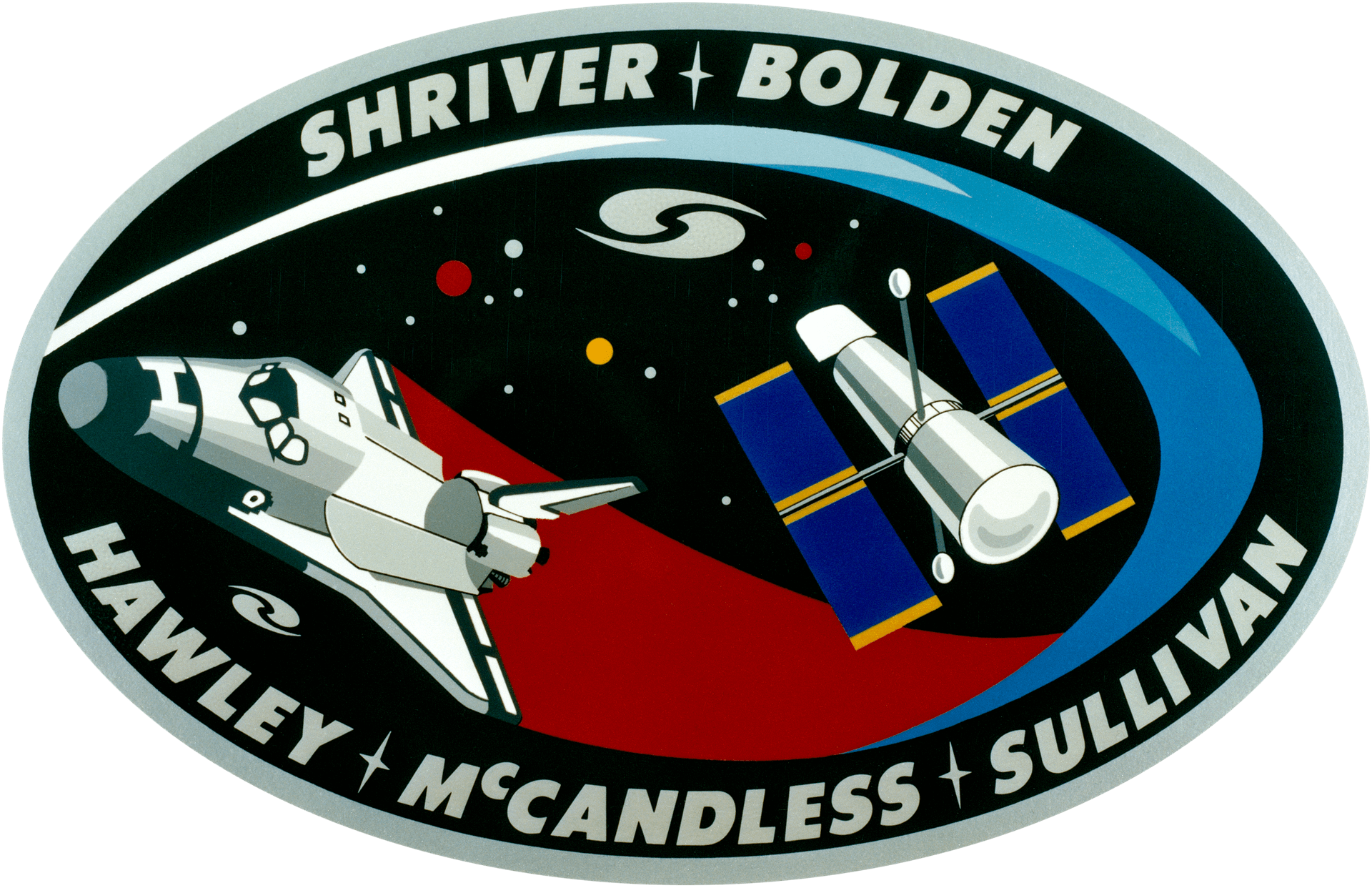
Space Shuttle Discovery / OV-103 | STS-31 (Hubble)
Launched on STS-31; redefined astronomy.
About this launch
Background
Few moments in the history of space exploration carry the weight of April 24, 1990, when Space Shuttle Discovery lifted off carrying a piece of hardware that would fundamentally alter humanity's understanding of the universe. The Hubble Space Telescope, a project decades in the making and the product of an extraordinary collaboration between NASA, the European Space Agency, and the scientific community at large, represented the most ambitious astronomical instrument ever prepared for launch. Its deployment during STS-31 marked Discovery's tenth flight and the thirty-fifth mission of the Space Shuttle program overall, placing it firmly within an era when the shuttle had matured from an experimental vehicle into the workhorse of American human spaceflight.
The concept of placing a large optical telescope in orbit above Earth's atmosphere had been championed by astronomers since the mid-twentieth century. Ground-based observatories, however powerful, contend with the distorting effects of atmospheric turbulence, light pollution, and the simple limitation that certain wavelengths of electromagnetic radiation never reach the surface at all. A space-based telescope promised unobstructed views across a far wider spectrum, from ultraviolet light to visible and near-infrared wavelengths, offering resolving power that no ground installation could match. After years of design, construction, and painful delays, the hardware was ready. The mission was assigned to Discovery and the Lockheed Space Operations Company oversaw launch operations at Kennedy Space Center.
The Launch
On Tuesday, April 24, 1990, at 12:33:51 GMT, Space Shuttle Discovery rose from Launch Complex 39B at Kennedy Space Center in the United States. The moment marked the culmination of years of preparation and carried with it the hopes of the global astronomical community. The shuttle's main engines and twin solid rocket boosters worked in concert to push the vehicle clear of the Florida coastline and into the sky, beginning the ascent that would carry crew and cargo to low Earth orbit.
The target orbit was deliberately higher than most shuttle missions. Placing Hubble at a sufficiently elevated altitude served two purposes: it extended the telescope's operational life between servicing visits and reduced atmospheric drag, which at lower altitudes would gradually pull an unattended spacecraft back toward reentry. Reaching this higher orbit required more propellant and presented additional operational considerations for the crew, but the mission profile had been carefully designed to meet these demands while keeping the flight within Discovery's capabilities.
The launch itself was smooth, and Discovery made the transition from Earth's surface to orbit with the efficiency that the shuttle program had refined over dozens of previous missions. Once in low Earth orbit, the crew began the careful procedures that would lead to the telescope's release into space. The mission was categorized as an astrophysics deployment flight, and every phase of the operation had been rehearsed extensively. The crew was well aware that the hardware in the payload bay was irreplaceable and that its successful deployment was a matter of historic consequence.
The Mission
Once on orbit, the crew's primary task was extracting the Hubble Space Telescope from Discovery's payload bay and releasing it into its own independent orbit. This was not a simple matter of opening the bay doors and letting the telescope float free. Hubble required careful handling with the shuttle's robotic arm, methodical checkout procedures to verify that its systems were functioning correctly after the violence of launch, and a precisely managed release sequence. The telescope measured roughly the size of a large school bus and represented an investment of enormous scientific and financial resources, making every step of the deployment sequence a high-stakes operation.
The crew worked systematically through their checklists, extending and maneuvering the robotic arm to grasp and then slowly raise the telescope clear of the payload bay. Solar arrays and antennas were deployed, allowing Hubble to begin drawing power from sunlight and establishing communications links with ground controllers. When the telescope was confirmed stable and its essential systems were verified as operational, it was released to fly independently. Discovery maintained proximity for a period before moving away, and ground teams took over active control of the observatory.
The mission was declared a success. Hubble was in orbit, alive, and communicating. There was celebration in the scientific community and among the teams who had invested years in making the mission possible. However, the celebration would soon be tempered by the discovery of a flaw in the telescope's primary mirror, a subtle but deeply consequential error in its curvature that prevented it from focusing light with the precision originally intended. This problem, while a serious setback, did not negate the achievement of STS-31. The telescope was in space, and critically, the shuttle program's architecture allowed for future crews to visit and correct it.
Legacy
The legacy of STS-31 and the deployment of the Hubble Space Telescope is difficult to overstate. Even setting aside the subsequent servicing missions that corrected Hubble's optics and upgraded its instruments over the following decades, the act of placing the observatory in orbit opened a new chapter in human knowledge. Once repaired during a later mission, Hubble delivered images and data that reshaped virtually every branch of observational astronomy. It contributed to the measurement of the universe's expansion rate, provided evidence supporting the existence of supermassive black holes at the centers of galaxies, helped constrain the age of the universe, and produced imagery of such clarity and beauty that it changed how the general public perceived and engaged with astronomy.
Discovery's role in this story is inseparable from the mission's meaning. The orbiter had already demonstrated its reliability across nine previous flights, and STS-31 added a defining chapter to its record. The decision to operate from Launch Complex 39B, to reach the higher orbit required for Hubble's long-term placement, and to execute a flawless deployment under the watchful management of Lockheed Space Operations all reflected a program operating with considerable competence and purpose.
The Hubble Space Telescope became, in the years that followed, perhaps the single most recognized scientific instrument in history. Its name entered everyday language as a synonym for cosmic wonder, and its images became cultural touchstones reproduced in classrooms, museums, and public spaces around the world. None of that would have been possible without the events of April 24, 1990, and the crew and ground teams who brought STS-31 to a successful conclusion.
In the broader context of the Space Shuttle program's thirty-fifth mission, STS-31 stands as one of the most consequential flights ever conducted. It demonstrated what the shuttle was uniquely capable of doing: carrying large, complex, and sensitive payloads to orbit and deploying them with the precision that robotic systems alone could not then provide. The decision to build a human-tended, serviceable space telescope and to trust the shuttle to deliver it proved visionary. Hubble's decades of operation, its multiple upgrades, and its continuing contribution to science all trace their origin to the moment Discovery cleared the launch tower at Complex 39B and began its climb into history.