Redstone MRLV
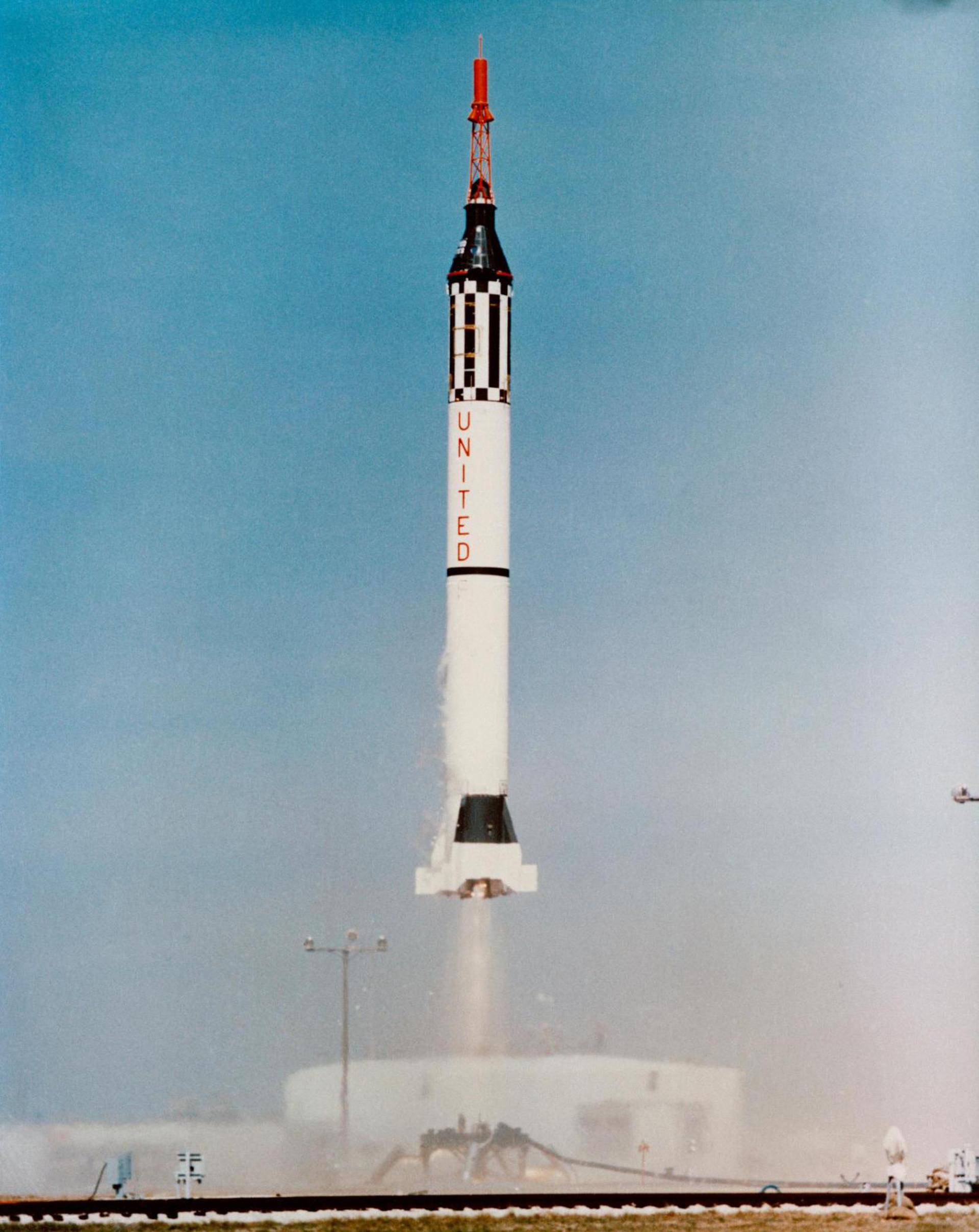
About the Redstone MRLV
Redstone MRLV
The Redstone MRLV (Man-Rated Launch Vehicle) was an American single-stage ballistic missile derivative developed by the Army Ballistic Missile Agency and later managed by NASA to carry human passengers on suborbital flights during the early years of the United States space program. Standing 25.41 meters tall with a diameter of 1.78 meters, the vehicle was a carefully modified version of the Redstone ballistic missile, adapted to meet the stringent reliability and safety standards required for crewed spaceflight.
Development and Role
The Redstone MRLV emerged from the broader Redstone missile program, which had itself been developed at Redstone Arsenal in Huntsville, Alabama, under the leadership of Wernher von Braun and his team of engineers. When NASA selected the Redstone as the booster for Project Mercury's suborbital phase, the rocket underwent extensive modifications to improve its reliability and to allow for crew escape in the event of an emergency. These changes earned it the "man-rated" designation, distinguishing it from its military predecessor.
The vehicle's primary — and only — customer was the National Aeronautics and Space Administration, which used it exclusively as part of the Mercury program to place American astronauts on brief suborbital trajectories, reaching the edge of space before splashing down in the Atlantic Ocean.
Flight History
The Redstone MRLV flew six times between 1960 and 1961, recording five successes and one failure or partial failure. The program began with Mercury-Redstone 1, which suffered an anomalous launch abort in late 1960. This was followed by the successful Mercury-Redstone 1A, an uncrewed test flight that validated the vehicle's performance.
Mercury-Redstone BD (Booster Development) followed as a rapid turnaround test to verify fixes and improvements. Mercury-Redstone 2 then carried the chimpanzee Ham on a successful suborbital flight in early 1961, demonstrating that the system was ready to support a human passenger.
The program reached its historic apex with Mercury-Redstone 3 on May 5, 1961, which carried Alan Shepard — the first American in space — on a suborbital arc lasting approximately 15 minutes. The final flight, Mercury-Redstone 4 on July 21, 1961, carried Gus Grissom on a similar trajectory, concluding the Redstone MRLV's operational life. All launches took place from Cape Canaveral, Florida.
Legacy
Though its operational career spanned only two years and six flights, the Redstone MRLV holds an outsized place in the history of human spaceflight. It gave the United States its first experience launching astronauts and provided NASA with critical operational knowledge — from launch procedures to recovery operations — that informed the development of the subsequent Gemini and Apollo programs. The vehicle demonstrated that a ballistic missile could be responsibly adapted for human use, establishing a template that would define American launch vehicle development for decades to come.
- Jul 21, 1961Redstone MRLV | Mercury-Redstone 4Success
- May 05, 1961Redstone MRLV | Mercury-Redstone 3Success
- Mar 24, 1961Redstone MRLV | Mercury-Redstone BDSuccess
- Jan 31, 1961Redstone MRLV | Mercury-Redstone 2Success
- Dec 19, 1960Redstone MRLV | Mercury-Redstone 1ASuccess
- Nov 21, 1960Redstone MRLV | Mercury-Redstone 1Failure