Falcon 1
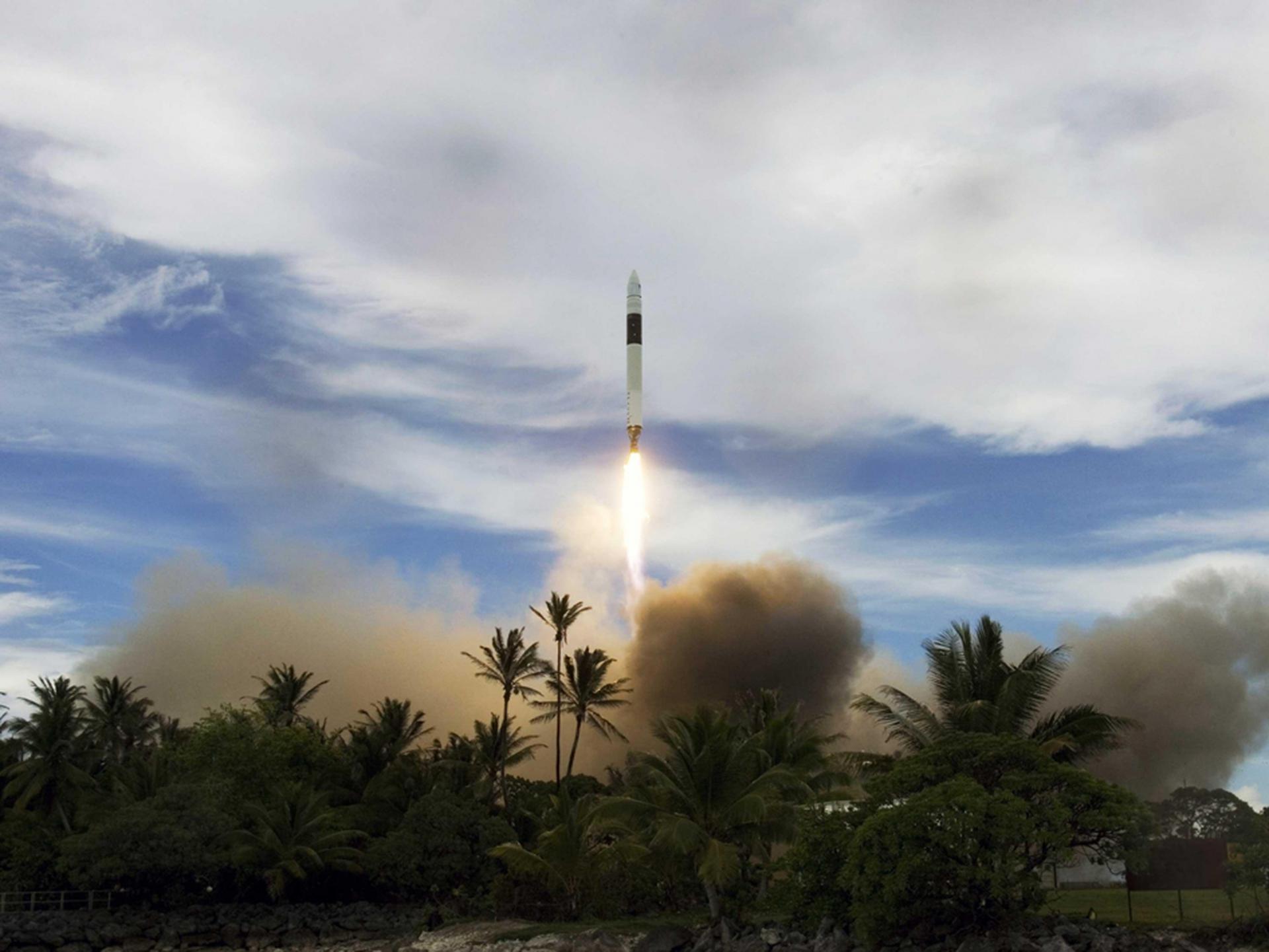
About the Falcon 1
Falcon 1
The Falcon 1 was a small, two-stage orbital launch vehicle developed and operated by SpaceX (Space Exploration Technologies Corp.), an American private aerospace company founded by Elon Musk. Designed to carry lightweight payloads to low Earth orbit, the Falcon 1 holds a significant place in spaceflight history as the first privately developed liquid-fueled rocket to reach Earth orbit.
Standing 22.25 meters tall with a diameter of 1.7 meters, the Falcon 1 was a slender, relatively modest vehicle by orbital standards, capable of delivering up to 470 kilograms to low Earth orbit. Its two stages were powered by liquid propellants, with the first stage using a single Merlin engine — a rocket engine developed in-house by SpaceX — and the second stage using a Kestrel engine. The vehicle launched from Omelek Island in the Kwajalein Atoll in the central Pacific Ocean, a remote site that suited the vehicle's early experimental character.
Flight History
Our records document five flights of the Falcon 1, conducted between 2006 and 2009, of which two were successful and three resulted in failure or partial failure.
The program began with FalconSAT-2, a mission that ended in failure shortly after liftoff. A second attempt, carrying DemoSat, also failed to reach orbit. These early setbacks were significant but not unexpected for a vehicle at the frontier of commercial spaceflight development. A third flight, tracked simply as Flight 3, came agonizingly close to success before a staging anomaly prevented orbit insertion.
The tide turned decisively on the fourth flight, which carried RatSat — a mass simulator payload — to orbit. This mission, completed in 2008, marked a historic milestone: the first time a privately funded liquid-fueled rocket had successfully achieved Earth orbit. The fifth and final flight delivered RazakSAT, a Malaysian Earth-observation satellite, successfully to orbit in 2009, demonstrating that the Falcon 1 could perform genuine commercial satellite delivery.
Significance and Legacy
Despite its modest payload capacity and relatively short operational life, the Falcon 1 was enormously consequential for the commercial launch industry. It demonstrated that a privately funded company could design, build, and fly an orbital rocket — a capability previously held only by national space agencies and large government contractors.
The Falcon 1 also served as a critical proving ground for the technologies and engineering culture that would define SpaceX's later, far larger vehicles. The Merlin engine at its core was developed and refined through the Falcon 1 program before scaling up to power the Falcon 9 family, which would go on to become one of the most frequently flown orbital rockets in history.
SpaceX was both the developer and the primary customer represented in the Falcon 1's mission manifest, reflecting the vehicle's role as much as a development platform as a commercial product. The program's willingness to accept early failures, learn rapidly, and persist through setbacks became emblematic of SpaceX's broader approach to rocket development — an approach that would reshape the global launch industry in the decades that followed.