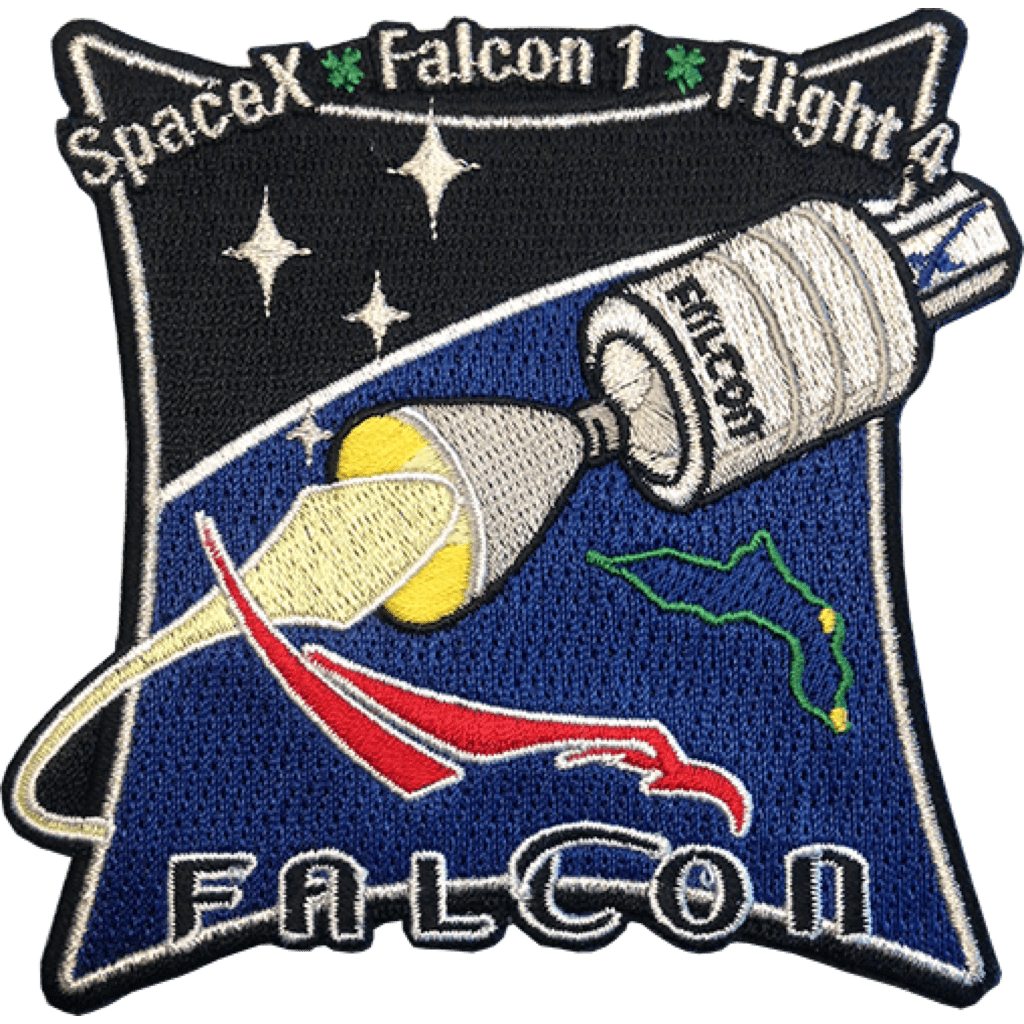
Falcon 1 | RatSat
Falcon 1 Flight 4 — first privately developed liquid-fuel rocket to reach orbit (28 September 2008).
About this launch
Background
The story of Falcon 1 Flight 4 is inseparable from the broader narrative of commercial spaceflight's emergence as a credible force in the early twenty-first century. SpaceX, the California-based aerospace company founded by entrepreneur Elon Musk, had spent several years developing the Falcon 1 — a small, two-stage liquid-fueled orbital launch vehicle — with the explicit ambition of dramatically reducing the cost of access to space. That ambition had been tested severely by the time the fourth flight was being prepared. Three consecutive launch attempts had each ended in failure, consuming hardware, payloads belonging to other organizations, and a significant measure of public confidence. The company's financial reserves were under strain, and the pressure to succeed was acute. A fourth failure, by most accounts, would have placed the entire enterprise in serious jeopardy.
The Falcon 1 was designed around simplicity and reliability. Its first stage used a single Merlin engine burning liquid oxygen and rocket-grade kerosene, a propellant combination chosen partly for its relative safety and partly for its cost-effectiveness. The second stage used the Kestrel engine, also burning the same propellant combination. The vehicle was modest in scale compared to the large government rockets of the era, but its significance lay not in raw size or power but in the philosophy behind its construction: that a small, focused private company could build and operate an orbital rocket without the vast institutional infrastructure that had historically defined the launch industry.
Omelek Island, the launch site in the Marshall Islands atoll of Kwajalein, had served as SpaceX's primary launch facility for the Falcon 1 program. Remote and demanding to work at logistically, the site was nonetheless well-suited to over-ocean launches and offered the safety clearances necessary for an unproven vehicle. The team that worked there on successive missions had developed considerable expertise under difficult circumstances, and the hard-won lessons of three failed flights were embedded in the modifications and procedural improvements brought to the fourth attempt.
The Payload
Rather than carry a commercial or scientific payload of significant monetary or scientific value — a risk that would have been difficult to justify given the vehicle's track record at the time — SpaceX chose to fly a mass simulator designated RatSat. This was a simple block of aluminum, shaped and weighted to approximate the mass properties of a real satellite, allowing the mission to serve its primary purpose as a demonstration of the rocket's ability to reach orbit without placing any irreplaceable asset at risk. The name itself carried a certain wry humor, fitting for a company that had cultivated an unconventional culture. RatSat had no instruments, no solar panels, no communications systems. It was purely a stand-in, a physical argument to be made to the upper atmosphere: that the rocket could deliver something there and leave it circling the Earth.
This pragmatic choice reflected a mature assessment of what Flight 4 actually needed to accomplish. Orbit itself was the milestone. Everything else was secondary. If the vehicle performed correctly and the aluminum block arrived in low Earth orbit, the mission would be an unqualified success regardless of the payload's scientific worth.
The Launch
On 28 September 2008, at 23:15 GMT, the Falcon 1 lifted off from Omelek Island and began its ascent. What followed was, by the standards of the program's troubled history, a remarkably clean flight. The first stage performed its burn and separated without the staging anomalies that had plagued earlier attempts. The second stage ignited, and the Kestrel engine carried RatSat the rest of the way to orbital velocity. When confirmation came that the payload had achieved low Earth orbit, it represented the successful conclusion of a mission that had been years in the making and had survived repeated setbacks to reach this moment.
The emotional response from the SpaceX team was significant. The launch had taken place with relatively little public fanfare compared to what would come later in the company's history, but those who had worked directly on the Falcon 1 program understood exactly what had been accomplished. The vehicle had not simply survived; it had performed. Every major system had functioned as designed. The guidance, the engines, the staging sequence, the second-stage restart capability — all of it had come together in a single coherent mission.
For a company that had come close to dissolution, the successful orbit of even an aluminum mass simulator carried enormous weight. It validated years of engineering work, justified the confidence of those who had continued to invest in and work for the company, and answered critics who had questioned whether a private firm operating outside the traditional aerospace contractor system could truly deliver an orbital vehicle.
Legacy
The historical importance of Falcon 1 Flight 4 extends well beyond the fate of any single company. On 28 September 2008, for the first time in history, a privately developed liquid-fueled rocket reached Earth orbit. This was not a government program operating under a commercial label, nor a legacy contractor working on government contracts — it was a rocket conceived, financed, built, and operated by a private company, and it worked.
That distinction matters because it marked a genuine threshold in the democratization of space access. Governments had held an effective monopoly on orbital launch capability since Sputnik, not because private enterprise lacked the will but because the technical and financial barriers were so formidable. SpaceX's success demonstrated that those barriers, while real, were not insurmountable for a well-organized and sufficiently motivated private organization. The implications for launch pricing, for the commercial satellite industry, and for the long-term structure of the space economy were profound.
The success of Flight 4 also had immediate practical consequences for SpaceX itself. It provided the proof of concept necessary to secure further contracts, including a landmark agreement with NASA that would allow the company to develop larger vehicles under the Commercial Orbital Transportation Services program. The Falcon 1 itself flew only one more time after this mission before SpaceX shifted its focus to the larger Falcon 9, but the program had served its essential purpose. It had demonstrated that the company's approach to rocket development was sound, and it had given the organization the credibility and momentum to pursue far more ambitious goals.
RatSat, the aluminum block that rode the Falcon 1 into orbit on that September evening, remained in low Earth orbit as a passive artifact of the mission. It carried no data, transmitted no signals, and served no ongoing function — but its presence in orbit was itself the message. Something had been placed there by a new kind of space actor, and the industry would never look quite the same again. The launch is remembered not for the complexity of its payload or the novelty of its destination, but for the precedent it set: that the orbital frontier, long the exclusive domain of nation-states, had opened to private enterprise in a meaningful and lasting way.