Zhuque-2E
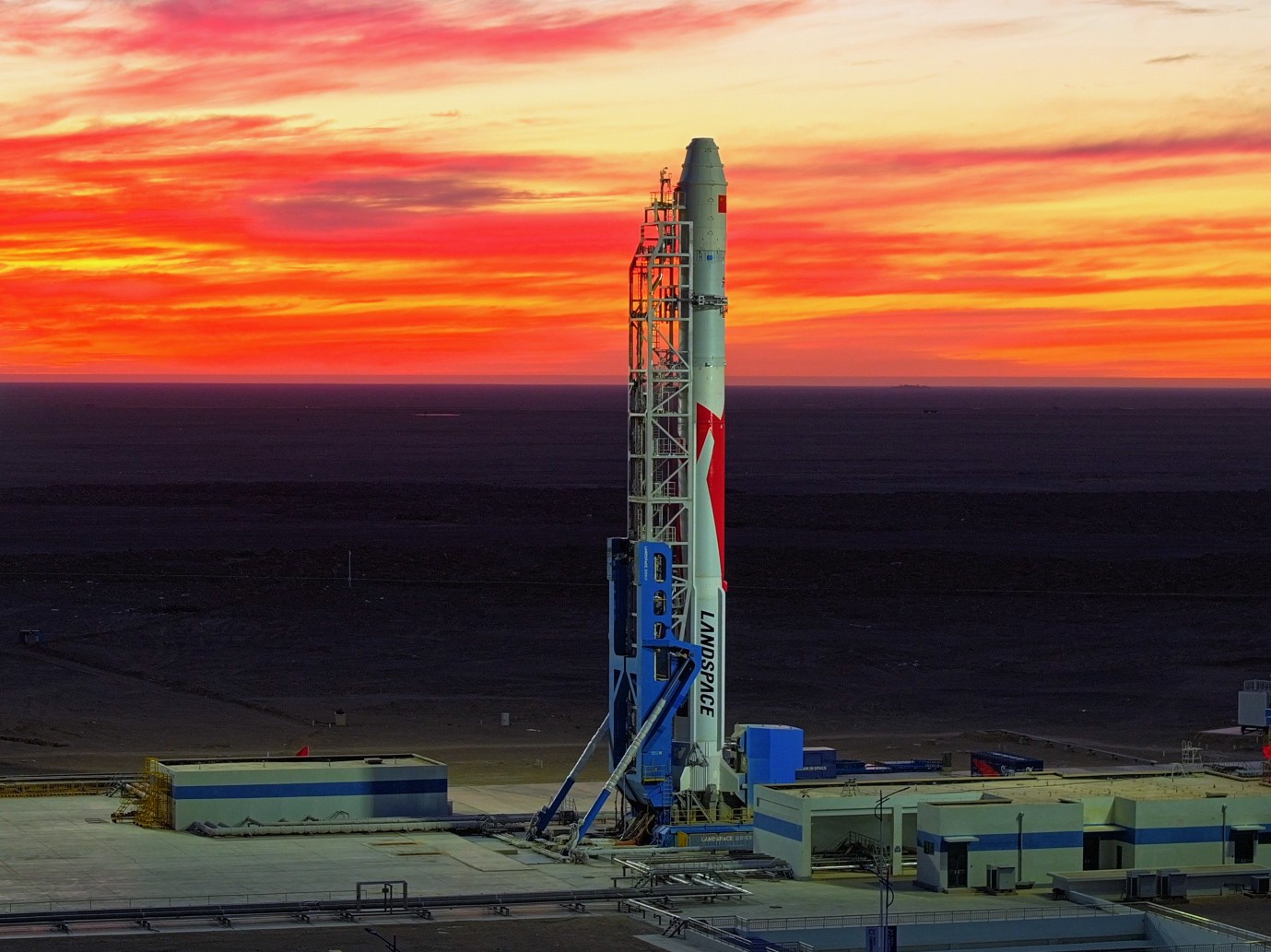
About the Zhuque-2E
Zhuque-2E
The Zhuque-2E is a Chinese orbital launch vehicle developed and operated by LandSpace (Landspace Technology Corporation), a Beijing-based commercial space company. It is an evolved variant of the Zhuque-2 rocket family, which holds the distinction of being the world's first methane-fueled rocket to successfully reach orbit — a milestone achieved in July 2023. The Zhuque-2E represents LandSpace's continued refinement of that platform for commercial small-satellite deployment.
Vehicle Overview
Standing 49.5 meters tall with a diameter of 3.35 meters, the Zhuque-2E is a medium-class launch vehicle capable of delivering up to 6,000 kilograms to low Earth orbit (LEO). Like its predecessors in the Zhuque-2 family, it burns liquid methane and liquid oxygen — a propellant combination increasingly favored in modern rocketry for its performance characteristics, cleaner combustion, and suitability for potential reuse. The 3.35-meter core diameter is a common standard in Chinese launch vehicles, reflecting shared infrastructure and manufacturing tooling across the industry.
The vehicle launches from the Jiuquan Satellite Launch Center in northwestern China, the country's oldest and most active launch site, which has been adapted to support LandSpace's commercial operations.
Flight History
According to tracked flight data, the Zhuque-2E conducted three flights between 2024 and 2025, recording two successes and one failure or partial failure — a track record consistent with an actively developing commercial platform still maturing its reliability.
The tracked missions reflect a focus on smallsat constellation deployment. One mission delivered four SatNet test satellites, supporting what appears to be early infrastructure for a broadband or communications network. A second mission lofted a batch of six satellites, demonstrating the vehicle's capacity for multi-payload rideshare arrangements. A third mission carried Guangchuan-01 and Guangchuan-02, a pair of satellites likely associated with remote sensing or maritime monitoring applications based on the naming convention.
LandSpace itself appears as the top customer across tracked flights, a pattern common among emerging launch providers that use their own rocket to fulfill contracted government or quasi-government constellation programs before broadening their commercial customer base.
Context and Significance
The Zhuque-2E sits at an important intersection in the commercial space landscape. China's private launch sector has expanded rapidly since the mid-2010s, and LandSpace has been one of its most prominent actors. By operating a methane-fueled rocket at a time when only a handful of such vehicles have ever reached orbit worldwide, the company positions itself competitively against both domestic rivals and international providers.
The "E" designation suggests incremental improvement over the baseline Zhuque-2 — likely encompassing refinements to payload capacity, fairing geometry, or stage performance, though the specific engineering changes that define this variant have not been detailed in publicly confirmed documentation.
With an active operational window spanning 2024 into 2025 and a growing mission manifest centered on satellite constellation buildout, the Zhuque-2E represents a maturing chapter in both LandSpace's commercial ambitions and China's broader push toward a competitive, privately led launch industry.