Zhuque-2
About the Zhuque-2
Overview
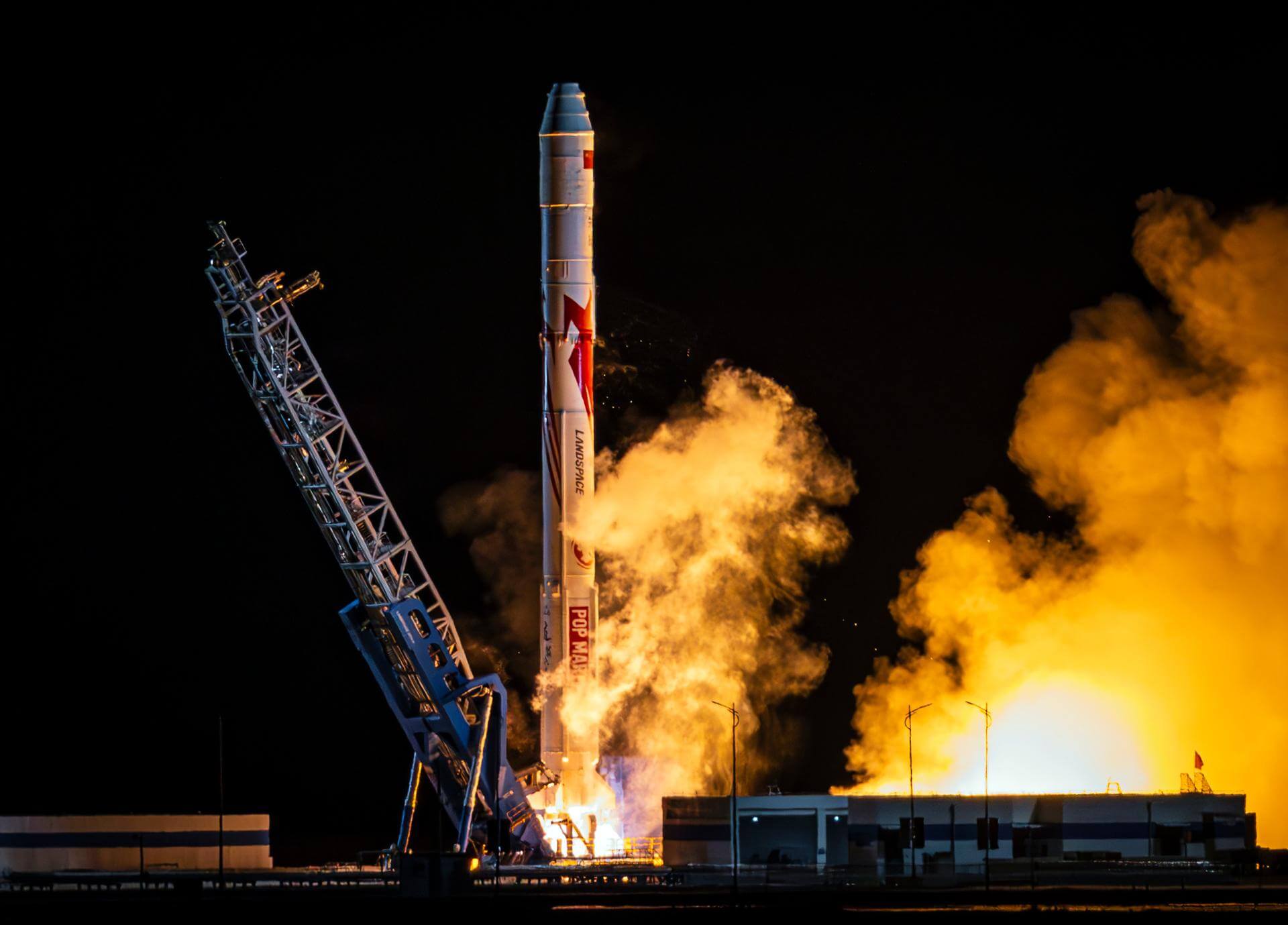
Zhuque-2 is a medium-class orbital launch vehicle developed and operated by LandSpace (朱雀二号), a Chinese commercial launch company headquartered in Beijing. The rocket holds a landmark place in spaceflight history as the first methane-fueled rocket in the world to reach orbit, a milestone achieved in 2023 and notable for placing LandSpace ahead of better-funded international competitors racing toward the same goal.
Design and Configuration
Standing 49.5 meters tall with a diameter of 3.35 meters, Zhuque-2 is a two-stage vehicle built around liquefied natural gas (methane) and liquid oxygen propellants — a combination increasingly favored in modern rocket design for its reusability potential, cleaner combustion, and storability advantages over traditional kerosene or hypergolic fuels. The vehicle is capable of delivering up to 4,000 kg to low Earth orbit (LEO), placing it in a competitive tier alongside other medium-lift commercial rockets emerging from China's growing private space sector.
The first stage is powered by a cluster of Tianque (TQ) engines, while the second stage uses a vacuum-optimized variant of the same engine family. The choice of a full-flow or staged-combustion methane engine cycle reflects LandSpace's ambition to develop a technically sophisticated product competitive with next-generation vehicles worldwide.
Launch Site and Operations
Zhuque-2 launches from the Jiuquan Satellite Launch Center in the Gobi Desert, one of China's primary launch facilities and a site that has supported both government and commercial missions. LandSpace is among the first wave of Chinese private companies to operate orbital-class rockets from established national infrastructure.
Flight History
According to our flight record, Zhuque-2 has been tracked across three flights spanning 2022 to 2023, recording two successes and one failure or partial failure.
The vehicle's Maiden Flight, conducted in late 2022, ended in a partial failure when the second stage experienced an anomaly, preventing the rocket from achieving orbit despite the first stage performing nominally. This result, while disappointing, demonstrated meaningful progress for a first attempt at an entirely new propellant combination.
Flight 2, launched in July 2023, corrected the issues encountered on the debut mission and successfully reached orbit — making Zhuque-2 the world's first methane-oxygen rocket to do so. The achievement drew significant international attention and validated LandSpace's engineering approach.
Flight 3, also conducted in 2023, followed up with another successful mission, consolidating the vehicle's operational status and demonstrating back-to-back reliability after the early setback.
Significance and Context
Zhuque-2's emergence reflects the rapid maturation of China's commercial launch industry, which has expanded considerably since regulations opened the sector to private enterprise around 2015. LandSpace, founded in 2015, developed Zhuque-2 at a pace that surprised many observers, beating SpaceX's Starship and United Launch Alliance's Vulcan — both methane-fueled vehicles — to an orbital success with a methalox upper stage.
The vehicle's 4,000 kg LEO capacity positions it as a practical option for commercial satellite constellation deployment and government-adjacent payloads, serving a market segment that is growing rapidly as small- and medium-satellite operators seek affordable, dedicated launch options within China and potentially beyond.