Vulcan VC4S
About the Vulcan VC4S
Vulcan VC4S
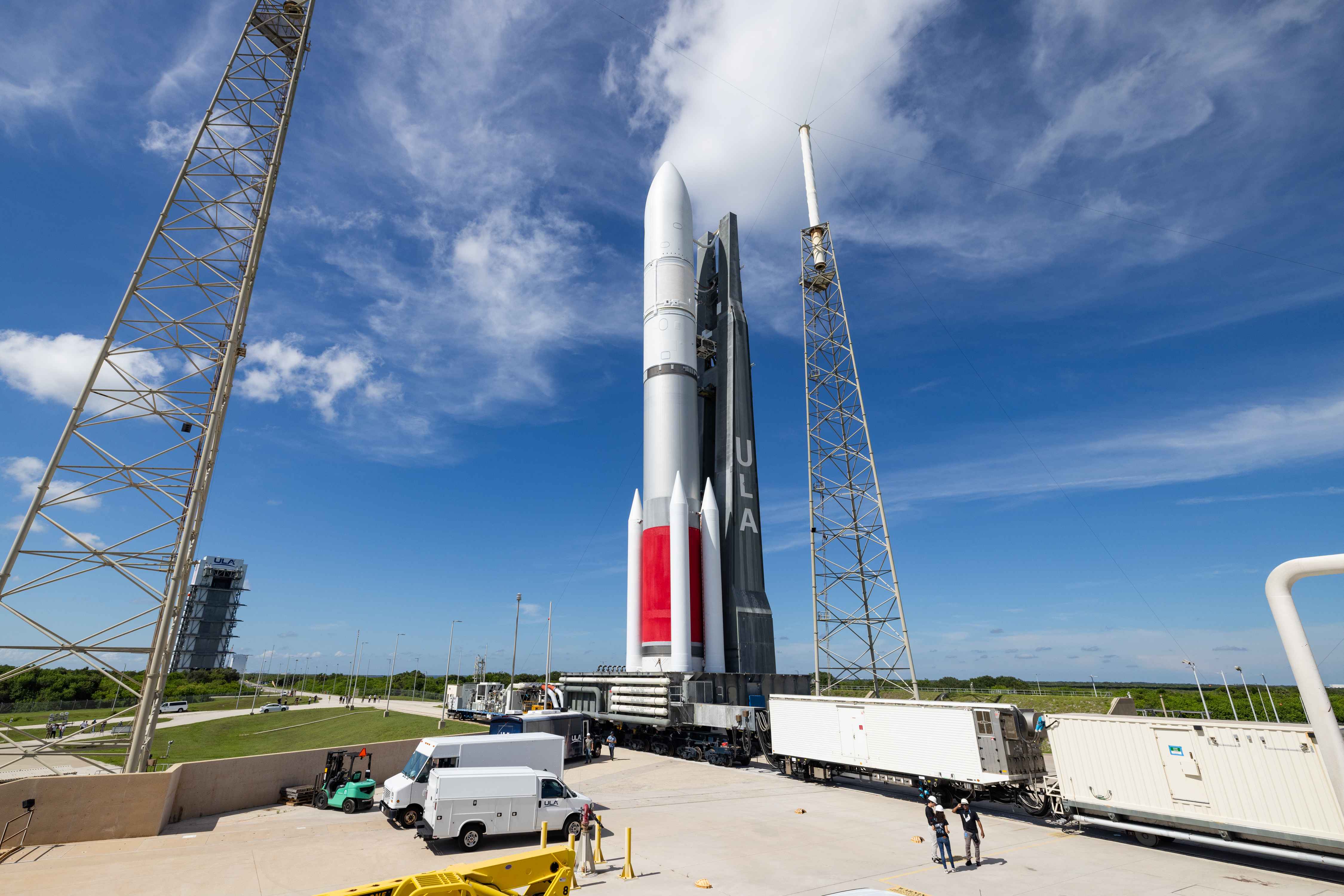
The Vulcan VC4S is a configuration of the Vulcan Centaur launch vehicle family, developed and operated by United Launch Alliance (ULA), the American launch services joint venture between Boeing and Lockheed Martin. It represents one of the higher-performance variants of the Vulcan Centaur rocket, distinguished by its use of four solid rocket boosters — the meaning of the "4S" designation — which augment the core stage's thrust at liftoff to accommodate heavier or more demanding payloads.
Vehicle Background
Vulcan Centaur was developed as ULA's next-generation heavy-lift rocket, intended to succeed both the Atlas V and Delta IV families that had anchored American government launch services for decades. The vehicle's first stage is powered by BE-4 engines built by Blue Origin, burning liquefied natural gas and liquid oxygen — a significant departure from the kerosene and hydrogen propellants used by ULA's legacy vehicles. The upper stage is the Centaur V, a modernized evolution of one of the longest-serving and most reliable upper stages in spaceflight history.
Vulcan launches from Space Launch Complex 41 (SLC-41) at Cape Canaveral Space Force Station in Florida, the same pad previously used by Atlas V. ULA designed the Vulcan family to be highly configurable, with options ranging from zero to six solid boosters and a choice of payload fairing sizes, allowing the rocket to be right-sized for a wide range of missions.
Operational History
According to our flight record, the Vulcan VC4S has flown three times between 2025 and 2027, with two confirmed successes and no recorded failures or partial failures. All three tracked missions have served national security customers, reflecting the strong early demand from the United States government for Vulcan's capabilities.
The missions logged in our data include NROL-88, a payload for the National Reconnaissance Office, and USSF-87 and USSF-106, both manifested for the United States Space Force. This pattern underscores the degree to which Vulcan Centaur, and the VC4S configuration in particular, has become a trusted vehicle for sensitive national security space launches — a role that ULA has fulfilled continuously since the early 2000s.
Role and Significance
The four-booster configuration places the VC4S in the upper tier of Vulcan Centaur's performance range, suited to missions requiring substantial lift capacity or the delivery of payloads to high-energy orbits. Its concentration of national security payloads in the early flight record is consistent with ULA's long-standing position as a primary launch provider for the U.S. Department of Defense and intelligence community.
As ULA transitions its government and commercial customers from the retiring Atlas V to Vulcan Centaur, the VC4S variant stands as one of the more capable tools in the company's portfolio, bridging proven ULA operational reliability with a new generation of propulsion and avionics technology. Its early record — unblemished through the missions captured in this database — reflects a deliberate and methodical introduction to operational launch service.