Vulcan
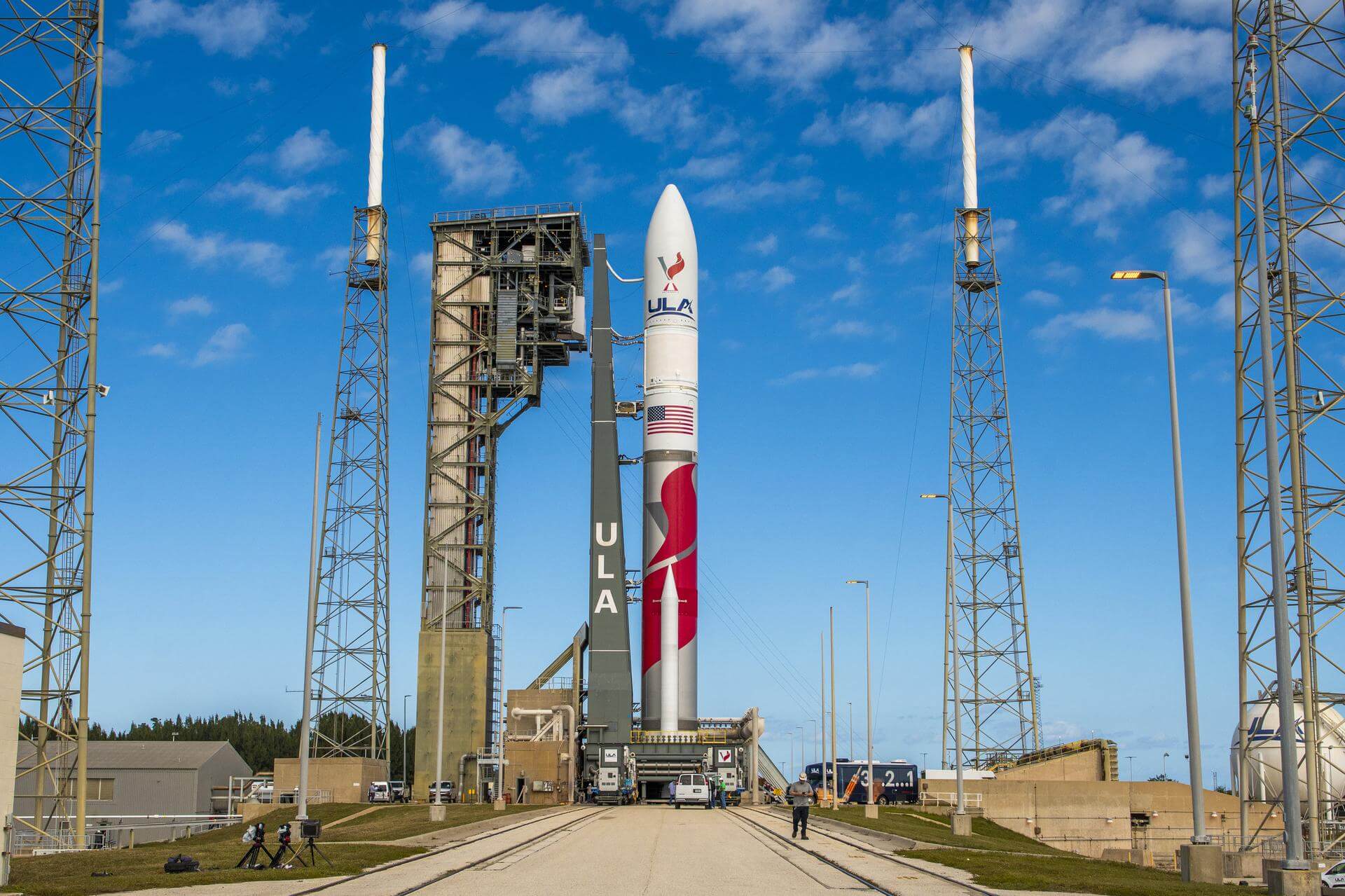
About the Vulcan
Vulcan
Vulcan is an American orbital launch vehicle developed and operated by United Launch Alliance (ULA), designed as the successor to the company's workhorse Atlas V and Delta IV rocket families. Manufactured in the United States, Vulcan represents ULA's next-generation heavy-lift platform, intended to serve both commercial and national security spaceflight customers well into the latter half of the 2020s.
Design and Configuration
Vulcan features a core diameter of 5.4 meters, giving it a wider cross-section than the Atlas V it succeeds and enabling a correspondingly large payload fairing volume suited to bulky government and commercial payloads. The vehicle is designed around a modular architecture that allows the number of solid rocket boosters to be varied depending on mission requirements. Unlike its Atlas V predecessor, Vulcan uses domestically sourced main engines, a deliberate strategic choice driven by U.S. government requirements to reduce reliance on foreign propulsion systems.
Role and Customer Base
Vulcan was conceived primarily to serve the U.S. national security launch market, and this is clearly reflected in the missions tracked in our flight record. The vehicle's top customers are closely associated with United Launch Alliance itself as the contracting entity, with payloads drawn overwhelmingly from U.S. government programs. Recent missions have included GPS IIIF satellite deployments for the U.S. Space Force under the USSF-49 and USSF-15 designations, a Next Generation OPIR geosynchronous missile-warning satellite (USSF-50), and classified national security payloads under the USSF-70, USSF-95, and NROL-83 mission designations. This manifest underscores Vulcan's central role in sustaining and modernizing U.S. military space infrastructure.
Flight History
According to our tracking data, Vulcan has accumulated 25 tracked flights spanning the period from 2026 through 2029. The vehicle's manifest across this window is dominated by U.S. Space Force and National Reconnaissance Office missions, reflecting the long-term Launch Service Agreement contracts ULA secured with the U.S. government to guarantee domestic assured access to space. The cadence of flights across these years demonstrates that Vulcan matured into a regularly flown vehicle relatively quickly after entering service.
Launch Operations
Vulcan launches from Cape Canaveral Space Force Station in Florida, continuing ULA's long operational history at the Eastern Range. The site provides access to the orbital inclinations required by the GPS, missile-warning, and reconnaissance missions that form the core of Vulcan's manifest.
Significance
Vulcan occupies an important place in the broader story of American spaceflight as the vehicle that formally closed the chapter on Atlas V and Delta IV, consolidating ULA's product line onto a single modern platform. Its manifest of GPS replenishment, missile-warning, and intelligence satellites speaks to the trust the U.S. national security community placed in the rocket from the outset. As competition in the launch industry intensified through the late 2020s, Vulcan served as ULA's primary answer to the question of how a legacy launch provider could remain relevant in a rapidly evolving market.
- Dec 31, 2029Vulcan | GPS IIIF SV02 (USSF-49)TBD
- Dec 31, 2029Vulcan | GPS IIIF SV03 (USSF-15)TBD
- Dec 31, 2029Vulcan | NGG-2 (USSF-50)TBD
- Dec 31, 2028Vulcan | GPS IIIF SV01TBD
- Sep 30, 2028Vulcan | USSF-70TBD
- Jun 30, 2027Vulcan | USSF-95TBD
- Dec 31, 2026Vulcan | NROL-109TBD
- Dec 31, 2026Vulcan | NROL-64TBD
- Dec 31, 2026Vulcan | NROL-73TBD
- Dec 31, 2026Vulcan | NROL-83TBD
- Dec 31, 2026Vulcan | SDA Tranche 1 Tracking Layer BTBD
- Dec 31, 2026Vulcan | SDA Tranche 1 Tracking Layer DTBD
- Dec 31, 2026Vulcan | SDA Tranche 2 Transport Layer BTBD
- Dec 31, 2026Vulcan | SILENTBARKER 2/NROL-118TBD
- Dec 31, 2026Vulcan | STP-5TBD
- Dec 31, 2026Vulcan | USSF-112TBD
- Dec 31, 2026Vulcan | USSF-114TBD
- Dec 31, 2026Vulcan | USSF-16TBD
- Dec 31, 2026Vulcan | USSF-23TBD
- Dec 31, 2026Vulcan | USSF-25TBD
- Dec 31, 2026Vulcan | USSF-43TBD
- Dec 31, 2026Vulcan | USSF-57TBD
- Dec 31, 2026Vulcan | WGS-11TBD
- Dec 31, 2026Vulcan | NROL-100TBD
- Dec 31, 2026Vulcan | NROL-56TBD