Vostok 8A92M
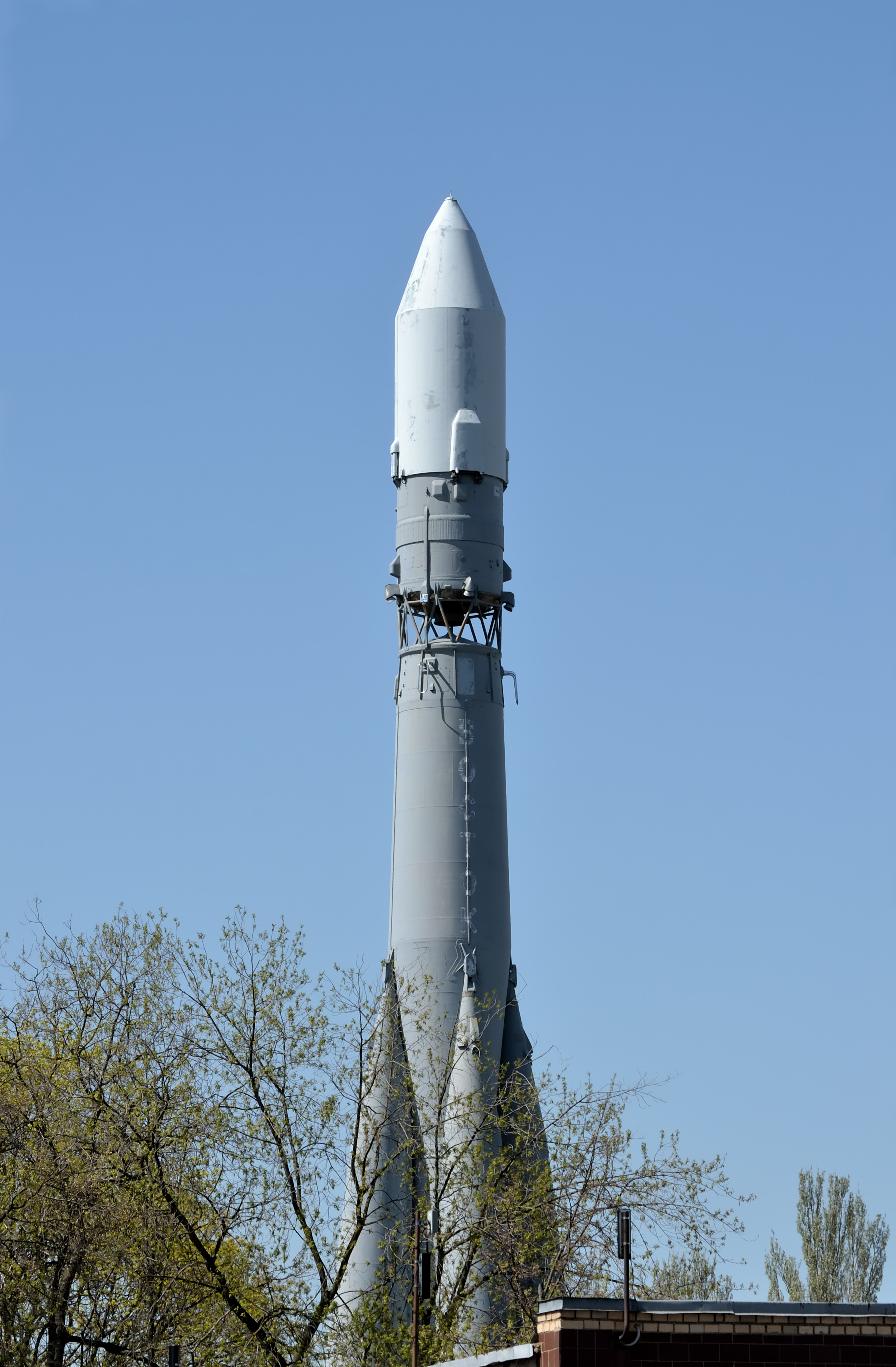
About the Vostok 8A92M
Vostok 8A92M
The Vostok 8A92M is a Soviet orbital launch vehicle developed as part of the venerable Vostok rocket family, operated by the Soviet Space Program under the direction of what is now known as the Rocket and Space Corporation Energia. A direct descendant of the R-7 intercontinental ballistic missile lineage pioneered by Sergei Korolev, the 8A92M represents a specialized, refined variant of the Vostok series optimized for the reliable deployment of Earth observation and meteorological satellites into low Earth orbit.
Design and Specifications
Standing 30.84 meters tall with a core diameter of 2.99 meters, the Vostok 8A92M follows the classic configuration of its R-7-derived predecessors, featuring a central core stage surrounded by four strap-on boosters that ignite at liftoff — a staging arrangement that became iconic in Soviet and later Russian launch vehicle design. The vehicle is capable of delivering up to 3,800 kilograms to low Earth orbit, placing it in the light-to-medium payload class. Like other members of the Vostok family, it launches from the Baikonur Cosmodrome in Kazakhstan, one of the world's oldest and most historically significant spaceports.
Operational History
The Vostok 8A92M entered service in 1964 and remained active through 1991, spanning nearly three decades of continuous operation — a testament to the robustness and adaptability of the underlying R-7 design philosophy. Across that period, our flight records document 93 tracked launches, of which 92 were successful and 1 resulted in failure or partial failure, yielding an exceptional reliability rate that reinforced the Soviet Union's confidence in this platform for high-priority national missions.
The rocket's primary customers were agencies and programs within the Soviet Space Program, and its manifest reflects a strong focus on Earth remote sensing and atmospheric science. Among its most notable payloads were satellites from the Meteor-2 meteorological series and the Resurs-O1 and Resurs-OE Earth resources satellite families. Notably, the 8A92M also demonstrated international utility late in its career, serving as the launch vehicle for IRS-1A and IRS-1B, the first two satellites belonging to India's Indian Remote Sensing program — a striking example of Soviet launch services reaching a foreign commercial and scientific customer during the late 1980s and early 1990s.
Legacy
The Vostok 8A92M occupies a meaningful place in the broader history of spaceflight as one of the longer-serving variants of the world's most prolific rocket family. Its three-decade operational lifespan bridged the height of the Space Race era and the twilight of the Soviet Union itself, during which time it quietly compiled one of the strongest reliability records of any orbital vehicle in its class. The missions it supported — weather monitoring, land resource mapping, and international scientific cooperation — underscore the vehicle's role not merely as a launch system, but as a practical instrument of both national policy and emerging global space collaboration. Its retirement in 1991 coincided with the dissolution of the Soviet state, closing a chapter on one of spaceflight's most enduring rocket lineages.
- Aug 29, 1991Vostok 8A92M | IRS-1BSuccess
- Apr 20, 1988Vostok 8A92M | Resurs-O1 2Success
- Mar 17, 1988Vostok 8A92M | IRS-1ASuccess
- Oct 03, 1985Vostok 8A92M | Resurs-O1 1Success
- Oct 28, 1983Vostok 8A92M | Meteor-2 10Success
- Jul 24, 1983Vostok 8A92M | Resurs-OE 1Success
- Feb 16, 1983Vostok 8A92M | Tselina-D 40Success
- Jan 20, 1983Vostok 8A92M | Tselina-D 39Success
- Dec 14, 1982Vostok 8A92M | Meteor-2 9Success
- Aug 05, 1982Vostok 8A92M | Tselina-D 37Success
- May 05, 1982Vostok 8A92M | Tselina-D 35Success
- Mar 31, 1982Vostok 8A92M | Tselina-D 34Success
- Feb 19, 1982Vostok 8A92M | Tselina-D 33Success
- Oct 13, 1981Vostok 8A92M | Tselina-D 31Success
- Aug 07, 1981Vostok 8A92M | Bulgaria 1300Success
- Jul 10, 1981Vostok 8A92M | Meteor-Priroda 2-4Success
- May 19, 1981Vostok 8A92M | Tselina-D 29Success
- May 14, 1981Vostok 8A92M | Meteor-2 7Success
- Jan 27, 1981Vostok 8A92M | Tselina-D 28Success
- Nov 21, 1980Vostok 8A92M | Tselina-D 27Success
- Sep 09, 1980Vostok 8A92M | Meteor-2 6Success
- Aug 15, 1980Vostok 8A92M | Tselina-D 26Success
- Jun 18, 1980Vostok 8A92M | Meteor-Priroda 3-1Success
- Jun 04, 1980Vostok 8A92M | Tselina-D 25Success
- Jan 30, 1980Vostok 8A92M | Tselina-D 23Success
- Nov 27, 1979Vostok 8A92M | Tselina-D 22Success
- Oct 31, 1979Vostok 8A92M | Meteor-2 5Success
- Oct 26, 1979Vostok 8A92M | Tselina-D 21Success
- Jul 20, 1979Vostok 8A92M | Tselina-D 20Success
- Apr 14, 1979Vostok 8A92M | Tselina-D 19Success
- Mar 01, 1979Vostok 8A92M | Meteor-2 4Success
- Feb 13, 1979Vostok 8A92M | Tselina-D 18Success
- Jan 25, 1979Vostok 8A92M | Meteor-Priroda 2-3Success
- Dec 23, 1978Vostok 8A92M | AstrofizikaSuccess
- Dec 19, 1978Vostok 8A92M | Tselina-D 17Success
- Oct 10, 1978Vostok 8A92M | Tselina-D 16Success
- May 12, 1978Vostok 8A92M | Tselina-D 15Success
- Jan 10, 1978Vostok 8A92M | Tselina-D 14Success
- Dec 14, 1977Vostok 8A92M | Meteor-2 3Success
- Sep 20, 1977Vostok 8A92M | Tselina-D 13Success
- Jul 07, 1977Vostok 8A92M | Tselina-D 12Success
- Jun 29, 1977Vostok 8A92M | Meteor-Priroda 2-2Success
- Apr 05, 1977Vostok 8A92M | Meteor-1 27 (39L)Success
- Feb 26, 1977Vostok 8A92M | Tselina-D 11Success
- Jan 06, 1977Vostok 8A92M | Meteor-2 2Success
- Oct 15, 1976Vostok 8A92M | Meteor-1 26 (35L)Success
- Aug 27, 1976Vostok 8A92M | Tselina-D 10Success
- May 15, 1976Vostok 8A92M | Meteor-Priroda 2-1Success
- Apr 07, 1976Vostok 8A92M | Meteor-1 24 (37L)Success
- Mar 16, 1976Vostok 8A92M | Tselina-D 9Success
- Dec 25, 1975Vostok 8A92M | Meteor-1 23 (38L)Success
- Sep 18, 1975Vostok 8A92M | Meteor-1 22 (28L)Success
- Aug 22, 1975Vostok 8A92M | Tselina-D 8Success
- Jul 11, 1975Vostok 8A92M | Meteor-2 1Success
- Jun 20, 1975Vostok 8A92M | Tselina-D 7Success
- Apr 01, 1975Vostok 8A92M | Meteor-1 21 (31L)Success
- Dec 17, 1974Vostok 8A92M | Meteor-1 20 (32L)Success
- Oct 28, 1974Vostok 8A92M | Meteor-1 19 (33L)Success
- Aug 16, 1974Vostok 8A92M | Tselina-D 6Success
- Jul 09, 1974Vostok 8A92M | Meteor-Priroda 1Success
- Apr 24, 1974Vostok 8A92M | Meteor-1 17 (22L)Success
- Mar 05, 1974Vostok 8A92M | Meteor-1 16 (30L)Success
- Oct 29, 1973Vostok 8A92M | Tselina-D 5Success
- May 29, 1973Vostok 8A92M | Meteor-1 15 (27L)Success
- Mar 20, 1973Vostok 8A92M | Meteor-1 14 (29L)Success
- Dec 28, 1972Vostok 8A92M | Tselina-D 4Success
- Oct 26, 1972Vostok 8A92M | Meteor-1 13 (25L)Success
- Jun 30, 1972Vostok 8A92M | Meteor-1 12 (26L)Success
- Mar 30, 1972Vostok 8A92M | Meteor-1 11 (23L)Success
- Mar 01, 1972Vostok 8A92M | Tselina-D 3Success
- Dec 29, 1971Vostok 8A92M | Meteor-1 10 (18L)Success
- Jul 16, 1971Vostok 8A92M | Meteor-1 9 (20L)Success
- Apr 17, 1971Vostok 8A92M | Meteor-1 8 (21L)Success
- Apr 07, 1971Vostok 8A92M | Tselina-D 2Success
- Jan 20, 1971Vostok 8A92M | Meteor-1 7 (19L)Success
- Dec 18, 1970Vostok 8A92M | Tselina-D 1Success
- Oct 15, 1970Vostok 8A92M | Meteor-1 6 (16L)Success
- Jun 23, 1970Vostok 8A92M | Meteor-1 5 (17L)Success
- Apr 28, 1970Vostok 8A92M | Meteor-1 4 (13L)Success
- Mar 17, 1970Vostok 8A92M | Meteor-1 3 (14L)Success
- Oct 06, 1969Vostok 8A92M | Meteor-1 2 (15L)Success
- Mar 26, 1969Vostok 8A92M | Meteor-1 1 (12L)Success
- Feb 01, 1969Vostok 8A92M | Meteor-1 11Failure
- Jun 12, 1968Vostok 8A92M | Meteor-1 10Success
- Mar 14, 1968Vostok 8A92M | Meteor-1 9Success
- Oct 24, 1967Vostok 8A92M | Meteor-1 8Success
- Apr 27, 1967Vostok 8A92M | Meteor-1 7Success
- Feb 28, 1967Vostok 8A92M | Meteor-1 6Success
- Jun 25, 1966Vostok 8A92M | Meteor-1 5Success
- May 11, 1966Vostok 8A92M | Meteor-1 4Success
- Dec 17, 1965Vostok 8A92M | Meteor-1 3Success
- Feb 26, 1965Vostok 8A92M | Meteor-1 2Success
- Aug 28, 1964Vostok 8A92M | Meteor-1 1Success