Vega-C Block 2
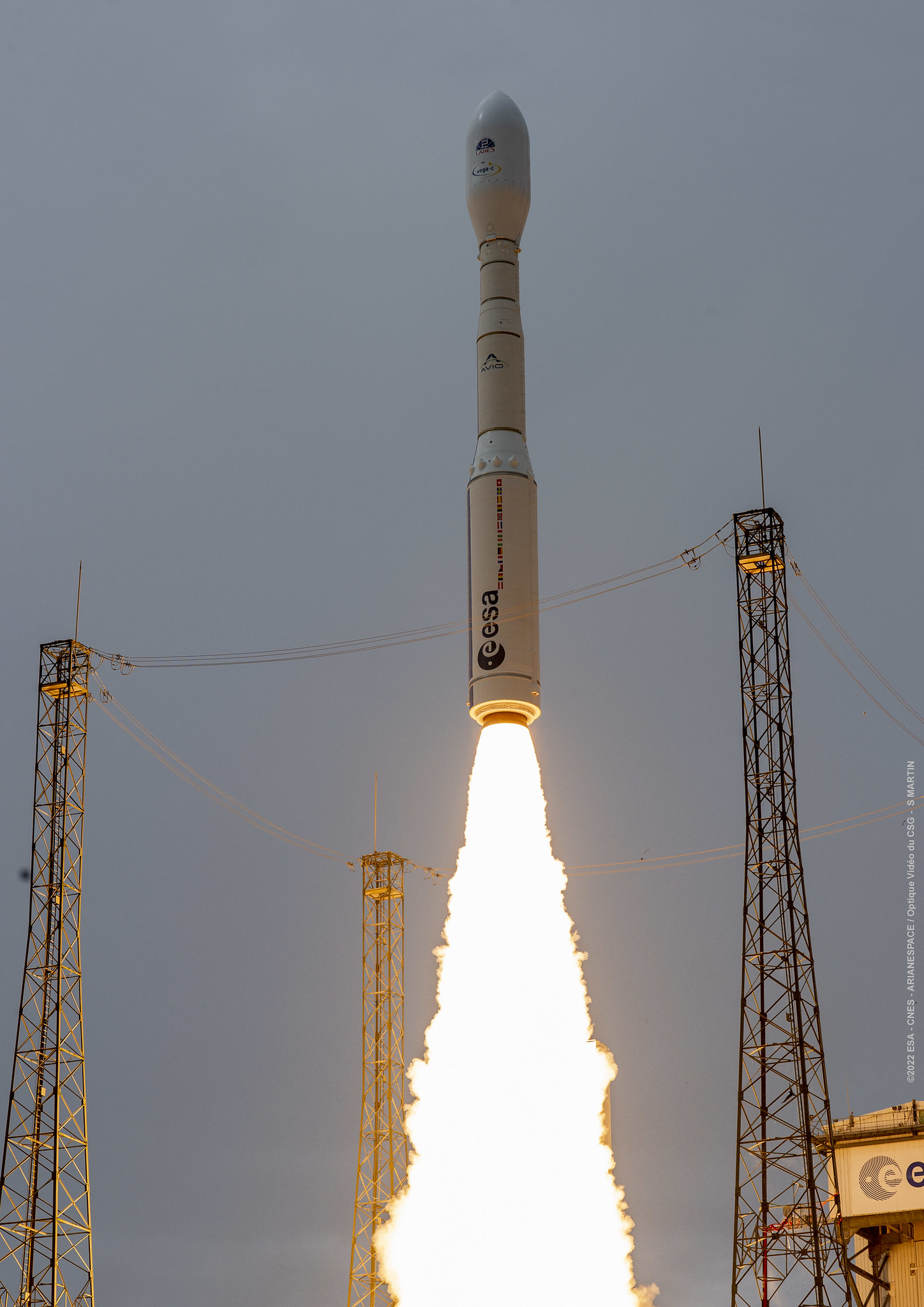
About the Vega-C Block 2
Vega-C Block 2
The Vega-C Block 2 is a European small-to-medium orbital launch vehicle operated by Arianespace and manufactured by Avio S.p.A. of Italy. It serves as an enhanced iteration within the Vega family of rockets, designed to provide Europe with an independent, dedicated launch capability for lightweight and medium-class payloads into low Earth orbit and sun-synchronous orbit. The vehicle launches from the Guiana Space Centre in Kourou, French Guiana, operated under the auspices of the European Space Agency (ESA).
Design and Capability
Standing 34.8 metres tall with a core diameter of 3 metres, the Vega-C Block 2 is a compact, solid-fueled launch vehicle with a liquid-fueled upper stage. It is capable of delivering up to 3,300 kg to low Earth orbit, representing a meaningful upgrade over earlier members of the Vega family and reflecting incremental improvements in performance introduced through the Block 2 development program. Its relatively modest size belies a capable architecture well-suited to the growing market for dedicated rideshare and single-payload missions to precise orbital slots.
Operational History
According to tracked flight data, the Vega-C Block 2 has been active from 2022 through 2030, accumulating 30 tracked flights with 6 confirmed successes and 1 failure or partial failure. This record reflects a maturing but not flawless launch history consistent with the broader development arc of the Vega-C program, which experienced a significant anomaly early in its operational life before returning to flight.
The vehicle has served a distinguished manifest of Earth observation and scientific missions. Recent flights include FORMOSAT-9B and FORMOSAT-8D, demonstrating continued partnership with Taiwan's space program; TRUTHS, a climate-benchmark satellite developed under ESA leadership; SBG-TIR, a NASA-ESA collaboration on surface biology and geology thermal infrared observation; Harmony, an ESA Earth Explorer mission studying ocean dynamics and ice sheets; and ClearSpace-1, ESA's pioneering active debris removal demonstration mission. Together these payloads highlight the rocket's role as a preferred vehicle for high-priority scientific and institutional European missions.
Role and Customers
The Vega-C Block 2's top customers — Avio S.p.A., Arianespace, and the European Space Agency — reflect the largely institutional nature of its manifest. ESA in particular has relied on the vehicle as a guaranteed-access launcher for flagship science and Earth observation programs, a role that underscores Europe's strategic investment in sovereign launch capability. The vehicle occupies a distinct market niche between very small launchers and the heavy-lift Ariane family, serving payloads that are too large or mission-critical for smallsat rideshare services but do not require the capacity of a large rocket.
Significance
The Vega-C Block 2 represents a continued European commitment to incremental, domestically developed launch capability. By supporting landmark missions in climate science, active debris removal, and international Earth observation partnerships, it has cemented its place as a workhorse of European institutional spaceflight during the late 2020s and an important element of ESA's broader launch services portfolio.
- Dec 31, 2030Vega-C | TRUTHSTBD
- Dec 31, 2030Vega-C | FORMOSAT-9BTBD
- Dec 31, 2029Vega-C | HarmonyTBD
- Dec 31, 2029Vega-C | SBG-TIRTBD
- Dec 31, 2029Vega-C | ClearSpace-1TBD
- Dec 31, 2028Vega-C | Sentinel-3DTBD
- Dec 31, 2028Vega-C Block 2 | Space RiderTBD
- Dec 31, 2028Vega-C | FORMOSAT-8DTBD
- Dec 31, 2028Vega-C | FORMOSAT-9ATBD
- Dec 31, 2028Vega-C | AltiusTBD
- Mar 31, 2028Vega-C | Pléiades Neo Next 1TBD
- Mar 31, 2028Vega-C | Sentinel CO2M-BTBD
- Dec 31, 2027Vega-C | FORUMTBD
- Dec 31, 2027Vega-C | Amazonia-1BTBD
- Dec 31, 2027Vega-C | EAGLE-1TBD
- Dec 31, 2027Vega-C | FORMOSAT-8CTBD
- Nov 30, 2027Vega-C | Sentinel CO2M-ATBD
- Jun 30, 2027Vega-C | CSG-4TBD
- Jun 30, 2027Vega-C | PLATiNO 2TBD
- Jun 30, 2027Vega-C | KOMPSAT-6 & PLATiNO 1TBD
- Dec 31, 2026Vega-C | IRIDE 2TBD
- Dec 31, 2026Vega-C | IRIDE 1TBD
- Sep 15, 2026Vega-C | Sentinel-3C & FLEXSuccess
- May 19, 2026Vega-C | Solar wind Magnetosphere Ionosphere Link Explorer (SMILE)Success
- Dec 01, 2025Vega-C | KOMPSAT-7Success
- Jul 26, 2025Vega-C | CO3D & MicroCarbSuccess
- Apr 29, 2025Vega-C | BiomassSuccess
- Dec 05, 2024Vega-C | Sentinel-1CSuccess
- Dec 21, 2022Vega-C | Pléiades Neo 5 & 6Failure
- Jul 13, 2022Vega-C | LARES-2 (Maiden flight)Success