Unha-3
About the Unha-3
Unha-3
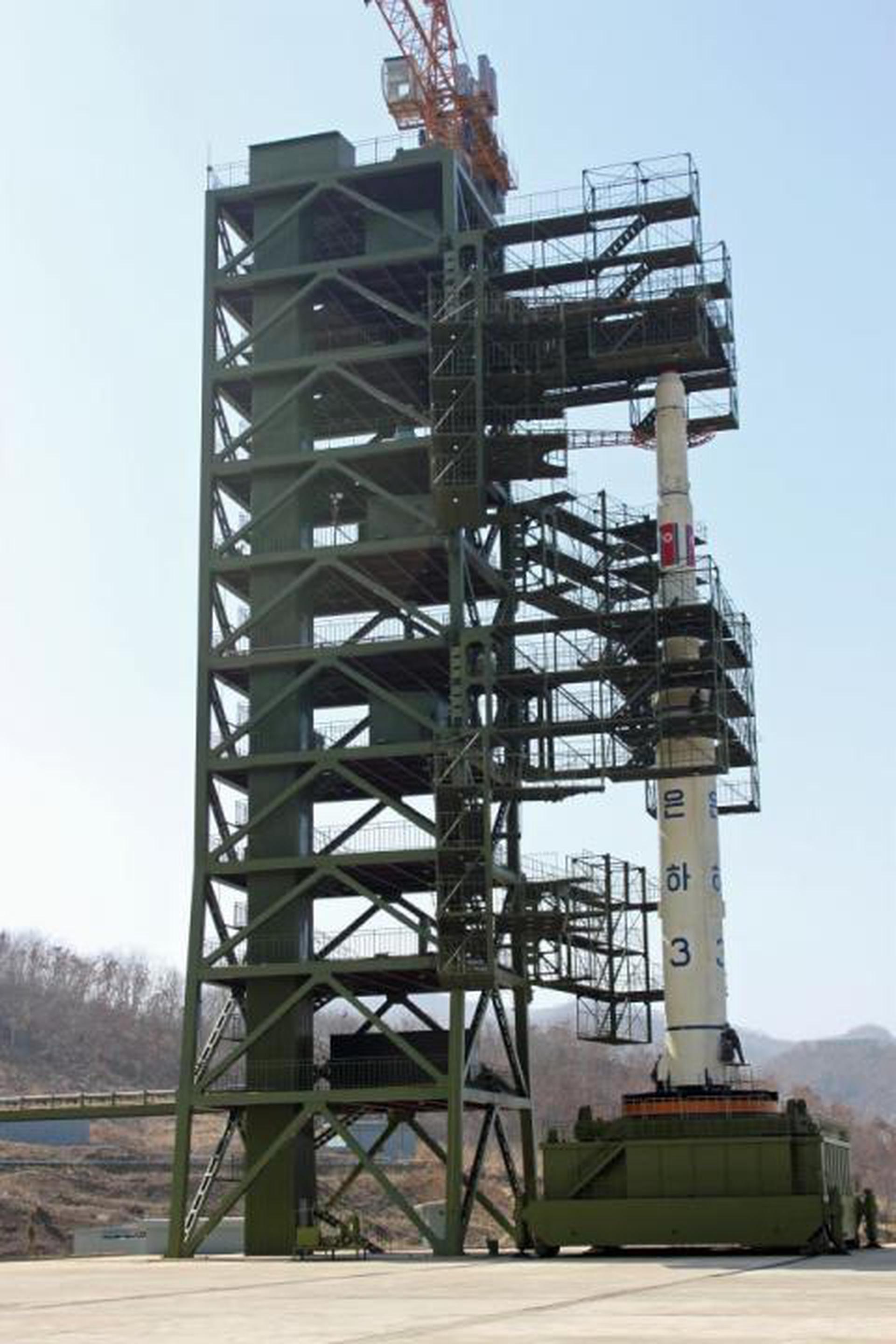
The Unha-3 (은하-3, meaning "Galaxy-3") is a North Korean orbital launch vehicle developed and operated by the Korean Committee of Space Technology (KCST) on behalf of the Democratic People's Republic of Korea. It represents the most capable iteration of the Unha rocket family, which itself descends from North Korea's long-running Paektusan/Taepodong ballistic missile lineage. The vehicle launches from the Sohae Satellite Launching Station (also known as Tongchang-ri) on North Korea's northwestern coast.
Development and Context
The Unha-3 emerged from North Korea's sustained effort to demonstrate an independent spaceflight capability, a program that carries significant dual-use implications given the overlap between long-range ballistic missile and orbital launch vehicle technology. International observers and governments widely regard the Unha family as a testbed for intercontinental ballistic missile technologies, a characterization the DPRK rejects, insisting the program serves peaceful scientific purposes. Regardless of interpretation, the Unha-3's flights drew intense international scrutiny and condemnation, and both launches occurred under United Nations Security Council resolutions prohibiting North Korean ballistic missile activity.
Flight History
Our records show two tracked flights for the Unha-3, both conducted in 2012, marking that year as the vehicle's sole period of operational activity. The sole customer across both missions was the Korean Committee of Space Technology.
The first flight, carrying the Kwangmyongsong-3 satellite, took place in April 2012 and ended in failure, with the rocket breaking apart shortly after liftoff and falling into the Yellow Sea. North Korean authorities unusually acknowledged the failure publicly, a rare departure from the country's typical information practices surrounding sensitive programs.
The second flight, carrying Kwangmyongsong-3 Unit 2, launched in December 2012 and achieved success, placing the satellite into orbit. This made North Korea only the tenth nation to independently orbit a satellite, a milestone the government celebrated extensively. International space tracking agencies, including the U.S. Strategic Command, confirmed the object in orbit, though the satellite's operational status was disputed — external observers reported it tumbling and showed no evidence of functioning transmissions.
Significance
The December 2012 success remains a landmark moment in North Korean spaceflight history and in the broader geopolitics of missile proliferation. For a nation operating under severe international sanctions and with limited industrial resources, reaching orbit represented a substantial technical achievement, whatever the underlying intent. The Unha-3 demonstrated that North Korea had mastered the staging, guidance, and propulsion challenges inherent to orbital-class rocketry.
With only two flights on record, the Unha-3's operational career was brief, concentrated entirely within a single calendar year. It nonetheless established a foundation upon which subsequent North Korean launch vehicle developments would build, cementing the Unha lineage's place in the history of spaceflight — as much for the political controversy it generated as for the technical milestones it achieved.