Tsiklon-3
About the Tsiklon-3
Tsiklon-3
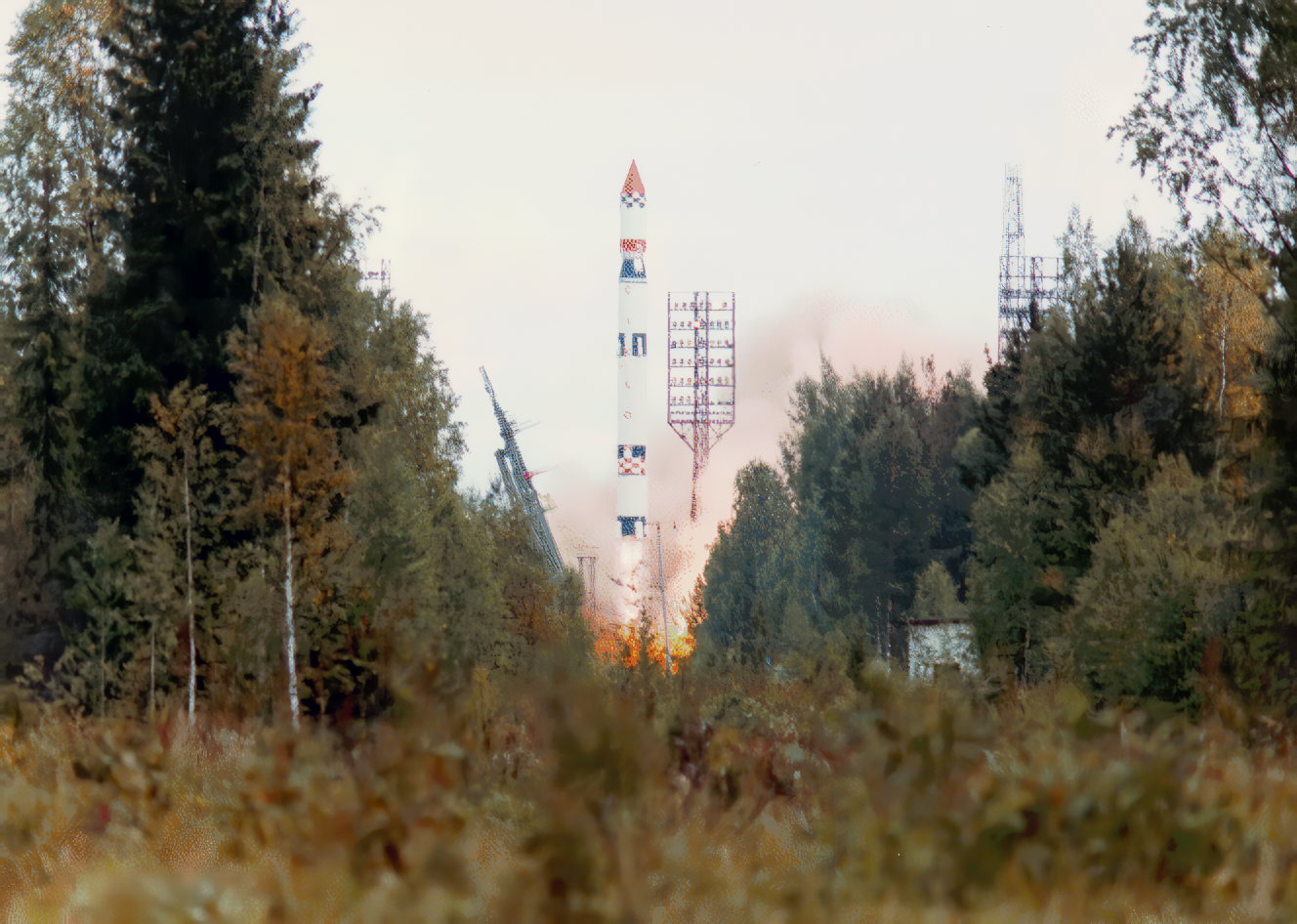
The Tsiklon-3 is a Soviet and Russian expendable orbital launch vehicle developed by the Yuzhnoye Design Bureau (now based in Dnipro, Ukraine) and manufactured by the Yuzhny Machine-Building Plant (Yuzhmash). A direct evolution of the earlier Tsiklon-2, the rocket was operated primarily on behalf of the Soviet Space Program and, after the dissolution of the Soviet Union, the Russian Space Forces and Strategic Rocket Forces. All known launches were conducted from Plesetsk Cosmodrome in northern Russia, making it one of the workhorses of that facility throughout the late twentieth century.
Design and Capabilities
Standing 39.27 metres tall with a core diameter of 3 metres, the Tsiklon-3 is a three-stage vehicle derived from the R-36 intercontinental ballistic missile. Its propellant combination of nitrogen tetroxide and unsymmetrical dimethylhydrazine (UDMH) allows for long-term storability, a characteristic inherited from its military heritage. The vehicle is capable of delivering up to 4,100 kg to low Earth orbit, placing it in the medium-lift category for its era. The addition of a restartable third stage distinguished it from its Tsiklon-2 predecessor and significantly broadened its mission flexibility, enabling deployments into a wider range of orbital inclinations and altitudes.
Operational History
The Tsiklon-3 entered service in 1977 and remained active through 2009, a span of more than three decades. Over that period, the vehicle accumulated 122 tracked flights, of which 115 were fully successful and 7 resulted in failure or partial failure — a reliability rate that compares favourably with contemporary launch vehicles of its generation. Its primary customers throughout its career were Soviet and Russian government entities, reflecting the rocket's role as a dedicated instrument of state space policy rather than a commercial launch platform.
The vehicle's manifest was dominated by military and dual-use satellites, including regular deployments of Strela-3 communications satellites and their commercial counterparts, the Gonets constellation. Missions frequently launched clusters of six satellites simultaneously, demonstrating the vehicle's ability to deploy multiple payloads on a single flight. Notable later missions included the Koronas-F solar research satellite in 2001 and the Koronas-Foton heliophysics observatory, which represented one of the rocket's final flights and its last major contribution to scientific research. The Ukrainian Earth-observation satellite Sich-1M was also among the final missions, reflecting the vehicle's occasional role in supporting the interests of post-Soviet Ukraine.
Legacy
The Tsiklon-3's three-decade operational career made it one of the most enduring medium-lift rockets in the history of Soviet and Russian spaceflight. Its high reliability, storability, and multi-payload capability ensured a steady cadence of launches well into the post-Soviet era. The rocket's retirement in 2009 marked the end of the Tsiklon line at Plesetsk, though the broader Tsiklon heritage has continued in development efforts for successor vehicles. Its record of sustained service across changing political and institutional landscapes stands as a testament to the durability of the underlying design.
- Jan 30, 2009Tsiklon-3 | Koronas-FotonSuccess
- Dec 24, 2004Tsiklon-3 | Sich-1MFailure
- Dec 28, 2001Tsiklon-3 | Strela-3 128 to 130 & Gonets 10 to 12Success
- Jul 31, 2001Tsiklon-3 | Koronas FSuccess
- Dec 27, 2000Tsiklon-3 | Strela-3 125 to 127 & Gonets 7 to 9Failure
- Jun 15, 1998Tsiklon-3 | Strela-3 119 to 124Success
- Feb 14, 1997Tsiklon-3 | Strela-3 116 to 118 & Gonets 4 to 6Success
- Feb 19, 1996Tsiklon-3 | Gonets-D 319 to 321 & Strela-3 113 to 115Success
- Aug 31, 1995Tsiklon-3 | Okean-O1 8Success
- Dec 26, 1994Tsiklon-3 | Strela-3 107 to 112Success
- Nov 29, 1994Tsiklon-3 | Geo-IK 14Success
- Oct 11, 1994Tsiklon-3 | Okean-O1 7Success
- May 25, 1994Tsiklon-3 | Tselina-D 69Failure
- Mar 02, 1994Tsiklon-3 | Koronas-ISuccess
- Feb 12, 1994Tsiklon-3 | Strela-3 101 to 106Success
- Jan 25, 1994Tsiklon-3 | Meteor-3 6Success
- Aug 31, 1993Tsiklon-3 | Meteor-2 21Success
- Jun 24, 1993Tsiklon-3 | Strela-3 95 to 100Success
- May 11, 1993Tsiklon-3 | Strela-3 89 to 94Success
- Apr 16, 1993Tsiklon-3 | Tselina-R 4Success
- Dec 25, 1992Tsiklon-3 | Tselina-D 68Success
- Dec 22, 1992Tsiklon-3 | Geo-IK 13Success
- Nov 24, 1992Tsiklon-3 | Tselina-D 67Success
- Oct 20, 1992Tsiklon-3 | Strela-3 83 to 88Success
- Jul 13, 1992Tsiklon-3 | Strela-3 79 to 82Success
- Dec 18, 1991Tsiklon-3 | AUOS-Z-AP-IK 1Success
- Nov 12, 1991Tsiklon-3 | Strela-3 73 to 78Success
- Sep 28, 1991Tsiklon-3 | Strela-3 67 to 72Success
- Aug 15, 1991Tsiklon-3 | Meteor-3 5Success
- Jun 13, 1991Tsiklon-3 | Tselina-R 3Success
- Jun 04, 1991Tsiklon-3 | Okean-O1 6Success
- May 16, 1991Tsiklon-3 | Strela-3 61 to 66Success
- Apr 24, 1991Tsiklon-3 | Meteor-3 4Success
- Dec 22, 1990Tsiklon-3 | Strela-3 55 to 60Success
- Nov 28, 1990Tsiklon-3 | Koltso 3Success
- Sep 28, 1990Tsiklon-3 | Meteor-2 20Success
- Aug 08, 1990Tsiklon-3 | Strela-3 49 to 54Success
- Jul 30, 1990Tsiklon-3 | Geo-IK 12Success
- Jun 27, 1990Tsiklon-3 | Meteor-2 19Success
- Feb 28, 1990Tsiklon-3 | Okean-O1 5Success
- Jan 30, 1990Tsiklon-3 | Tselina-R 2Success
- Dec 27, 1989Tsiklon-3 | Koltso 2Success
- Oct 24, 1989Tsiklon-3 | Meteor-3 3Success
- Sep 28, 1989Tsiklon-3 | AUOS-Z-AV-IK 1Success
- Sep 14, 1989Tsiklon-3 | Strela-3 43 to 48Success
- Aug 28, 1989Tsiklon-3 | Geo-IK 11Success
- Jun 09, 1989Tsiklon-3 | Okean-O1 4Failure
- Feb 28, 1989Tsiklon-3 | Meteor-2 18Success
- Feb 10, 1989Tsiklon-3 | Strela-3 37 to 42Success
- Dec 23, 1988Tsiklon-3 | Koltso 1Success
- Oct 11, 1988Tsiklon-3 | Tselina-D 66Success
- Jul 26, 1988Tsiklon-3 | Meteor-3 2Success
- Jul 05, 1988Tsiklon-3 | Okean-O1 3Success
- Jun 14, 1988Tsiklon-3 | Tselina-D 65Success
- May 30, 1988Tsiklon-3 | Geo-IK 10Success
- Mar 15, 1988Tsiklon-3 | Tselina-D 64Success
- Jan 30, 1988Tsiklon-3 | Meteor-2 17Success
- Jan 15, 1988Tsiklon-3 | Strela-3 31 to 36Success
- Jan 06, 1988Tsiklon-3 | Tselina-D 63Success
- Oct 20, 1987Tsiklon-3 | Tselina-D 62Success
- Sep 07, 1987Tsiklon-3 | Strela-3 25 to 30Success
- Aug 18, 1987Tsiklon-3 | Meteor-2 16Success
- Jul 16, 1987Tsiklon-3 | Okean-O1 2Success
- Jul 01, 1987Tsiklon-3 | Tselina-D 61Success
- Apr 27, 1987Tsiklon-3 | Tselina-D 60Success
- Mar 13, 1987Tsiklon-3 | Strela-3 19 to 24Success
- Mar 03, 1987Tsiklon-3 | Tselina-D 59Success
- Feb 20, 1987Tsiklon-3 | Geo-IK 9Success
- Jan 14, 1987Tsiklon-3 | Tselina-D 58Success
- Jan 05, 1987Tsiklon-3 | Meteor-2 15Success
- Dec 18, 1986Tsiklon-3 | Ionozond-ESuccess
- Dec 10, 1986Tsiklon-3 | Tselina-R 1Success
- Dec 02, 1986Tsiklon-3 | Geo-IK 8Success
- Oct 15, 1986Tsiklon-3 | Strela-3 13 to 18Failure
- Sep 30, 1986Tsiklon-3 | Tselina-D 57Success
- Jul 28, 1986Tsiklon-3 | Okean-O1 1Success
- Jun 12, 1986Tsiklon-3 | Tselina-D 56Success
- May 27, 1986Tsiklon-3 | Meteor-2 14Success
- May 15, 1986Tsiklon-3 | Tselina-D 55Success
- Feb 19, 1986Tsiklon-3 | Tselina-D 54Success
- Feb 11, 1986Tsiklon-3 | Geo-IK 7Success
- Jan 17, 1986Tsiklon-3 | Tselina-D 53Success
- Dec 26, 1985Tsiklon-3 | Meteor-2 13Success
- Dec 12, 1985Tsiklon-3 | Tselina-D 52Success
- Nov 22, 1985Tsiklon-3 | Tselina-D 51Success
- Oct 24, 1985Tsiklon-3 | Meteor-3 1Success
- Oct 09, 1985Tsiklon-3 | Strela-3 7 to 12Success
- Aug 08, 1985Tsiklon-3 | Tselina-D 50Success
- Jul 08, 1985Tsiklon-3 | Tselina-D 49Success
- Jun 14, 1985Tsiklon-3 | Geo-IK 6Success
- Mar 05, 1985Tsiklon-3 | Tselina-D 48Success
- Feb 06, 1985Tsiklon-3 | Meteor-2 12Success
- Jan 24, 1985Tsiklon-3 | Tselina-D 47Success
- Jan 15, 1985Tsiklon-3 | Strela-3 1 to 6Success
- Nov 27, 1984Tsiklon-3 | Meteor-3 1aFailure
- Oct 18, 1984Tsiklon-3 | Tselina-D 46Success
- Sep 28, 1984Tsiklon-3 | Okean-OE 2Success
- Aug 08, 1984Tsiklon-3 | Geo-IK 5Success
- Jul 05, 1984Tsiklon-3 | Meteor-2 11Success
- Mar 15, 1984Tsiklon-3 | Tselina-D 45Success
- Feb 08, 1984Tsiklon-3 | Tselina-D 44Success
- Dec 15, 1983Tsiklon-3 | Tselina-D 43Success
- Nov 24, 1983Tsiklon-3 | Geo-IK 4Success
- Sep 28, 1983Tsiklon-3 | Okean-OE 1Success
- Jun 22, 1983Tsiklon-3 | Tselina-D 42Success
- Apr 23, 1983Tsiklon-3 | Tselina-D 41Success
- Sep 24, 1982Tsiklon-3 | Geo-IK 3Success
- Sep 16, 1982Tsiklon-3 | Tselina-D 38Success
- Jun 10, 1982Tsiklon-3 | Tselina-D 36Success
- Mar 25, 1982Tsiklon-3 | Meteor-2 8Success
- Dec 03, 1981Tsiklon-3 | Tselina-D 32Success
- Sep 30, 1981Tsiklon-3 | Geo-IK 2Success
- Sep 21, 1981Tsiklon-3 | Aureole 3Success
- Aug 24, 1981Tsiklon-3 | Tselina-D 30Success
- Jan 23, 1981Tsiklon-3 | Geo-IK 1Failure
- Jan 23, 1980Tsiklon-3 | Okean-E 2Success
- Feb 12, 1979Tsiklon-3 | Okean-E 1Success
- Oct 26, 1978Tsiklon-3 | Meteor-2-GVMSuccess
- Jun 28, 1978Tsiklon-3 | EPN 03.0380 4Success
- Dec 27, 1977Tsiklon-3 | EPN 03.0380 3Success
- Sep 24, 1977Tsiklon-3 | EPN 03.0380 2Success
- Jun 24, 1977Tsiklon-3 | EPN 03.0380 1Success