Tsiklon-2
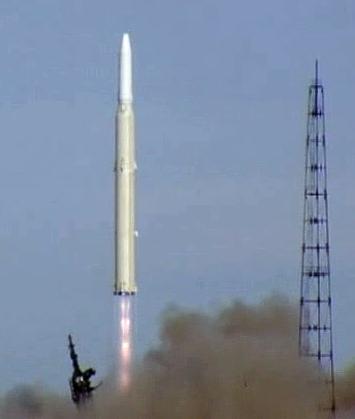
About the Tsiklon-2
Tsiklon-2
The Tsiklon-2 is a Soviet and Russian orbital launch vehicle developed by the Yuzhnoye Design Bureau in Ukraine and operated by the Soviet Space Program and, following the dissolution of the USSR, the Russian Federal Space Agency (ROSCOSMOS). A member of the broader Tsiklon family of rockets derived from the R-36 intercontinental ballistic missile, it served as a dedicated workhorse for military satellite deployment across nearly four decades of operational service.
Development and Design
Standing 39.7 metres tall with a core diameter of 3 metres, the Tsiklon-2 is a two-stage liquid-propellant rocket that burns nitrogen tetroxide and unsymmetrical dimethylhydrazine — a hypergolic propellant combination that provides reliable ignition without the complexities of cryogenic fueling. This choice of propellants made the vehicle well suited to rapid, repeatable launch operations from Baikonur Cosmodrome in Kazakhstan, its exclusive launch site throughout its service life. The rocket is capable of delivering up to 2,820 kg to low Earth orbit, a capacity sized precisely for the class of reconnaissance and ocean-surveillance payloads it was designed to carry.
Operational History
Tsiklon-2 entered service in 1969 and flew its final tracked mission in 2006, representing one of the longer operational lifespans of any Cold War-era launch vehicle. Across that period, our flight record documents 105 flights, of which 103 were successful and 2 resulted in failure or partial failure — a reliability rate that stands among the highest of any orbital rocket family from its era. This exceptional consistency made it the launch vehicle of choice for time-sensitive military satellite programs where mission assurance was paramount.
The rocket's manifest was dominated by Soviet and Russian military payloads, particularly spacecraft in the US-P and US-PM series — satellites associated with the RORSAT and MKRC ocean reconnaissance constellations tasked with tracking naval surface movements. The vehicle's final missions in our record, including US-PM 8 through US-PM 13, reflect the sustained operational demand for this class of spacecraft well into the post-Soviet era, with Russia continuing to rely on infrastructure and vehicles inherited from the Soviet defense industry.
Role and Legacy
The Tsiklon-2's near-exclusive focus on military reconnaissance payloads meant it operated largely outside public visibility compared to contemporaneous Soviet launch vehicles, yet its contribution to the Soviet and Russian strategic space posture was substantial. Flying for 37 years without significant modification to its core design, it demonstrated the durability of the Yuzhnoye bureau's engineering approach and the value of a purpose-built, highly reliable vehicle optimized for a narrow but critical mission set.
With the retirement of the US-PM satellite series, the need for Tsiklon-2 launches diminished, and the vehicle was ultimately phased out of service. Its legacy endures in the broader Tsiklon family, including the Tsiklon-3, which served a parallel role for different orbital inclinations, and in the continued reputation of Yuzhnoye as one of the most capable rocket design organizations to emerge from the Soviet space program.
- Jun 25, 2006Tsiklon-2 | US-PM 13Success
- May 28, 2004Tsiklon-2 | US-PM 12Success
- Dec 21, 2001Tsiklon-2 | US-PM 11Success
- Dec 26, 1999Tsiklon-2 | US-PM 10Success
- Dec 09, 1997Tsiklon-2 | US-PM 9Success
- Dec 11, 1996Tsiklon-2 | US-PM 8Success
- Dec 20, 1995Tsiklon-2 | US-PM 7Success
- Jun 08, 1995Tsiklon-2 | US-PM 6Success
- Nov 02, 1994Tsiklon-2 | US-PM 5Success
- Sep 17, 1993Tsiklon-2 | US-PM 4Success
- Jul 07, 1993Tsiklon-2 | US-PM 3Success
- Apr 28, 1993Tsiklon-2 | US-PM 2Success
- Mar 30, 1993Tsiklon-2 | US-PM 1Success
- Jan 18, 1991Tsiklon-2 | US-P 37Success
- Dec 04, 1990Tsiklon-2 | US-P 36Success
- Nov 14, 1990Tsiklon-2 | US-P 35Success
- Aug 23, 1990Tsiklon-2 | US-P 34Success
- Mar 14, 1990Tsiklon-2 | US-P 33Success
- Nov 24, 1989Tsiklon-2 | US-P 32Failure
- Sep 27, 1989Tsiklon-2 | US-P 31Success
- Jul 24, 1989Tsiklon-2 | US-P 30Success
- Nov 18, 1988Tsiklon-2 | US-P 29Success
- May 28, 1988Tsiklon-2 | US-P 28Success
- Mar 14, 1988Tsiklon-2 | US-A 32Success
- Dec 12, 1987Tsiklon-2 | US-A 31Success
- Oct 10, 1987Tsiklon-2 | US-P 27Success
- Jul 10, 1987Tsiklon-2 | Plasma-A 2Success
- Jun 18, 1987Tsiklon-2 | US-A 30Success
- Apr 08, 1987Tsiklon-2 | US-P 26Success
- Feb 01, 1987Tsiklon-2 | Plasma-A 1Success
- Aug 20, 1986Tsiklon-2 | US-A 29Success
- Aug 04, 1986Tsiklon-2 | US-P 25Success
- Mar 25, 1986Tsiklon-2 | US-P 24Success
- Mar 21, 1986Tsiklon-2 | US-A 28Success
- Feb 27, 1986Tsiklon-2 | US-P 23Success
- Sep 19, 1985Tsiklon-2 | US-P 22Success
- Aug 23, 1985Tsiklon-2 | US-A 27Success
- Aug 01, 1985Tsiklon-2 | US-A 26Success
- Apr 18, 1985Tsiklon-2 | US-P 21Success
- Jan 23, 1985Tsiklon-2 | US-P 20Success
- Oct 31, 1984Tsiklon-2 | US-A 25Success
- Aug 07, 1984Tsiklon-2 | US-P 19Success
- Jun 29, 1984Tsiklon-2 | US-A 24Success
- May 30, 1984Tsiklon-2 | US-P 18Success
- Oct 29, 1983Tsiklon-2 | US-P 17Success
- May 07, 1983Tsiklon-2 | US-P 16Success
- Oct 02, 1982Tsiklon-2 | US-A 23Success
- Sep 04, 1982Tsiklon-2 | US-P 15Success
- Aug 30, 1982Tsiklon-2 | US-A 22Success
- Jun 18, 1982Tsiklon-2 | IS-A 13Success
- Jun 01, 1982Tsiklon-2 | US-A 21Success
- May 14, 1982Tsiklon-2 | US-A 20Success
- Apr 29, 1982Tsiklon-2 | US-P 14Success
- Feb 11, 1982Tsiklon-2 | US-P 13Success
- Sep 14, 1981Tsiklon-2 | US-P 12Success
- Aug 24, 1981Tsiklon-2 | US-A 19Success
- Aug 04, 1981Tsiklon-2 | US-P 11Success
- Apr 21, 1981Tsiklon-2 | US-A 18Success
- Mar 20, 1981Tsiklon-2 | US-P 10Success
- Mar 14, 1981Tsiklon-2 | IS-A 12Success
- Mar 05, 1981Tsiklon-2 | US-A 17Success
- Feb 02, 1981Tsiklon-2 | IS-A 11Success
- Nov 04, 1980Tsiklon-2 | US-P 9Success
- Apr 29, 1980Tsiklon-2 | US-A 16Success
- Apr 18, 1980Tsiklon-2 | IS-A 10Success
- Mar 14, 1980Tsiklon-2 | US-P 8Success
- Apr 25, 1979Tsiklon-2 | US-P 7Success
- Apr 18, 1979Tsiklon-2 | US-P 6Success
- May 19, 1978Tsiklon-2 | IS-A 9Success
- Dec 21, 1977Tsiklon-2 | IS-A 8Success
- Oct 26, 1977Tsiklon-2 | IS-A 7Success
- Sep 18, 1977Tsiklon-2 | US-A 15Success
- Sep 16, 1977Tsiklon-2 | US-A 14Success
- Aug 24, 1977Tsiklon-2 | US-P 5Success
- Jun 17, 1977Tsiklon-2 | IS-A 6Success
- May 23, 1977Tsiklon-2 | IS-A 5Success
- Dec 27, 1976Tsiklon-2 | IS-A 4Success
- Nov 26, 1976Tsiklon-2 | US-P 4Success
- Oct 21, 1976Tsiklon-2 | US-A 13Success
- Oct 17, 1976Tsiklon-2 | US-A 12Success
- Jul 21, 1976Tsiklon-2 | IS-A 3Success
- Jul 02, 1976Tsiklon-2 | US-P 3Success
- Apr 13, 1976Tsiklon-2 | IS-A 2Success
- Feb 16, 1976Tsiklon-2 | IS-A 1Success
- Dec 12, 1975Tsiklon-2 | US-A 11Success
- Oct 29, 1975Tsiklon-2 | US-P 2Success
- Apr 07, 1975Tsiklon-2 | US-A 10Success
- Apr 02, 1975Tsiklon-2 | US-A 9Success
- Dec 24, 1974Tsiklon-2 | US-P 1Success
- May 17, 1974Tsiklon-2 | US-A 8Success
- May 15, 1974Tsiklon-2 | US-A 7Success
- Dec 27, 1973Tsiklon-2 | US-A 6Success
- Apr 25, 1973Tsiklon-2 | US-A 5Failure
- Aug 21, 1972Tsiklon-2 | US-A 4Success
- Dec 25, 1971Tsiklon-2 | US-A 3Success
- Dec 03, 1971Tsiklon-2 | I2P 8Success
- Apr 04, 1971Tsiklon-2 | I2P 7Success
- Apr 01, 1971Tsiklon-2 | US-A 2Success
- Feb 25, 1971Tsiklon-2 | I2P 6Success
- Oct 30, 1970Tsiklon-2 | I2P 5Success
- Oct 23, 1970Tsiklon-2 | I2P 4Success
- Oct 20, 1970Tsiklon-2 | I2M 3Success
- Oct 03, 1970Tsiklon-2 | US-A 1Success
- Dec 23, 1969Tsiklon-2 | I2P 3Success
- Aug 06, 1969Tsiklon-2 | IS-GVM 1Success