Titan II GLV
About the Titan II GLV
Titan II GLV
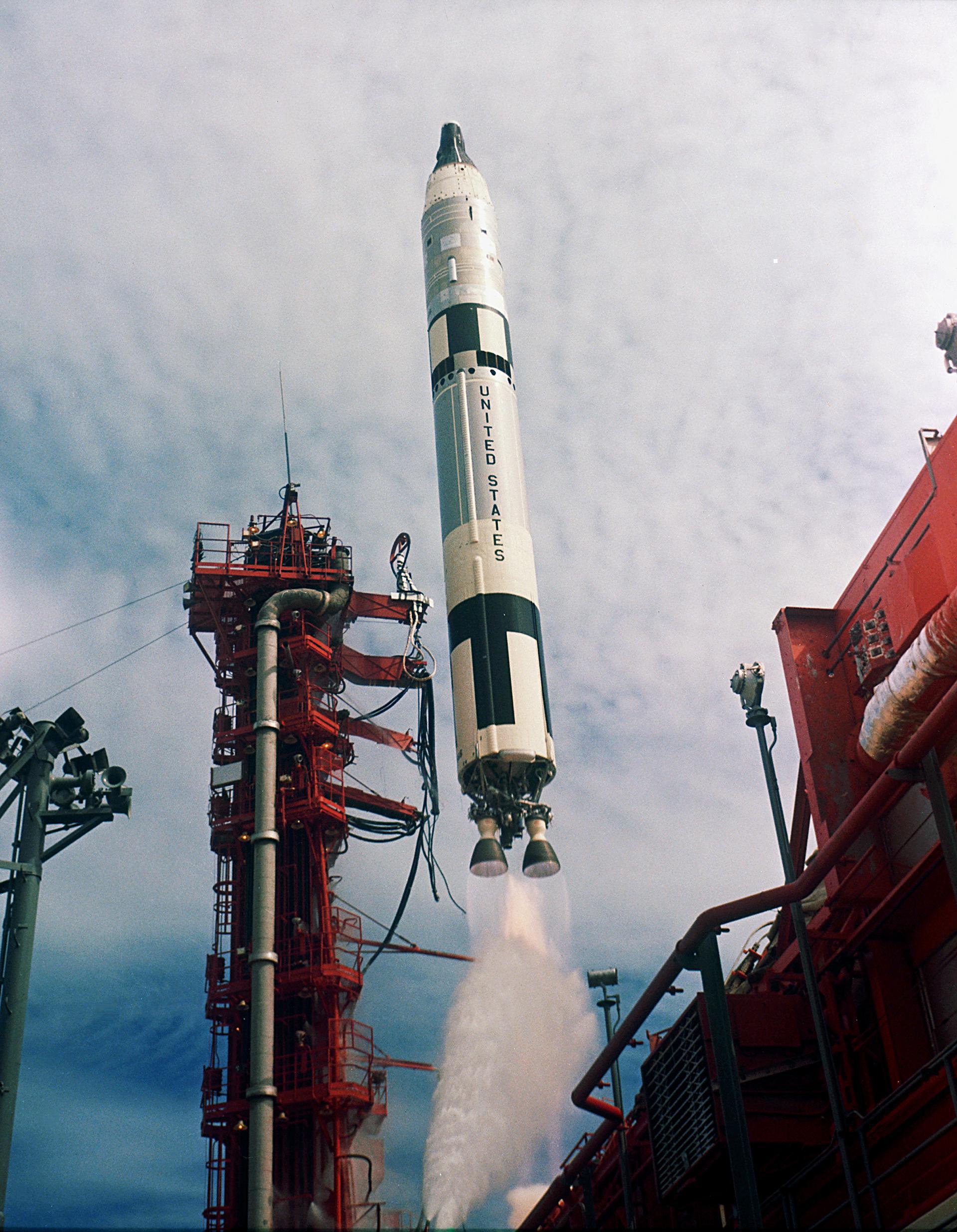
The Titan II GLV (Gemini Launch Vehicle) is an American orbital launch vehicle derived from the United States Air Force's Titan II intercontinental ballistic missile, modified and adapted by the Martin Company for use as a crewed spacecraft launcher. It served as the dedicated launch vehicle for NASA's Gemini program, the human spaceflight effort that bridged the Mercury and Apollo eras and developed the rendezvous, docking, and extravehicular activity techniques essential for reaching the Moon.
Origins and Design
The Titan II GLV was developed by converting surplus Titan II ICBM airframes into a reliable, human-rated launch vehicle. Significant engineering work was required to qualify the baseline missile for crewed flight, including upgrades to reduce vibration (a phenomenon known as "pogo"), improvements to guidance and control systems, and the addition of malfunction detection systems that could trigger crew abort procedures. The resulting vehicle stood 33.2 meters tall with a diameter of 3.05 meters — a slender, two-stage liquid-propellant rocket capable of delivering 3,850 kg to low Earth orbit. It flew from Launch Complex 19 at Cape Canaveral Air Force Station in Florida.
Operational History
Our flight record shows the Titan II GLV conducted 12 orbital missions between 1964 and 1966, all of which were successful. This unblemished record across a compressed operational window reflects both the thoroughness of the pre-flight qualification effort and the consistent execution by launch teams throughout the Gemini program. The vehicle's top customers were NASA and the United States Air Force, which jointly oversaw the Gemini effort as a national priority during the Space Race.
The vehicle's final six tracked missions illustrate its central role in the most demanding phase of the program: Gemini VIII, Gemini IX-A, Gemini X, Gemini XI, Gemini VI-A, and Gemini XII each carried a two-person crew on missions that accumulated critical experience in orbital rendezvous, docking with Agena target vehicles, and spacewalking. Gemini VI-A and Gemini VII achieved the first crewed rendezvous in space, while Gemini XII closed out the program with a successful series of extravehicular activities that resolved earlier difficulties with working in the vacuum of space.
Legacy
The Titan II GLV's perfect operational record stands as one of the more remarkable achievements of 1960s American spaceflight, particularly given that its missions were among the most technically complex and operationally demanding of the decade. Every Gemini astronaut who flew — including figures such as Neil Armstrong, Buzz Aldrin, John Glenn's successors in the astronaut corps, and future Apollo commanders — depended on this vehicle for their ascent to orbit.
By the time the last Gemini mission flew in November 1966, the Titan II GLV had effectively accomplished its purpose: the United States had developed the skills and confidence needed to attempt a crewed lunar landing. The vehicle itself was retired upon completion of the Gemini program, having served as an indispensable tool in one of history's most concentrated and consequential campaigns of human space exploration.
- Nov 11, 1966Titan II GLV | Gemini XIISuccess
- Sep 12, 1966Titan II GLV | Gemini XISuccess
- Jul 18, 1966Titan II GLV | Gemini XSuccess
- Jun 03, 1966Titan II GLV | Gemini IX-ASuccess
- Mar 16, 1966Titan II GLV | Gemini VIIISuccess
- Dec 15, 1965Titan II GLV | Gemini VI-ASuccess
- Dec 04, 1965Titan II GLV | Gemini VIISuccess
- Aug 21, 1965Titan II GLV | Gemini VSuccess
- Jun 03, 1965Titan II GLV | Gemini IVSuccess
- Mar 23, 1965Titan II GLV | Gemini IIISuccess
- Jan 19, 1965Titan II GLV | Gemini IISuccess
- Apr 08, 1964Titan II GLV | Gemini ISuccess