Terran R
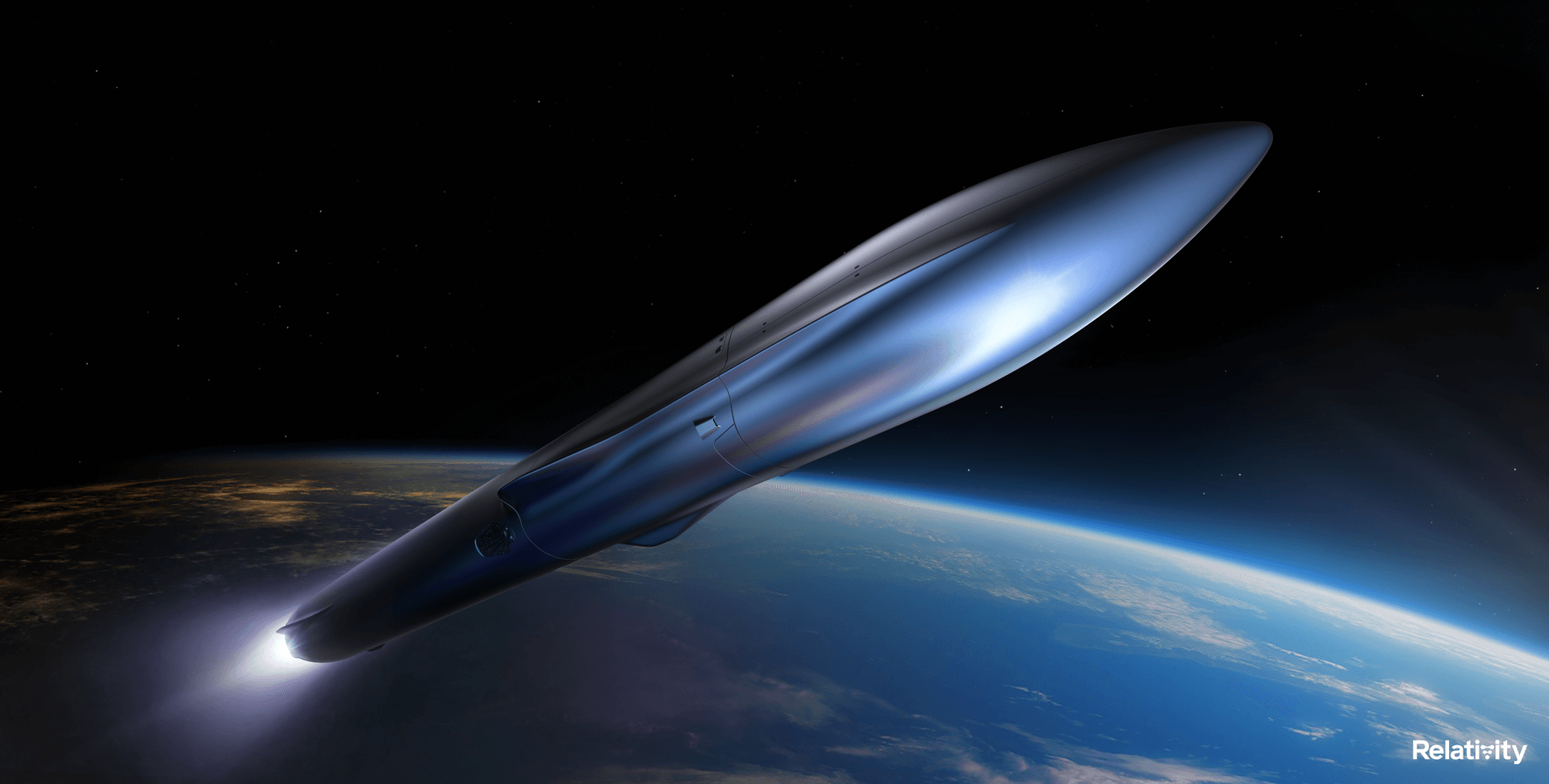
About the Terran R
Terran R
Terran R is a medium-to-heavy class orbital launch vehicle developed and operated by Relativity Space, an American launch company headquartered in Long Beach, California. Designed as a fully reusable two-stage rocket, Terran R represents Relativity Space's step beyond its smaller Terran 1 demonstrator and into the competitive commercial launch market for large payloads.
Design and Capabilities
Standing 66 meters tall with a diameter of 5.5 meters, Terran R is a substantial vehicle in the modern commercial launch landscape. It is capable of delivering 20,000 kilograms to low Earth orbit (LEO), placing it in a class that competes with vehicles such as SpaceX's Falcon 9 and United Launch Alliance's Vulcan for significant commercial and government payloads.
A defining feature of Terran R is its full reusability. Both the first stage and the second stage are designed to return and land after flight, a characteristic that Relativity Space has emphasized as central to its long-term business model of reducing the cost of access to space. This ambition for complete vehicle reusability, if consistently demonstrated, would distinguish Terran R from many contemporaries that recover only their first stages.
Relativity Space is also notable for its extensive use of 3D printing in manufacturing rocket components, a technology the company has championed since its founding. Terran R continues this philosophy at a larger scale, with the company citing reduced part counts and faster production timelines as key advantages.
Flight History
Terran R entered our tracking records in 2026, with two flights logged to date. Neither of these missions has been recorded as either a success or a failure, reflecting the early and closely watched nature of the vehicle's inaugural campaign.
The two missions tracked are Terran R | Intelsat-1, carrying a payload for established satellite operator Intelsat, and Terran R | Mars Lander, a notable mission by name suggesting an interplanetary or deep-space payload objective. Together, these early flights demonstrate a customer manifest that already spans both commercial telecommunications and ambitious exploration-class payloads — a broad range that speaks to the ambitions placed in the vehicle by its early customers.
Relativity Space itself appears as the top customer in the current record, which is consistent with the company reserving early launch capacity for internal demonstration or development flights before transitioning fully to commercial service.
Context and Significance
The development of Terran R places Relativity Space among a generation of new-space launch providers seeking to challenge established players through manufacturing innovation and reusable architecture. With a LEO capacity of 20,000 kg and a fully reusable design, Terran R is positioned to serve the growing demand for large constellation deployment, government missions, and potentially interplanetary cargo.
Its operational history, while still in its earliest stages as of 2026, marks a significant milestone for a company that began with a novel manufacturing approach and has scaled it to a vehicle of genuine commercial consequence. The coming flights will be closely watched as indicators of whether Terran R can achieve the reliable, cost-efficient operations its design promises.