Strela
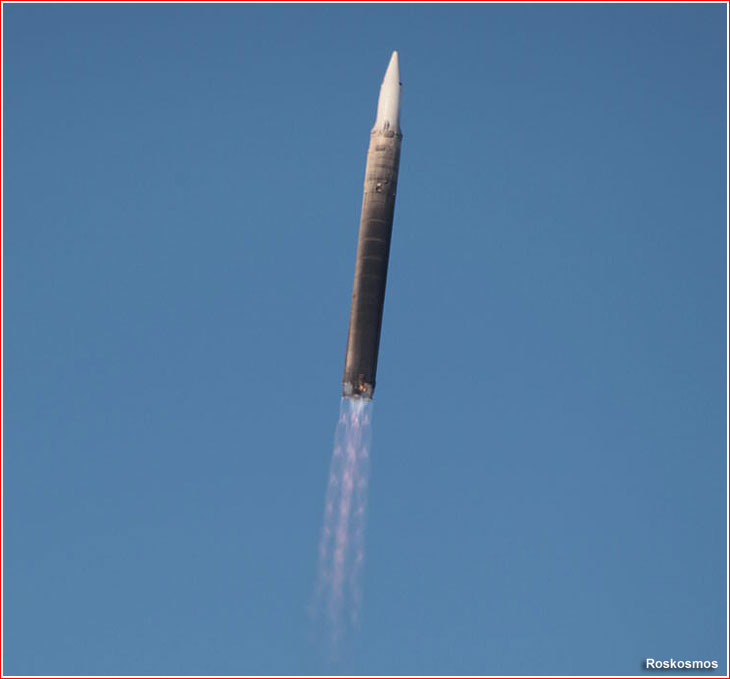
About the Strela
Strela
Strela is a Russian orbital launch vehicle derived from the UR-100N (SS-19 *Stiletto*) intercontinental ballistic missile, converted for space launch use under the direction of the Khrunichev State Research and Production Space Center. The rocket represents a cost-effective approach to placing small payloads into low Earth orbit, repurposing retired Cold War-era missile hardware rather than developing an entirely new vehicle.
Origins and Development
The Strela concept follows a well-established Russian tradition of converting decommissioned ICBMs into launch vehicles, a practice that reduces costs by utilizing existing, fully engineered propulsion systems and airframes. Khrunichev, the same industrial enterprise responsible for the Proton-M heavy-lift rocket and the Rokot launch vehicle (another UR-100N derivative), oversaw the conversion and operational management of the Strela system. Launches take place from Baikonur Cosmodrome in Kazakhstan, one of the world's premier launch facilities.
Configuration and Role
Strela is closely related to the Rokot vehicle, sharing the same ICBM heritage, and is similarly intended to serve the small-satellite market. It is a liquid-propellant rocket, inheriting its propulsion characteristics from the UR-100N baseline. Rather than serving broad commercial customers, Strela has primarily supported missions on behalf of Khrunichev itself and Russian state interests, functioning as a dedicated delivery system for specific institutional payloads.
Flight History
According to tracked flight records, Strela conducted three orbital launches between 2003 and 2014, all of which were successful. This modest but unblemished record reflects the vehicle's selective, purpose-driven use rather than any ambition to compete at high launch cadence.
The three tracked missions share a common customer: Khrunichev State Research and Production Space Center, underscoring the vehicle's role as an in-house asset rather than a general-market product.
Among the notable missions in this record is the Kondor-E flight, which carried a radar Earth-observation satellite developed by NPO Mashinostroyenia. The Kondor No.202 mission, also tracked under the designation Kosmos-2487, delivered a similar synthetic aperture radar spacecraft and reflects the Russian practice of assigning Kosmos designations to military or sensitive government payloads. The Gruzomaket mission involved a mass simulator, a standard approach for validating vehicle performance or filling a launch slot without a primary payload.
Significance
Strela occupies a quiet but practical corner of Russian launch history. Its longevity across an eleven-year span — with launches in 2003 and again in 2014 — demonstrates that even vehicles operated at very low flight rates can maintain relevance when tied to specific programmatic needs. By converting existing ICBM stockpiles, the program contributed to arms-reduction goals while simultaneously providing an affordable path to orbit for specialized payloads. Though it never achieved the visibility of Russia's higher-profile launch vehicles, Strela's perfect success rate across all tracked flights speaks to the underlying reliability of the mature hardware from which it was built.