Start-1
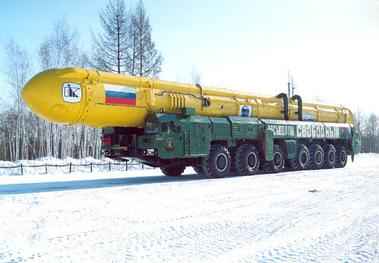
About the Start-1
Start-1
The Start-1 is a Russian small-satellite orbital launch vehicle derived from the RT-2PM Topol (SS-25 Sickle) intercontinental ballistic missile. Developed and operated by the Moscow Institute of Thermal Technology (MITT), the rocket represents one of the more prominent examples of post-Cold War ICBM conversion programs, in which surplus or retired strategic missile hardware was adapted for commercial and governmental space launch purposes.
Origins and Design
Start-1 emerged in the early 1990s as part of broader Russian efforts to leverage existing solid-fueled ballistic missile technology for civilian and commercial spaceflight. The vehicle is a four-stage, solid-propellant rocket, making it simpler to handle and store than comparable liquid-fueled launchers of its era. At 22.7 meters tall and 1.61 meters in diameter, Start-1 is a compact vehicle well suited to niche small-payload missions. Its capacity of 632 kilograms to low Earth orbit placed it squarely in the small-launcher category, appealing to customers with modest satellites rather than large flagship spacecraft.
Launches take place from the Svobodny Cosmodrome (also known as Svobodny Space Launch Complex) in Russia's Far East, a facility that itself was created in part to support the Start family of rockets. The use of a mobile launch platform—inherited from the Topol missile system—gives Start-1 a degree of operational flexibility uncommon among orbital launch vehicles of comparable size.
Flight History
According to tracked flight records, Start-1 conducted five orbital missions between 1993 and 2006, achieving a perfect 5-for-5 success rate. This unblemished record across more than a decade of operation speaks to the reliability inherent in its well-proven missile heritage. The vehicle's primary customers included the Russian Space Forces and the Strategic Rocket Forces, reflecting its origins within the Russian defense establishment, though it also supported a notable range of international commercial and scientific payloads.
Among the missions in the tracked record, EROS A1 and EROS B were Israeli Earth observation satellites operated by ImageSat International, demonstrating Start-1's role as a vehicle for foreign commercial customers. Odin was a Swedish-led astronomical and atmospheric research satellite, underlining the rocket's appeal to scientific users seeking affordable dedicated launches. EarlyBird was a high-resolution commercial Earth imaging satellite, and EKA-1 (also known as Mozhayets) was a Russian scientific and educational spacecraft.
Legacy and Context
Start-1 occupies a notable place in the history of post-Soviet spaceflight as a successful example of military-to-civilian technology conversion. While its payload capacity was modest, its solid-propellant design, mobile launch capability, and strong reliability record gave it genuine commercial appeal during its operational window. The vehicle did not evolve into a larger or more frequently flown successor, and launches ceased after 2006, leaving Start-1 as a relatively small but historically interesting chapter in the broader story of small-satellite launch vehicles. Its missions contributed meaningfully to Earth observation, scientific research, and the broader ecosystem of international small-satellite operators that flourished in the late 1990s and early 2000s.