Starship Prototype
About the Starship Prototype
Starship Prototype
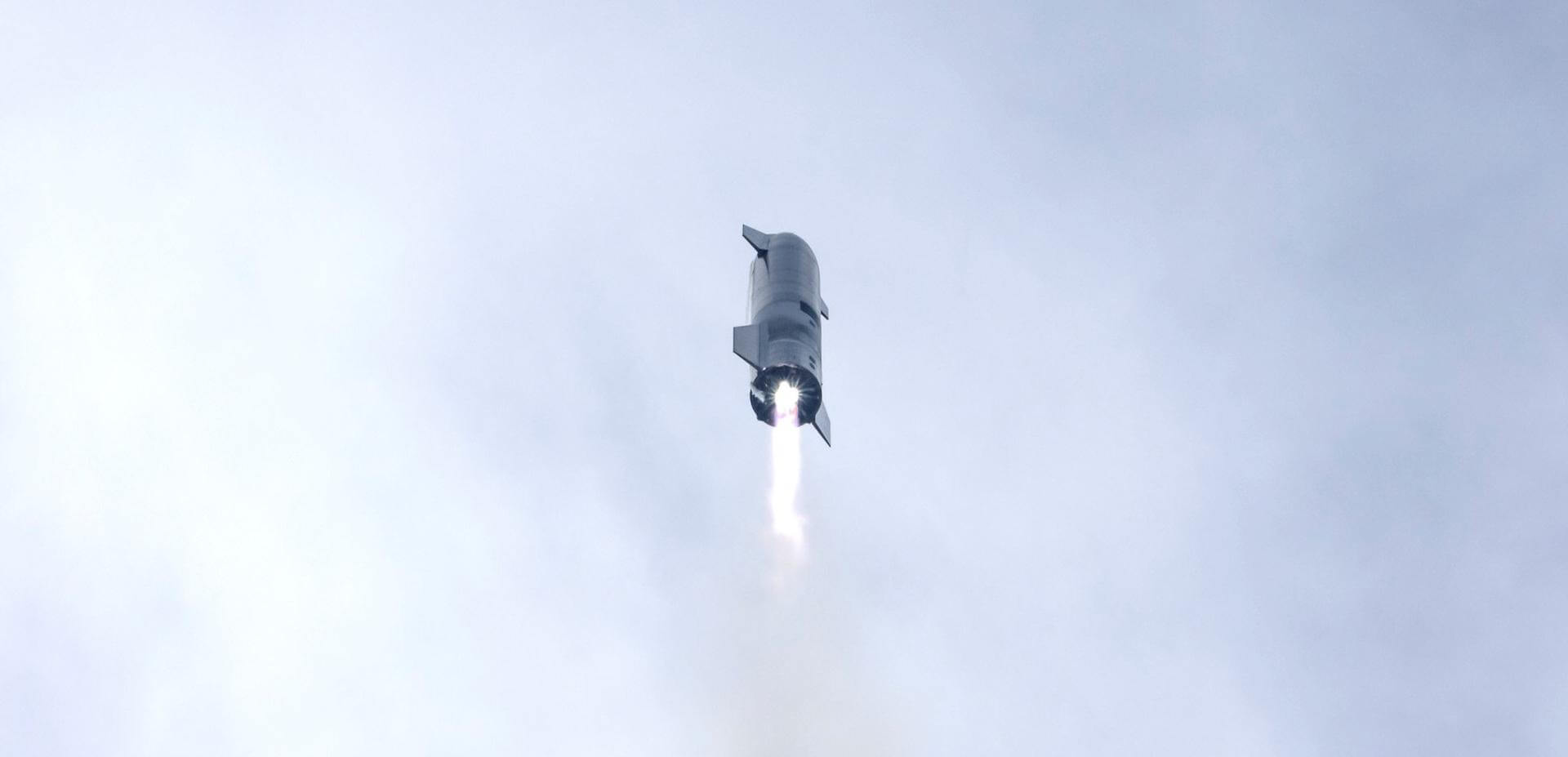
The Starship Prototype is an experimental suborbital test vehicle developed and operated by SpaceX, the American aerospace manufacturer founded by Elon Musk. Rather than a single rocket, the name refers to a series of full-scale prototype vehicles built at SpaceX's Starbase facility in Boca Chica, Texas, used to validate the design, aerodynamics, and landing systems of the company's next-generation Starship spacecraft. Activity in our flight record spans 2019 to 2021, covering nine tracked flights — six successful and three ending in failure or partial success.
Design and Purpose
Standing 50 meters tall and 9 meters in diameter, the Starship Prototype is a full-scale representation of the upper stage of SpaceX's two-stage Starship launch system. The vehicle is constructed from stainless steel and is designed to be fully reusable, a central feature of SpaceX's broader goal of dramatically reducing the cost of access to space. Rather than flying to orbit, these prototypes were tasked with demonstrating a unique flight profile: ascending vertically under Raptor engine power, performing a controlled "belly-flop" free-fall maneuver, then righting themselves and executing a propulsive landing.
Flight History
The test campaign began modestly, with early vehicles such as SN6 conducting short 150-meter hops to verify basic propulsion and control. The program then escalated significantly when SN8 attempted a 12.5-kilometer flight in late 2020, reaching the highest altitude of the campaign and demonstrating the aerodynamic belly-flop descent for the first time, though it was destroyed on landing. Subsequent vehicles — SN9, SN10, and SN11 — each flew the 10-kilometer profile, with mixed results. SN10 became the first prototype to successfully touch down intact, though it exploded on the pad shortly afterward. SN11 was lost during descent in foggy conditions.
The campaign's landmark achievement came with SN15, which in May 2021 completed a full 10-kilometer flight and landed successfully without post-landing anomaly — marking a decisive milestone for the program. SpaceX subsequently stood down from further prototype hops, having gathered sufficient data to proceed toward the integrated Super Heavy/Starship orbital stack.
Significance
The Starship Prototype campaign represents one of the most publicly visible and iterative rocket development programs in spaceflight history. SpaceX deliberately accepted a high tempo of testing and failure, treating each destroyed vehicle as a source of engineering data rather than a setback. The rapid progression from low-altitude hops to high-altitude powered landings — compressed into roughly two years — demonstrated the viability of the Starship aerodynamic control concept and the reusability of the Raptor engine under repeated flight conditions.
As the direct predecessor to the orbital Starship vehicle, the prototype series occupies a historically significant place in the development of large, fully reusable launch systems. All flights were conducted at the Starbase facility in South Texas, with SpaceX serving as both the sole operator and manufacturer of every vehicle in the series.
- May 05, 2021Starship SN15 | 10 km FlightSuccess
- Mar 30, 2021Starship SN11 | 10 km FlightFailure
- Mar 03, 2021Starship SN10 | 10 km FlightSuccess
- Feb 02, 2021Starship SN9 | 10 km FlightPartial Failure
- Dec 09, 2020Starship SN8 | 12.5 km FlightPartial Failure
- Sep 03, 2020Starship SN6 | 150m HopSuccess
- Aug 04, 2020Starship SN5 | 150m HopSuccess
- Aug 27, 2019Starship Hopper | 150m HopSuccess
- Jul 26, 2019Starship Hopper | 20m HopSuccess