Starship V3
About the Starship V3
Starship V3
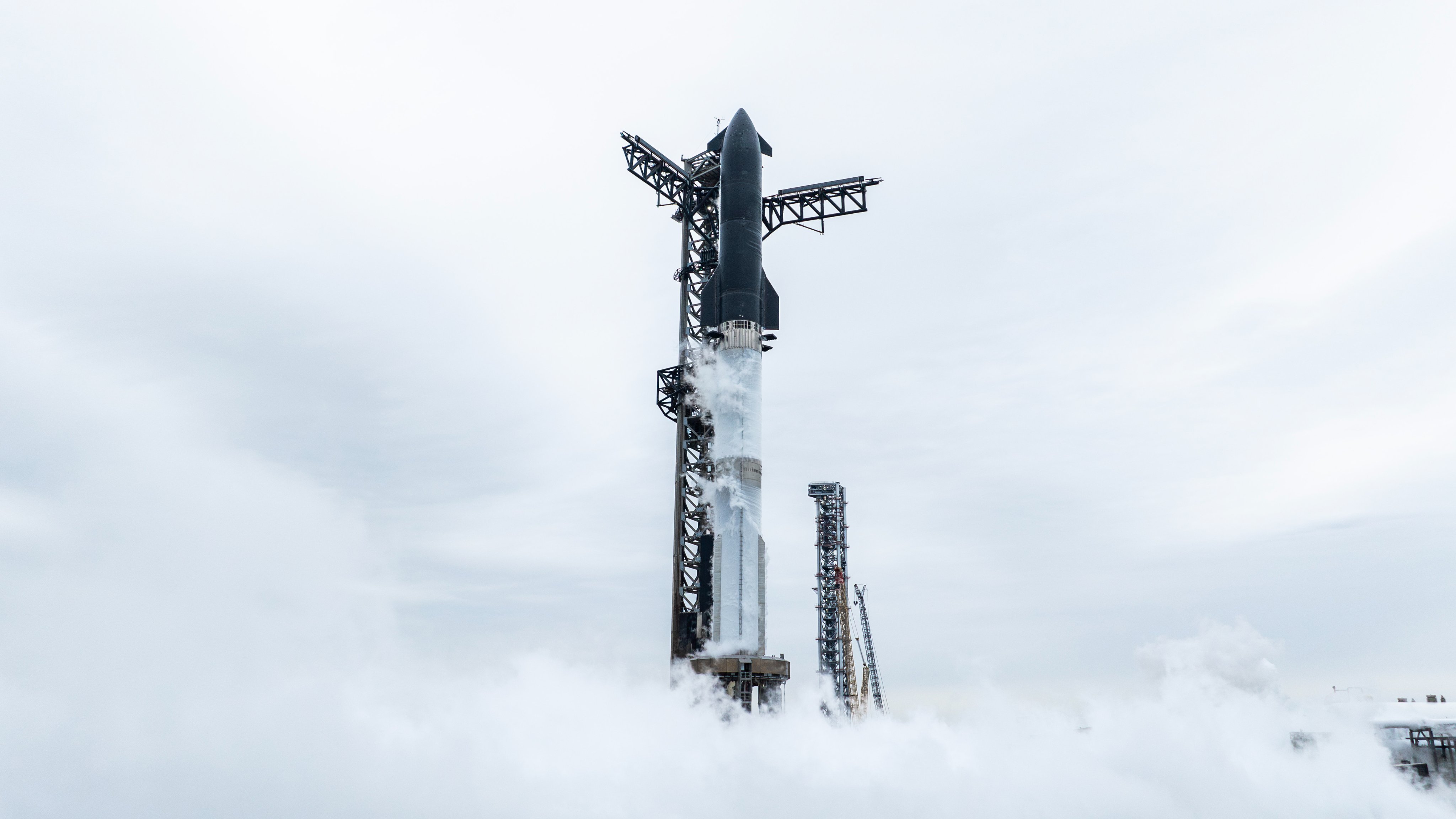
Starship V3 is a fully reusable, heavy-lift orbital launch vehicle developed and operated by SpaceX, an American aerospace company founded by Elon Musk. It represents a mature iteration of the Starship vehicle family, one of the most ambitious and consequential launch systems in the history of spaceflight. Starship V3 stands 124.4 meters tall with a 9-meter diameter and is capable of delivering up to 100,000 kilograms to low Earth orbit, placing it among the most capable launch vehicles ever flown.
Design and Architecture
Starship V3 is a two-stage system consisting of the Super Heavy booster and the Starship upper stage. Both stages are designed for full reusability, a defining characteristic of the Starship program and a central element of SpaceX's strategy to dramatically reduce the cost of access to space. The vehicle is constructed primarily from stainless steel and launches from SpaceX's Starbase facility located near Boca Chica, Texas. Its unprecedented payload capacity reflects years of iterative development and testing across earlier Starship configurations.
Operational History
According to tracked flight data, Starship V3 conducted 15 flights between 2023 and 2029, of which 7 were fully successful and 5 resulted in failure or partial failure, reflecting the experimental pace and high ambition of the program's development cadence. This mixed but progressively improving record is consistent with SpaceX's iterative, test-to-learn philosophy, which accepted early losses in exchange for rapid refinement of vehicle systems.
SpaceX itself has been the primary customer for Starship V3, using the vehicle to support its own constellation and infrastructure goals. Notable missions in the tracked record include a series of development flights — Flight 10, Flight 11, Flight 12, and Flight 13 — which likely represented incremental milestones in validating the vehicle's performance and reusability systems. The manifest also includes Starship | Superbird-9, a commercial satellite delivery mission, and Starship | Starlab, associated with the Starlab commercial space station program, demonstrating the vehicle's growing role in supporting large-scale orbital infrastructure.
Significance
Starship V3 occupies a historic position in launch vehicle development. Its payload capacity to low Earth orbit substantially exceeds that of any previous operational rocket, surpassing even the Saturn V that carried Apollo missions to the Moon. This capability makes it particularly well suited to missions requiring the delivery of very large or very massive payloads in a single launch — a category that includes commercial space stations, large satellite batches, and deep-space spacecraft.
The vehicle's fully reusable architecture represents a fundamental shift in how orbital launch systems are conceived and operated. By recovering and reflying both stages, SpaceX aimed to compress launch costs in ways that could reshape the broader commercial launch market. The operational record of Starship V3, spanning several years and a diverse mission manifest, marks a significant step in translating that vision from ambition into routine practice.
- Dec 31, 2029Starship | StarlabTBD
- Jun 30, 2027Starship | Superbird-9TBD
- Dec 31, 2026Starship | Flight 15TBD
- Sep 28, 2026Starship | Starlink Group 31-1 (Starship Flight 14)Success
- Jul 24, 2026Starship | Flight 13Success
- May 22, 2026Starship | Flight 12Success
- Oct 13, 2025Starship | Flight 11Success
- Aug 26, 2025Starship | Flight 10Success
- May 27, 2025Starship | Flight 9Failure
- Mar 06, 2025Starship | Flight 8Failure
- Jan 16, 2025Starship | Flight 7Failure
- Nov 19, 2024Starship | Integrated Flight Test 6Success
- Oct 13, 2024Starship | Integrated Flight Test 5Success
- Jun 06, 2024Starship | Integrated Flight Test 4Success
- Mar 14, 2024Starship | Integrated Flight Test 3Success
- Nov 18, 2023Starship | Integrated Flight Test 2Partial Failure
- Apr 20, 2023Starship | Integrated Flight TestFailure