SpaceShipTwo
About the SpaceShipTwo
SpaceShipTwo
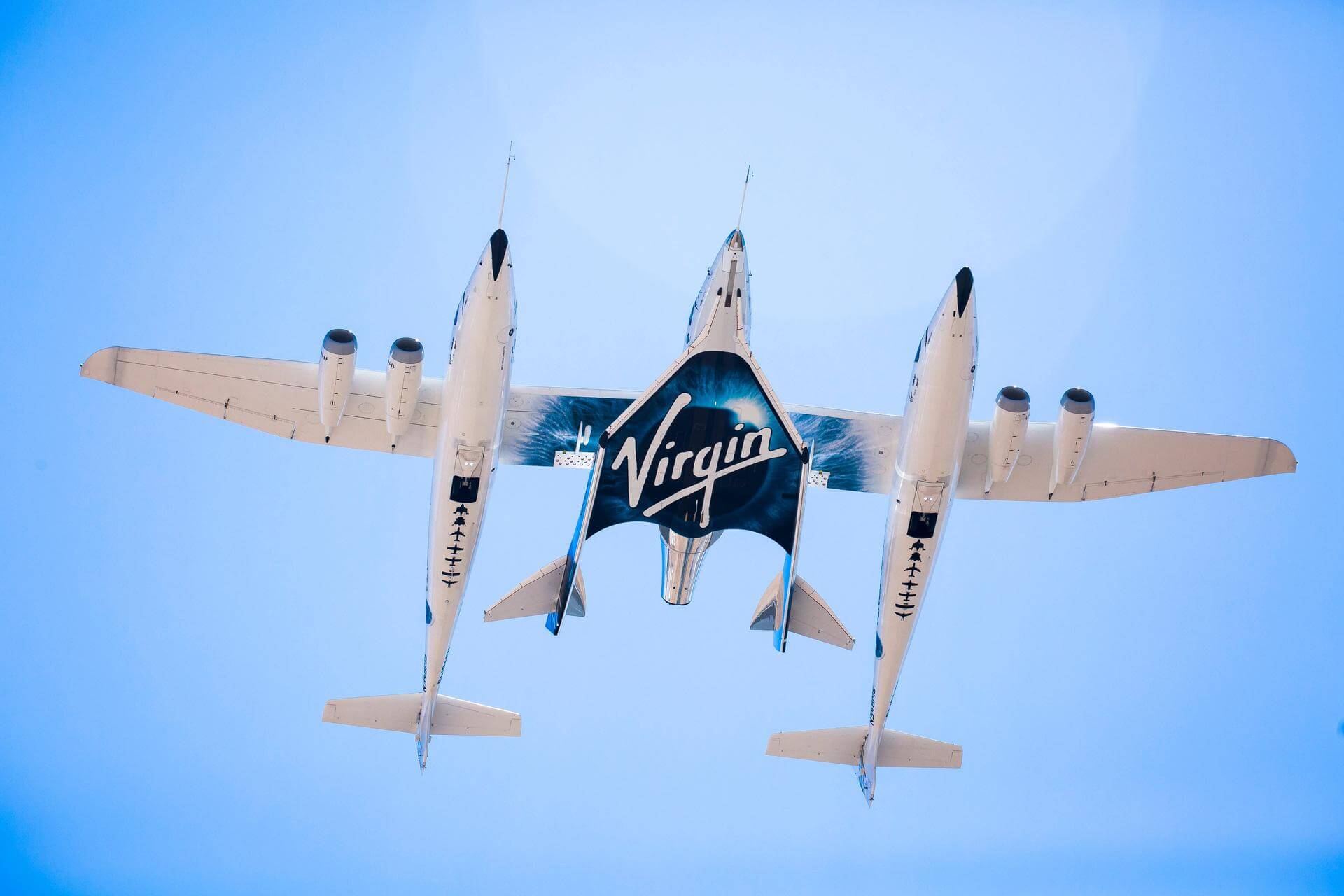
SpaceShipTwo is a reusable, air-launched spaceplane developed and operated by Virgin Galactic, designed to carry passengers and researchers on suborbital flights beyond the Kármán line. Built by The Spaceship Company, a Virgin Galactic subsidiary, it represents one of the most prominent vehicles in the commercial human spaceflight industry and is widely regarded as a landmark in the broader history of privately funded crewed spaceflight.
Unlike conventional orbital launch vehicles, SpaceShipTwo does not lift off from a ground-based pad under its own power. Instead, it is carried aloft by a purpose-built mothership aircraft — known as VMS Eve — before igniting its hybrid rocket motor and climbing to suborbital altitudes. This air-launch approach allows the vehicle to begin its powered ascent at altitude, reducing the propellant load required and enabling a fully reusable design. Upon reentry, SpaceShipTwo employs a distinctive "feathering" system, in which the tail section rotates to increase drag and stabilize the vehicle without requiring active control inputs, before gliding unpowered to a runway landing.
Development and Operations
SpaceShipTwo traces its lineage to SpaceShipOne, the vehicle that won the Ansari X Prize in 2004. The program transitioned into a commercial phase under Virgin Galactic, with operations centered at Spaceport America in New Mexico, USA, as well as earlier development flights from the Mojave Air and Space Port in California. The first vehicle in the class, VSS Enterprise, was lost in a fatal accident during a test flight in 2014. Its successor, VSS Unity, went on to complete the program's first commercial spaceflights.
Our flight record covers 68 tracked flights between 2010 and 2027, of which 62 are recorded as successful. The five failure or partial-failure entries in the dataset reflect the program's challenging development history and the inherent risks of a cutting-edge crewed vehicle entering a category of spaceflight with no prior commercial precedent.
Role and Customer Base
Virgin Galactic is by far the primary customer represented in the flight record, which is consistent with the vehicle's mission profile: rather than serving a broad commercial launch market, SpaceShipTwo was built to deliver a premium passenger spaceflight experience, along with limited research payload opportunities. Recent missions tracked in our data include a series of Galactic flights — Galactic 03 through Galactic 07 — reflecting the operational phase of Virgin Galactic's commercial service, alongside research-oriented missions such as SpaceShipTwo | Purdue 1, which highlights the vehicle's role in supporting academic and scientific payloads.
Physical Characteristics
SpaceShipTwo stands 18 meters tall with a diameter of 8.2 meters, giving it a relatively compact profile suited to its air-launch configuration. Its fully reusable design was central to Virgin Galactic's business model, allowing individual vehicles to fly multiple times and amortize the cost of each flight across a larger number of missions.
SpaceShipTwo occupies a unique niche in the launch vehicle landscape — neither a traditional rocket nor a conventional aircraft — and its operational history represents a sustained, real-world demonstration of reusable commercial human spaceflight at suborbital altitudes.
- Dec 31, 2027SpaceShipTwo | Purdue 1TBD
- Jun 08, 2024SpaceShipTwo | Galactic 07Success
- Jan 26, 2024SpaceShipTwo | Galactic 06Success
- Nov 02, 2023SpaceShipTwo | Galactic 05Success
- Oct 06, 2023SpaceShipTwo | Galactic 04Success
- Sep 08, 2023SpaceShipTwo | Galactic 03Success
- Aug 10, 2023SpaceShipTwo | Galactic 02Success
- Jun 29, 2023SpaceShipTwo | Galactic 01Success
- May 25, 2023SpaceShipTwo | VSS Unity 25Success
- Apr 26, 2023SpaceShipTwo | VSS Unity 24Success
- Jul 11, 2021SpaceShipTwo | VSS Unity 22Success
- May 22, 2021SpaceShipTwo | VSS Unity VF-03Success
- Dec 12, 2020SpaceShipTwo | VSS Unity VF-02Partial Failure
- Jun 25, 2020SpaceShipTwo | VSS Unity GF09Success
- May 01, 2020SpaceShipTwo | VSS Unity GF08Success
- Feb 22, 2019SpaceShipTwo | VSS Unity VF-01Success
- Dec 13, 2018SpaceShipTwo | VSS Unity VP-03Success
- Jul 26, 2018SpaceShipTwo | VSS Unity PF03Success
- May 29, 2018SpaceShipTwo | VSS Unity PF02Success
- Apr 05, 2018SpaceShipTwo | VSS Unity PF01Success
- Jan 11, 2018SpaceShipTwo | VSS Unity GF07Success
- Aug 04, 2017SpaceShipTwo | VSS Unity GF06Success
- Jun 01, 2017SpaceShipTwo | VSS Unity CF01Success
- May 01, 2017SpaceShipTwo | VSS Unity GF04Success
- Feb 24, 2017SpaceShipTwo | VSS Unity GF03Success
- Dec 22, 2016SpaceShipTwo | VSS Unity GF02Success
- Dec 03, 2016SpaceShipTwo | VSS Unity GF01Success
- Nov 30, 2016SpaceShipTwo | VSS Unity CC04Success
- Nov 03, 2016SpaceShipTwo | VSS Unity CC03Partial Failure
- Nov 01, 2016SpaceShipTwo | VSS Unity CC02Partial Failure
- Sep 08, 2016SpaceShipTwo | VSS Unity CC01Success
- Oct 31, 2014SpaceShipTwo | VSS Enterprise PF04Failure
- Oct 07, 2014SpaceShipTwo | VSS Enterprise GF30Success
- Aug 28, 2014SpaceShipTwo | VSS Enterprise CF02Success
- Jul 29, 2014SpaceShipTwo | VSS Enterprise GF29Success
- Jan 17, 2014SpaceShipTwo | VSS Enterprise GF28Success
- Jan 10, 2014SpaceShipTwo | VSS Enterprise PF03Success
- Dec 11, 2013SpaceShipTwo | VSS Enterprise GF27Success
- Sep 05, 2013SpaceShipTwo | VSS Enterprise PF02Success
- Aug 08, 2013SpaceShipTwo | VSS Enterprise GF26Success
- Jul 25, 2013SpaceShipTwo | VSS Enterprise GF25Success
- Apr 29, 2013SpaceShipTwo | VSS Enterprise PF01Success
- Apr 12, 2013SpaceShipTwo | VSS Enterprise CF01Success
- Apr 03, 2013SpaceShipTwo | VSS Enterprise GF24Success
- Dec 19, 2012SpaceShipTwo | VSS Enterprise GF23Success
- Aug 11, 2012SpaceShipTwo | VSS Enterprise GF22Success
- Aug 07, 2012SpaceShipTwo | VSS Enterprise GF21Success
- Aug 02, 2012SpaceShipTwo | VSS Enterprise GF20Success
- Jul 18, 2012SpaceShipTwo | VSS Enterprise GF19Success
- Jun 29, 2012SpaceShipTwo | VSS Enterprise GF18Success
- Jun 26, 2012SpaceShipTwo | VSS Enterprise GF17Success
- Sep 29, 2011SpaceShipTwo | VSS Enterprise GF16Success
- Jun 27, 2011SpaceShipTwo | VSS Enterprise GF15Success
- Jun 23, 2011SpaceShipTwo | VSS Enterprise GF14Success
- Jun 21, 2011SpaceShipTwo | VSS Enterprise GF13Success
- Jun 15, 2011SpaceShipTwo | VSS Enterprise GF12Success
- Jun 14, 2011SpaceShipTwo | VSS Enterprise GF11Success
- Jun 09, 2011SpaceShipTwo | VSS Enterprise CC12Partial Failure
- May 25, 2011SpaceShipTwo | VSS Enterprise GF10Success
- May 19, 2011SpaceShipTwo | VSS Enterprise GF09Success
- May 10, 2011SpaceShipTwo | VSS Enterprise GF08Success
- May 04, 2011SpaceShipTwo | VSS Enterprise GF07Success
- Apr 27, 2011SpaceShipTwo | VSS Enterprise GF06Success
- Apr 22, 2011SpaceShipTwo | VSS Enterprise GF05Success
- Jan 13, 2011SpaceShipTwo | VSS Enterprise GF04Success
- Nov 17, 2010SpaceShipTwo | VSS Enterprise GF03Success
- Oct 28, 2010SpaceShipTwo | VSS Enterprise GF02Success
- Oct 10, 2010SpaceShipTwo | VSS Enterprise GF01Success