Space Launch System Block 1B
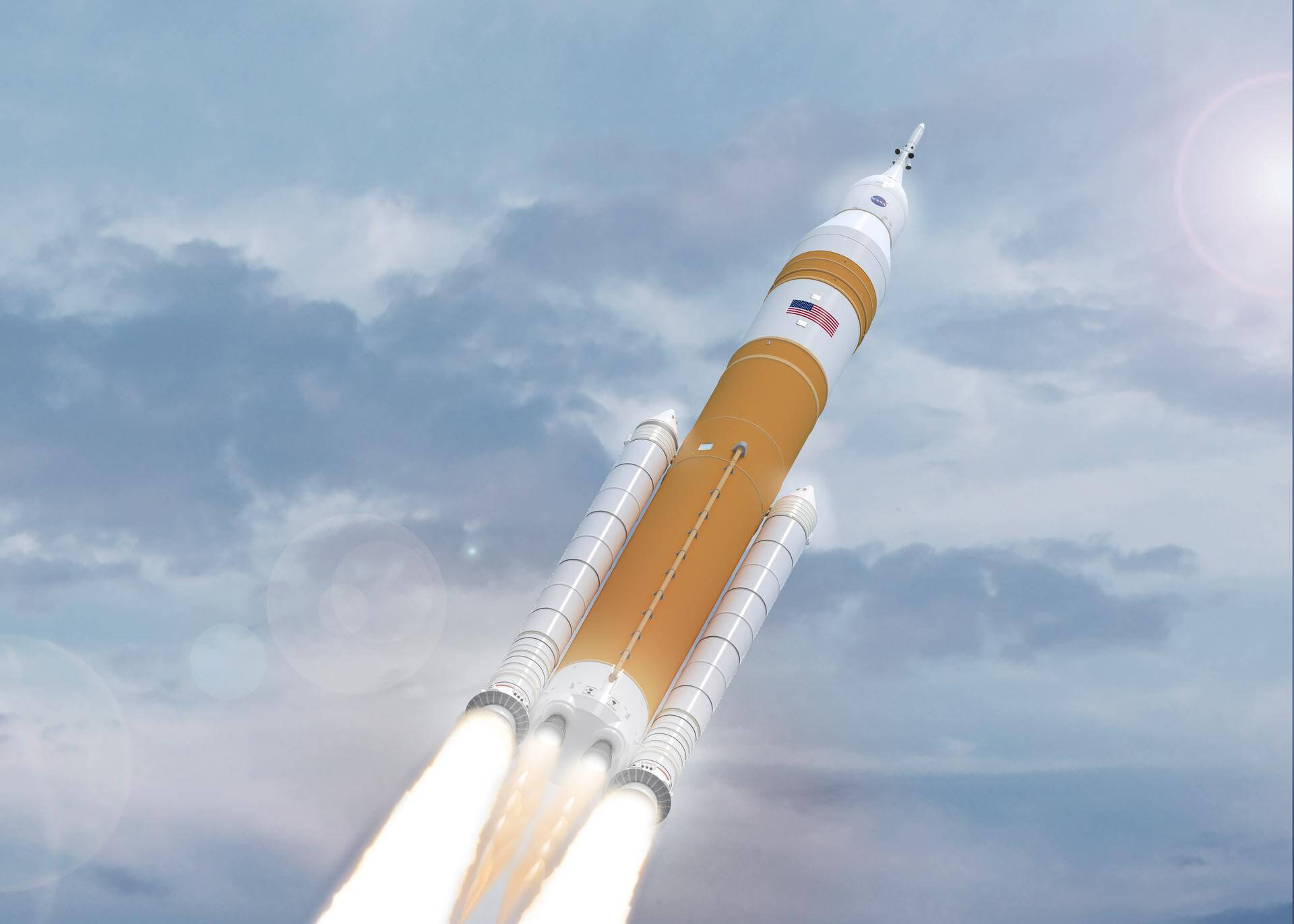
About the Space Launch System Block 1B
Space Launch System Block 1B
The Space Launch System Block 1B (SLS Block 1B) is a heavy-lift orbital launch vehicle developed and operated by the National Aeronautics and Space Administration (NASA) of the United States. It represents the evolved configuration of the broader SLS vehicle family, which was designed to support NASA's Artemis lunar exploration program and carry crew and cargo beyond low Earth orbit. With a height of 111 meters and a core diameter of 8.4 meters, Block 1B is among the largest launch vehicles ever flown, capable of delivering approximately 105,000 kilograms to low Earth orbit.
Development and Configuration
Block 1B builds upon the baseline SLS Block 1 design by incorporating an upgraded upper stage known as the Exploration Upper Stage (EUS) in place of the interim cryogenic propulsion stage used on earlier flights. This more powerful upper stage significantly increases the vehicle's capability for translunar injection and deep-space missions. The core stage is powered by four RS-25 engines and augmented by a pair of solid rocket boosters, continuing the architecture established with the original SLS configuration.
Flight History
According to our flight record, SLS Block 1B has been tracked across 7 flights spanning the years 2022 to 2031, with 2 confirmed successes recorded. The vehicle entered service as part of the Artemis campaign, following earlier missions flown on the Block 1 variant. Recent missions tracked in our data include Artemis IV, Artemis V, Artemis VI, and Artemis VII, all designated to the Block 1B configuration. The preceding Artemis II and Artemis III missions appear in the record under the original SLS Block 1 designation, illustrating the transition between configurations as the program matured.
NASA is the sole customer represented in our flight record, reflecting the vehicle's purpose as a government-operated, program-specific launch system rather than a commercial offering.
Role in the Artemis Program
SLS Block 1B serves as the primary launch vehicle for NASA's crewed and uncrewed lunar surface missions under the Artemis program, the agency's flagship effort to return humans to the Moon and establish a sustained presence there. The increased performance of Block 1B over its predecessor allows it to fly the Gateway lunar space station components and larger payloads in a single launch, reducing the logistical complexity of deep-space operations. Launches take place from Launch Complex 39B at NASA's Kennedy Space Center in Florida.
Significance
SLS Block 1B occupies a distinctive place in spaceflight history as one of only a small number of super heavy-lift vehicles ever to reach operational status. Its scale, government ownership, and exclusive focus on human deep-space exploration distinguish it from contemporary commercial heavy-lift vehicles. While the broader launch industry has shifted substantially toward reusable private systems, SLS represents a continuation of the heritage of large, expendable NASA launch vehicles, drawing on decades of shuttle-era technology and infrastructure to support an ambitious program of crewed exploration beyond Earth orbit.