Soyuz STB Fregat-MT
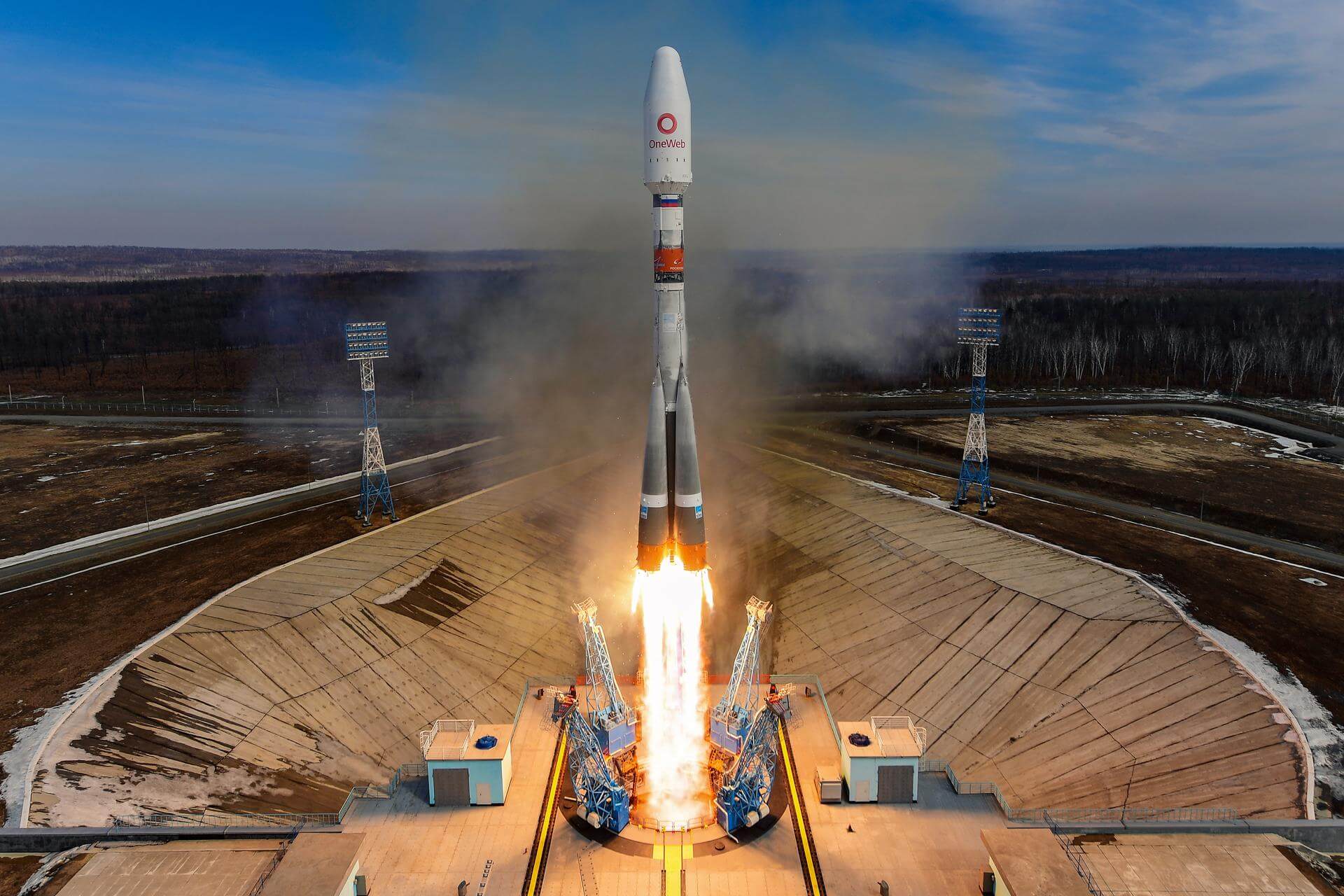
About the Soyuz STB Fregat-MT
Soyuz STB Fregat-MT
The Soyuz STB Fregat-MT is a Russian-developed medium-lift orbital launch vehicle operated commercially by Arianespace, the European launch services company that served as its primary customer. A member of the long-running Soyuz rocket family manufactured by TsSKB-Progress in Samara, Russia, the variant combines the modernized Soyuz STB core with the Fregat-MT upper stage — an enhanced version of the Fregat restartable space tug equipped with enlarged propellant tanks, giving it greater delta-v capability for demanding high-energy missions. Standing 46.3 meters tall with a core diameter of 2.95 meters, the vehicle is capable of delivering up to 8,200 kg to low Earth orbit or 3,250 kg to geostationary transfer orbit.
Design and Upper Stage
The Fregat-MT upper stage is what distinguishes this configuration from standard Soyuz variants. Its expanded propellant capacity makes it especially well suited to missions requiring insertion into medium Earth orbit (MEO) or other trajectories that demand sustained, multiple-burn propulsion after separation from the core. This capability made the Soyuz STB Fregat-MT a natural fit for European institutional and commercial programs requiring precise orbital delivery to non-standard orbits.
Operational History
According to tracked flight data, the Soyuz STB Fregat-MT flew 19 missions between 2011 and 2022, recording 18 successes and one failure or partial failure — a strong but not unblemished record across more than a decade of service. The vehicle launched from both the Baikonur Cosmodrome in Kazakhstan and the Guiana Space Centre (CSG) in Kourou, French Guiana, the latter developed specifically to give Arianespace direct access to equatorial launch trajectories aboard Soyuz vehicles.
Notable missions in the flight record include MetOp-C, a European meteorological satellite delivered to polar orbit; multiple Galileo navigation satellites supporting the European Union's independent positioning constellation; O3b FM17–20, broadband communications satellites for SES; and CSG-1 alongside CHEOPS, demonstrating the vehicle's flexibility in multi-payload configurations. The rocket also played a significant role in the early deployment of the OneWeb broadband megaconstellation, conducting the inaugural OneWeb batch launch (OneWeb 1 / F6) as well as a later mission (OneWeb 13) before geopolitical events in 2022 disrupted the Soyuz–Arianespace partnership.
Legacy and Context
The Soyuz STB Fregat-MT represented a mature, reliable workhorse at the intersection of Russian launch heritage and European commercial spaceflight. Arianespace's long-standing agreement to market Soyuz launches gave Western and European operators access to a vehicle with deep institutional history and proven performance. The 2022 suspension of Soyuz launches from Kourou, following Russia's invasion of Ukraine, effectively ended the vehicle's operational role in the European commercial market, making its 2011–2022 flight record a closed chapter. Its contributions to Galileo, OneWeb, meteorological observation, and commercial broadband infrastructure nonetheless represent a meaningful part of the early 21st century's satellite deployment history.
- Feb 10, 2022Soyuz STB/Fregat | OneWeb 13Success
- Dec 05, 2021Soyuz STB/Fregat | Galileo L11 (FOC FM23-FM24)Success
- Dec 18, 2019Soyuz STB/Fregat | CSG-1, CHEOPS, & othersSuccess
- Apr 04, 2019Soyuz STB/Fregat | O3b FM17-20Success
- Feb 27, 2019Soyuz STB/Fregat | OneWeb 1 (F6)Success
- Nov 07, 2018Soyuz STB/Fregat-MT | MetOp-CSuccess
- Mar 09, 2018Soyuz STB/Fregat | O3b FM13-16Success
- Jan 28, 2017Soyuz STB/Fregat-MT | Hispasat 36W-1 (Hispasat AG1)Success
- May 24, 2016Soyuz STB/Fregat | Galileo L7 (FOC FM10-FM11)Success
- Dec 17, 2015Soyuz STB/Fregat | Galileo L6 (FOC FM08-FM09)Success
- Sep 11, 2015Soyuz STB/Fregat | Galileo L5 (FOC FM05-FM06)Success
- Mar 27, 2015Soyuz STB/Fregat | Galileo L4 (FOC FM03-FM04)Success
- Dec 18, 2014Soyuz STB/Fregat | O3b FM9-FM12Success
- Aug 22, 2014Soyuz STB/Fregat | Galileo L3 (FOC FM01-FM02)Partial Failure
- Jul 10, 2014Soyuz STB/Fregat | O3b FM3, FM6-FM8Success
- Dec 19, 2013Soyuz STB/Fregat-MT | GaiaSuccess
- Jun 25, 2013Soyuz STB/Fregat-MT | O3b FM1, FM2, FM4, FM5Success
- Oct 12, 2012Soyuz STB/Fregat-MT | Galileo L2 (IOV FM03-FM04)Success
- Oct 21, 2011Soyuz STB/Fregat | Galileo L1 (IOV FM01-FM02)Success