Soyuz STA Fregat
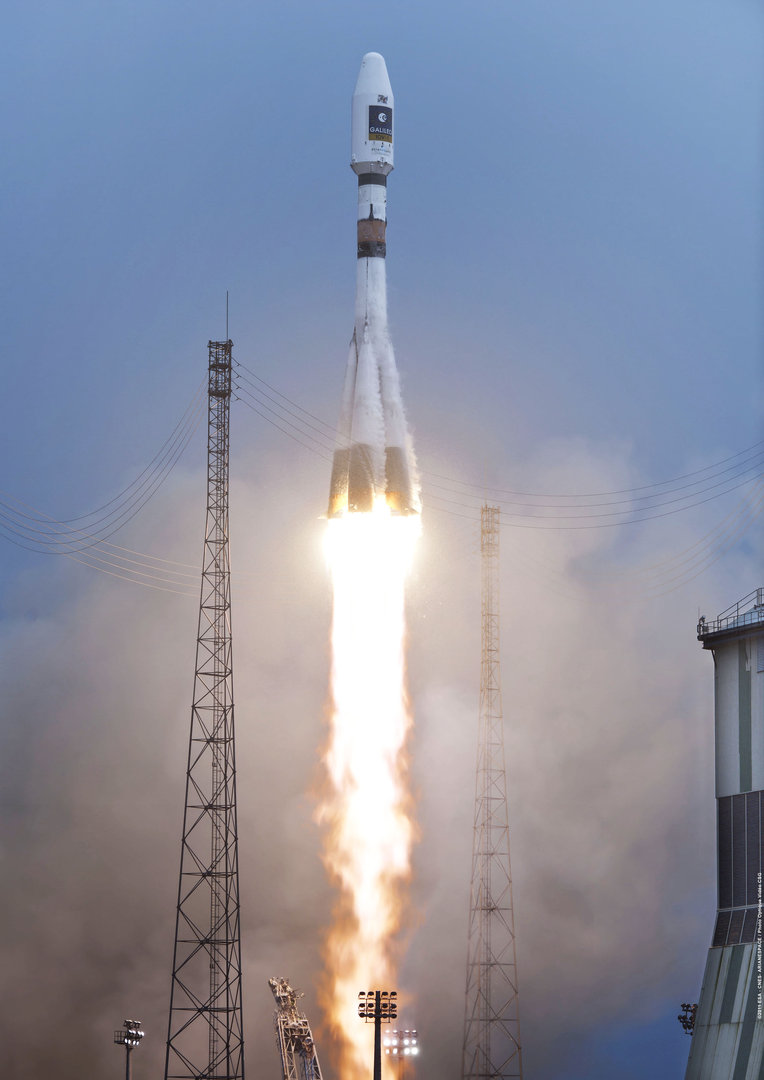
About the Soyuz STA Fregat
Soyuz STA Fregat
The Soyuz STA Fregat is a medium-class orbital launch vehicle operated by Arianespace under a commercial agreement with the Russian manufacturer RKTs Progress (also known as TsSKB-Progress). It represents a modernized variant of the venerable Soyuz rocket family — one of the most flown launch vehicle lineages in spaceflight history — adapted for commercial satellite deployment from the Guiana Space Centre (CSG) at Kourou, French Guiana.
Configuration and Design
The STA designation refers to a variant of the Soyuz-2.1a rocket equipped with a fully digital flight control system and upgraded engines, distinguishing it from earlier Soyuz generations. The vehicle stands 46.3 meters tall with a diameter of 2.95 meters at its core stage. It retains the classic four-booster first-stage architecture that has defined the Soyuz family for decades, paired with a core second stage and a third stage.
The Fregat upper stage is a restartable, autonomous spacecraft-like propulsion unit developed by NPO Lavochkin. Its ability to perform multiple burns makes it particularly well-suited for delivering payloads to precise orbits, including geostationary transfer orbit (GTO) and sun-synchronous orbit (SSO). Payload capacity reaches 7,020 kg to low Earth orbit (LEO) and 2,810 kg to GTO, positioning the vehicle as a capable mid-range workhorse for commercial and institutional missions.
Operational History
According to tracked flight data, the Soyuz STA Fregat conducted 8 flights between 2011 and 2020, all of which were successful. This unblemished record reflects both the maturity of the underlying Soyuz platform and the reliability of the Fregat upper stage in handling demanding mission profiles.
The vehicle's manifest includes a notable mix of Earth observation and telecommunications satellites. Among its most prominent missions are the Sentinel-1A and Sentinel-1B launches for the European Union's Copernicus programme, which placed radar imaging satellites into sun-synchronous orbit in support of environmental monitoring and disaster response. The vehicle also lofted CSO-1 and CSO-2, military optical reconnaissance satellites operated by France's DGA defense procurement agency, underscoring the rocket's suitability for high-priority government payloads.
Commercial telecommunications were also well represented. The SES-15 mission delivered a hybrid GEO/HEO communications satellite for Luxembourg-based operator SES, while Falcon Eye 2 carried a high-resolution Earth observation satellite for the United Arab Emirates. These missions highlight the breadth of customers served through Arianespace's commercial offering.
Role and Legacy
The Soyuz STA Fregat occupied an important niche in Arianespace's launch catalog, complementing the heavy-lift Ariane 5 and the smaller Vega rocket by addressing medium-payload missions that neither vehicle served as efficiently. Its operation from Kourou — at a latitude far more favorable than the traditional Baikonur Cosmodrome — provided a meaningful performance advantage for geostationary missions compared to Russian-site launches.
The vehicle's clean operational record across its tracked flights reinforces the Soyuz family's reputation for reliability, making it a trusted choice for both commercial operators and institutional customers throughout its active service window.
- Dec 29, 2020Soyuz STA/Fregat | CSO-2Success
- Dec 02, 2020Soyuz STA/Fregat | Falcon Eye 2Success
- Dec 19, 2018Soyuz STA/Fregat | CSO-1Success
- May 18, 2017Soyuz STA/Fregat | SES-15Success
- Apr 25, 2016Soyuz STA/Fregat | Sentinel-1BSuccess
- Apr 03, 2014Soyuz STA/Fregat | Sentinel-1ASuccess
- Dec 02, 2012Soyuz STA/Fregat | Pléiades-HR 1BSuccess
- Dec 17, 2011Soyuz STA/Fregat | Pléiades-HR 1A, FASat-Charlie (SSOT), 4 x ELISASuccess