Soyuz-FG Fregat
About the Soyuz-FG Fregat
Soyuz-FG Fregat
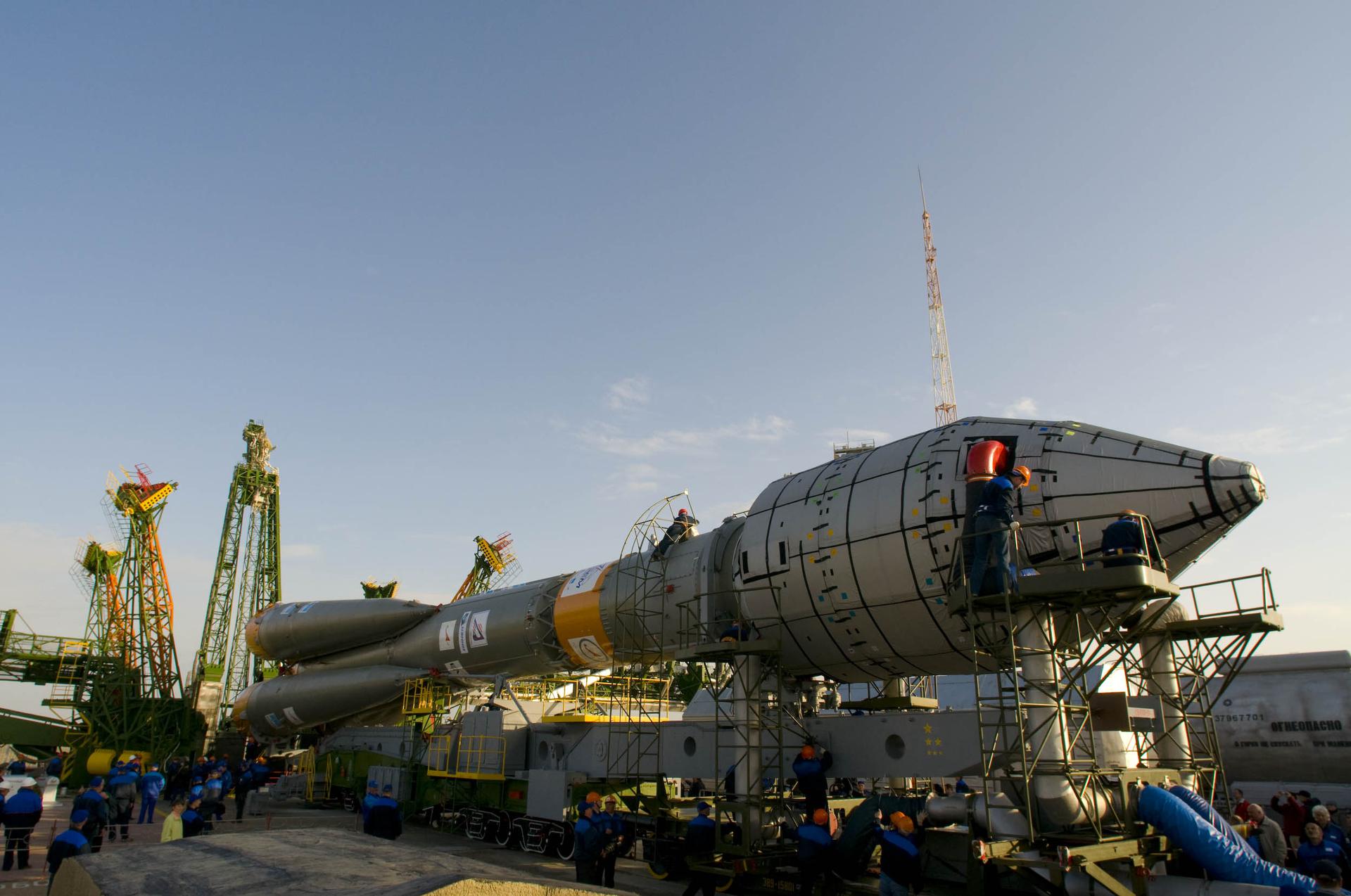
The Soyuz-FG Fregat is a Russian orbital launch vehicle combining the modernized Soyuz-FG rocket with the autonomous Fregat upper stage, operated primarily by the Russian Federal Space Agency (Roscosmos). It is manufactured by TsSKB-Progress in Samara, Russia, and represents a specialized configuration of the long-serving Soyuz rocket family optimized for delivering payloads to medium and high orbits that the core Soyuz stages alone cannot efficiently reach.
Design and Configuration
The Soyuz-FG booster introduced upgraded fuel injection systems compared to earlier Soyuz variants, improving combustion efficiency and overall performance. The distinguishing element of this configuration is the Fregat upper stage, a restartable, autonomous propulsion unit developed by NPO Lavochkin. Fregat is capable of multiple burns in orbit, making it particularly well-suited for missions requiring precise insertion into geostationary transfer orbits, medium Earth orbits, or highly inclined trajectories. The vehicle stands 4.95 meters in diameter at its widest point, with a Fregat stage diameter of 2.68 meters, and delivers up to 7,100 kg to low Earth orbit.
Operational History
According to tracked flight records, the Soyuz-FG Fregat conducted 10 flights between 2003 and 2012, all of which were successful. This unblemished record across a diverse range of missions underscores the reliability of both the Soyuz-FG booster and the Fregat upper stage as a combined system.
Launches took place from Baikonur Cosmodrome in Kazakhstan, the historic facility that has served as Russia's primary launch site since the dawn of the Space Age. The vehicle's primary customer throughout this period was Roscosmos, reflecting its role as a nationally strategic asset for Russian civil space activities.
Notable Missions
The Soyuz-FG Fregat configuration supported a notably varied manifest. Among its most significant missions was the launch of Giove-A and Giove-B, the two experimental satellites that validated key technologies for Europe's Galileo navigation system. These flights demonstrated the vehicle's suitability for precise medium Earth orbit insertion and represented an important chapter in European-Russian launch cooperation.
The vehicle also lofted Radarsat-2, a high-resolution Canadian Earth observation radar satellite, as well as Kanopus-V No.1 and BelKA-2, Russian and Belarusian Earth observation spacecraft launched together on a single mission. Multiple Globalstar telecommunications satellites were also delivered across two dedicated flights, serving the constellation's second-generation buildout.
Legacy and Context
The Soyuz-FG Fregat configuration occupied an important niche in the broader Soyuz family by extending the rocket's reach to orbital regimes beyond the grasp of the unaugmented vehicle. While the core Soyuz became synonymous with crewed spaceflight to the International Space Station, the Fregat-equipped variant served as a capable workhorse for scientific, commercial, and navigation payloads requiring more energetic trajectories. Its decade-long operational run and perfect flight record make it one of the more dependable specialized configurations fielded by Russia during the 2000s.
- Jul 22, 2012Soyuz-FG/Fregat | Kanopus-V No.1 & BelKA-2Success
- Apr 26, 2008Soyuz-FG | Giove-BSuccess
- Dec 14, 2007Soyuz-FG | Radarsat-2Success
- Oct 20, 2007Soyuz-FG | Globalstar 66,67,68,70Success
- May 29, 2007Soyuz-FG | Globalstar 65,69,71,72Success
- Dec 28, 2005Soyuz-FG | Giove ASuccess
- Nov 09, 2005Soyuz-FG | Venus ExpressSuccess
- Aug 13, 2005Soyuz-FG | Galaxy 14Success
- Dec 27, 2003Soyuz-FG | Amos 2Success
- Jun 02, 2003Soyuz-FG | Mars ExpressSuccess