Soyuz 2.1v Volga
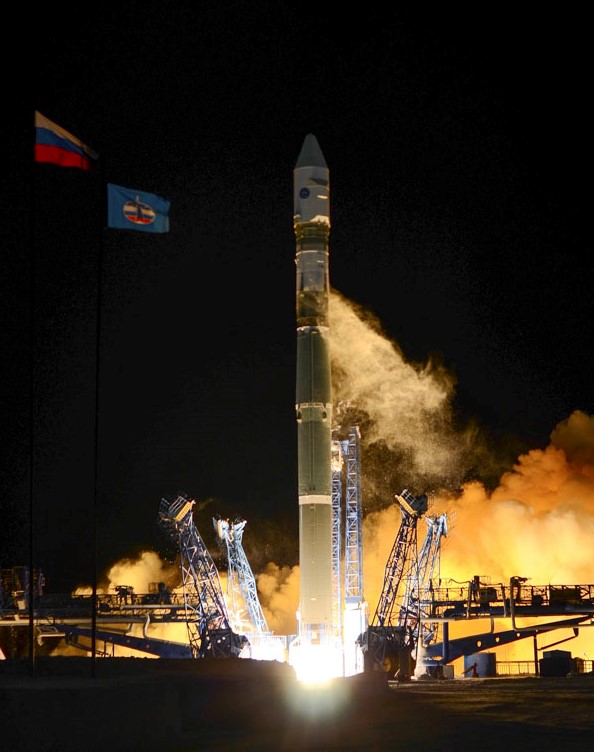
About the Soyuz 2.1v Volga
Soyuz 2.1v Volga
The Soyuz 2.1v Volga is a Russian orbital launch vehicle operated primarily by the Russian Space Forces and Russian Aerospace Defence Forces. It is a member of the venerable Soyuz rocket family, manufactured by Progress Rocket Space Centre (TsSKB-Progress) in Samara, Russia, and is optimized for delivering small to medium payloads into low Earth orbit from the Plesetsk Cosmodrome in northwestern Russia.
Design and Configuration
The Soyuz 2.1v is a notably streamlined variant of the broader Soyuz 2 family. Unlike its siblings, it omits the four liquid-fueled strap-on boosters that are a defining visual characteristic of most Soyuz configurations, relying instead on an upgraded core stage. Standing 44 meters tall with a diameter of 3 meters, it is a relatively slender vehicle for its class. The Volga designation refers to the upper stage frequently paired with this rocket, a restartable upper stage that provides additional flexibility for deploying payloads into precise orbits. The vehicle is capable of delivering up to 2,850 kg to low Earth orbit.
Role and Customer Base
The Soyuz 2.1v Volga has served almost exclusively as a dedicated launch platform for classified Russian military satellites. Its primary customers — the Russian Space Forces and the Russian Aerospace Defence Forces — have used the vehicle consistently to replenish and expand constellations of reconnaissance, inspection, and surveillance spacecraft. The rocket's ability to place payloads into precise low Earth orbits, combined with the Volga upper stage's restart capability, makes it well suited for missions requiring careful orbital insertion.
Flight History
The vehicle conducted its first flight in 2013 and has remained in active service through at least 2025, demonstrating sustained relevance within Russia's military space program. Based on tracked data, the Soyuz 2.1v Volga has recorded 9 flights, with 8 successes and 1 failure or partial failure, representing a strong but not unblemished record.
Recent missions reflect the vehicle's continued importance to Russian military space operations. Notable launches include the deployment of Kosmos 2581, 2582, and 2583, multiple Kosmos 2500-series inspection and surveillance satellites, and the Kosmos 2568 (EO MKA-4) Earth-observation spacecraft. Earlier missions such as the Kosmos 2535–2538 cluster deployment and the Kosmos 2542 mission — associated with Russian satellite inspection activities that drew significant international attention — further illustrate the strategic nature of its manifest.
Significance
The Soyuz 2.1v Volga occupies a specialized niche within Russia's launch architecture, sitting between small dedicated smallsat launchers and larger general-purpose rockets. By inheriting the deep heritage and proven reliability of the Soyuz lineage while adapting the design for military small-payload missions, it has proven to be a durable tool for the Russian state's space-based intelligence and defense programs. Its continued use into the mid-2020s underscores the enduring demand for capable, dedicated military launch services within Russia's national space program.
- Feb 05, 2025Soyuz 2.1v/Volga | Kosmos 2581/2582/2583Success
- Mar 29, 2023Soyuz 2.1v | Kosmos 2568 (EO MKA-4)Success
- Oct 21, 2022Soyuz 2.1v/Volga | Kosmos 2561 & Kosmos 2562Success
- Aug 01, 2022Soyuz 2.1v/Volga | Kosmos 2558Success
- Nov 25, 2019Soyuz 2.1v/Volga | Kosmos 2542Success
- Jul 10, 2019Soyuz 2.1v/Volga | Kosmos 2535, Kosmos 2536, Kosmos 2537, Kosmos 2538Success
- Jun 23, 2017Soyuz 2.1v/Volga | Kosmos-2519Success
- Dec 05, 2015Soyuz 2.1v/Volga | Kanopus-ST (Kosmos 2511) & KYuA-1 (Kosmos 2512)Failure
- Dec 28, 2013Soyuz 2.1v/Volga | Aist-1Success