Soyuz 2.1b Fregat-M
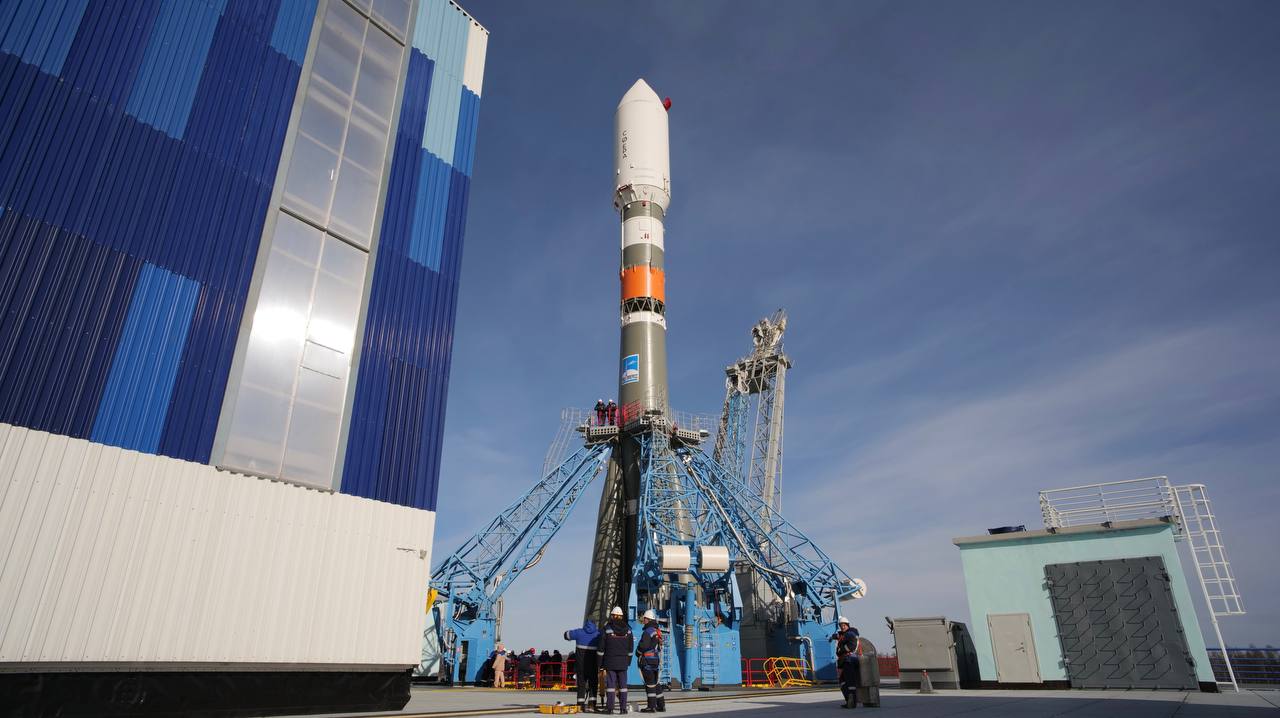
About the Soyuz 2.1b Fregat-M
Soyuz 2.1b Fregat-M
The Soyuz 2.1b Fregat-M is a Russian orbital launch vehicle operated primarily by Roscosmos and its affiliated launch services provider Arianespace, combining the upgraded Soyuz 2.1b booster with the restartable Fregat-M upper stage. It represents one of the most capable configurations in the long-running Soyuz family, a lineage stretching back to the early Space Age and rooted in the R-7 intercontinental ballistic missile design. The vehicle launches from facilities including the Baikonur Cosmodrome in Kazakhstan and the Vostochny Cosmodrome in Russia's Far East.
Vehicle Configuration
The Soyuz 2.1b core stage benefits from a modernized digital flight control system and an upgraded third-stage engine compared to earlier Soyuz variants, allowing it to carry heavier payloads to a broader range of orbits. The Fregat-M upper stage is an autonomous, restartable unit capable of performing multiple burns, making it well suited for delivering spacecraft to precise medium Earth, highly elliptical, geostationary transfer, and interplanetary trajectories. Standing 46.3 meters tall with a maximum diameter of 10.3 meters, the vehicle can deliver up to 8,200 kg to low Earth orbit and 3,250 kg to geostationary transfer orbit.
Operational History
According to tracked flight data, the Soyuz 2.1b Fregat-M has been active between 2017 and 2028, accumulating 37 tracked flights with 35 confirmed successes and no recorded failures or partial failures in this dataset — a reliability record that underscores the maturity of both the Soyuz booster and the Fregat upper stage.
The vehicle's customer base reflects its dual role as both a national workhorse and a commercial launcher. The Russian Space Forces and Roscosmos rely on it heavily for government and military missions, while Arianespace has marketed it internationally for commercial satellite deployments.
Recent Missions
Recent flights illustrate the vehicle's breadth of application. The Luna 26 and Luna 27 missions represent Russia's continued investment in lunar exploration, with the Fregat-M stage providing the precise injection burns required for translunar trajectories. The Kosmos 2600–2608 and Kosmos 2588 missions reflect its continued importance to the Russian military space program, deploying constellations and individual spacecraft for national security purposes. Scientific and technology demonstration payloads have also featured prominently, including the AIST-2T 01 & 02 small satellites and the Ionosfera-M 3 & 4 ionospheric research spacecraft — the latter illustrating the vehicle's flexibility in deploying multi-satellite stacks to tailored orbits.
Significance
Within the global launch vehicle landscape, the Soyuz 2.1b Fregat-M occupies a well-established medium-lift niche. Its combination of proven heritage, restartable upper stage capability, and demonstrated reliability makes it a consistent choice for both high-value government payloads and precision-orbit commercial missions. The Fregat-M's multi-burn capability in particular extends the vehicle's reach far beyond what the core Soyuz booster alone could achieve, positioning this configuration as one of the more versatile members of the broader Soyuz 2 family in active service.
- Dec 31, 2028Soyuz 2.1b/Fregat-M | Luna 27TBD
- Dec 31, 2027Soyuz 2.1b/Fregat-M | Luna 26TBD
- Sep 17, 2026Soyuz 2.1b/Fregat | Glonass-K1 No. 19 (Kosmos 2620)Success
- Feb 05, 2026Soyuz 2.1b/Fregat-M | Kosmos 2600-2608Success
- Dec 28, 2025Soyuz 2.1b/Fregat-M | AIST-2T 01 & 02Success
- Jul 25, 2025Soyuz 2.1b/Fregat-M | Ionosfera-M 3 & 4Success
- May 23, 2025Soyuz 2.1b/Fregat-M | Kosmos 2588Success
- Mar 02, 2025Soyuz 2.1b/Fregat-M | Glonass-K2 No. 14 (Kosmos 2584)Success
- Nov 04, 2024Soyuz 2.1b/Fregat-M | Ionosfera-M 1 & 2Success
- May 16, 2024Soyuz 2.1b/Fregat-M | Kosmos 2576Success
- Feb 29, 2024Soyuz 2.1b/Fregat-M | Meteor-M No.2-4 & othersSuccess
- Dec 16, 2023Soyuz 2.1b/Fregat-M | Arktika-M No.2Success
- Aug 10, 2023Soyuz 2.1b/Fregat-M | Luna 25Success
- Aug 07, 2023Soyuz 2.1b/Fregat-M | Glonass-K2 No. 13 (Kosmos 2569)Success
- Jun 27, 2023Soyuz 2.1b/Fregat-M | Meteor-M No.2-3 & othersSuccess
- Nov 28, 2022Soyuz 2.1b/Fregat-M | Glonass-M No. 61 (Kosmos 2564)Success
- Oct 22, 2022Soyuz 2.1b/Fregat-M | Gonets-M33, Gonets-M34, Gonets-M35 & Skif-DSuccess
- Aug 09, 2022Soyuz 2.1b/Fregat-M | Khayyam & rideshareSuccess
- Dec 27, 2021Soyuz 2.1b/Fregat-M | OneWeb 12Success
- Sep 14, 2021Soyuz 2.1b/Fregat-M | OneWeb 10Success
- Aug 21, 2021Soyuz 2.1b/Fregat-M | OneWeb 9Success
- Jul 01, 2021Soyuz 2.1b/Fregat-M | OneWeb 8Success
- May 28, 2021Soyuz 2.1b/Fregat-M | OneWeb 7Success
- Apr 25, 2021Soyuz 2.1b/Fregat-M | OneWeb 6Success
- Mar 25, 2021Soyuz 2.1b/Fregat-M | OneWeb 5Success
- Feb 28, 2021Soyuz 2.1b/Fregat-M | Arktika-M No.1Success
- Dec 18, 2020Soyuz 2.1b/Fregat-M | OneWeb 4Success
- Dec 03, 2020Soyuz 2.1b/Fregat-M | Gonets-M30, Gonets-M31, Gonets-M32Success
- Sep 28, 2020Soyuz 2.1b/Fregat-M | Gonets-M27, Gonets-M28, Gonets-M29 & othersSuccess
- Mar 21, 2020Soyuz 2.1b/Fregat-M | OneWeb 3Success
- Mar 16, 2020Soyuz 2.1b/Fregat-M | Glonass-M No. 60 (Kosmos 2545)Success
- Feb 06, 2020Soyuz 2.1b/Fregat-M | OneWeb 2Success
- Dec 11, 2019Soyuz 2.1b/Fregat-M | Glonass-M No. 59 (Kosmos 2544)Success
- May 27, 2019Soyuz 2.1b/Fregat-M | Glonass-M No. 58 (Kosmos 2534)Success
- Feb 21, 2019Soyuz 2.1b/Fregat-M | EgyptSat-ASuccess
- Nov 03, 2018Soyuz 2.1b/Fregat-M | Glonass-M No. 57 (Kosmos 2529)Success
- Jun 16, 2018Soyuz 2.1b/Fregat-M | Glonass-M No. 56 (Kosmos 2527)Success
- Sep 22, 2017Soyuz-2.1b/Fregat-M | Glonass-M (Kosmos 2522)Success