Soyuz 2.1a
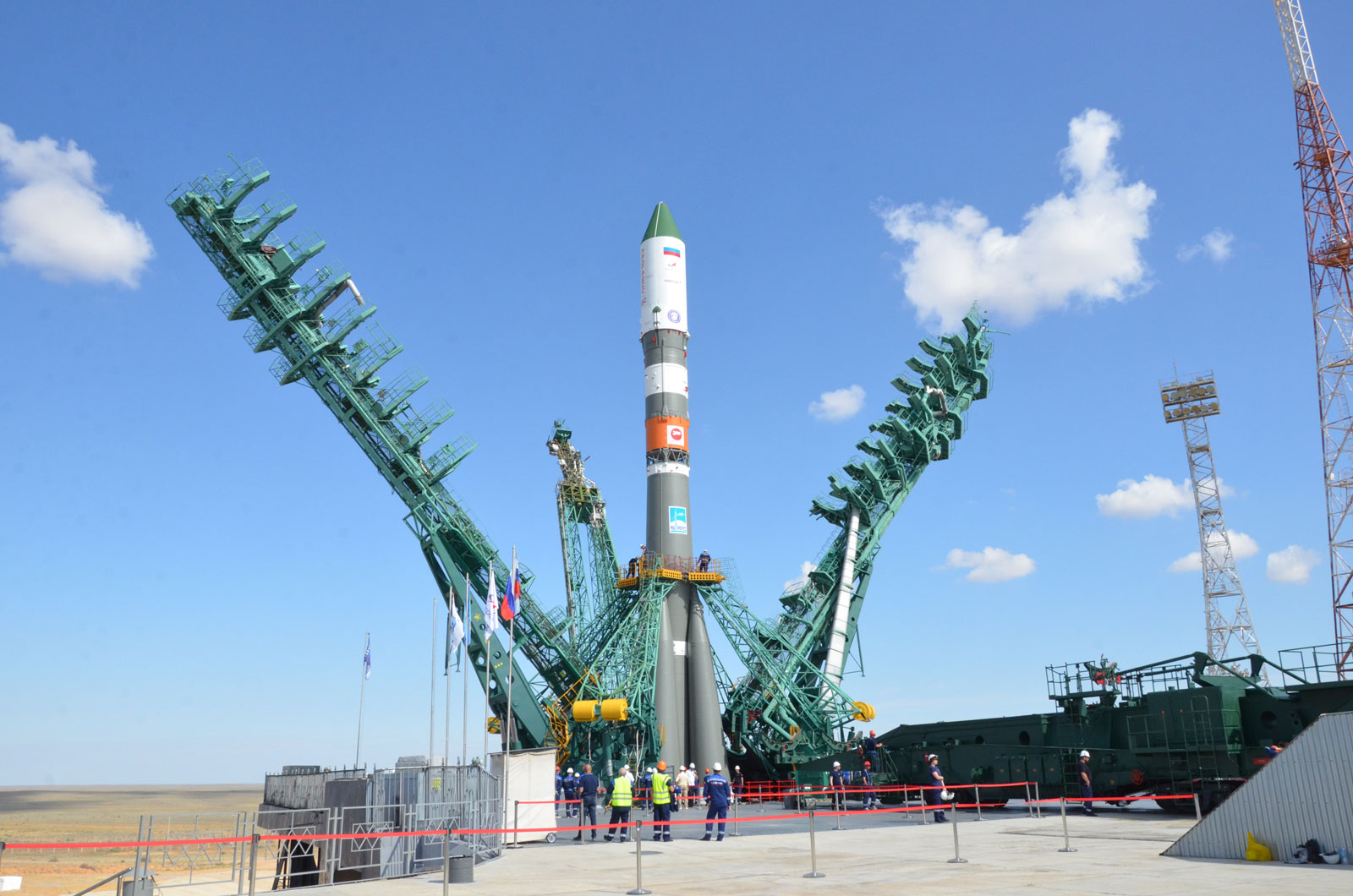
About the Soyuz 2.1a
Soyuz 2.1a
The Soyuz 2.1a is a medium-lift orbital launch vehicle developed and operated by Russia, forming part of the long-running Soyuz rocket family manufactured by RKTs Progress (also known as Progress Rocket Space Centre) in Samara. It serves as the primary workhorse of the Russian space program for crewed missions, cargo resupply flights, and a range of government payloads. Its principal customers include Roscosmos, the Russian Space Forces, and the Russian Aerospace Defence Forces.
Design and Capability
The Soyuz 2.1a is the first of two variants introduced under the modernized Soyuz-2 program, the other being the 2.1b. Standing 46.3 metres tall with a core diameter of 2.95 metres, it follows the classic Soyuz configuration: a central core stage flanked by four liquid-fuelled strap-on boosters, topped by an upper stage and payload fairing. The vehicle is capable of delivering 7,020 kg to low Earth orbit (LEO) and 2,810 kg to geostationary transfer orbit (GTO).
Compared to earlier Soyuz variants, the 2.1a introduced a modernized digital flight control system, upgraded NK-33-derived and RD-107A/RD-108A engines with improved performance and reliability, and enhanced telemetry and guidance systems. These upgrades significantly broadened the vehicle's operational flexibility relative to its Soviet-era predecessors.
Operational History
The Soyuz 2.1a entered service in 2004 and has remained in active use through at least 2026, reflecting a remarkably sustained operational career. Across 60 tracked flights, the vehicle has achieved 56 successes alongside 1 recorded failure or partial failure, representing a strong reliability record consistent with the broader Soyuz heritage.
The rocket operates from multiple launch sites, most notably Baikonur Cosmodrome in Kazakhstan and Plesetsk Cosmodrome in northern Russia. It has also launched from the Vostochny Cosmodrome, Russia's newest domestic spaceport in the Russian Far East.
Role in the Russian Space Program
The Soyuz 2.1a carries out two of Russia's most mission-critical and high-frequency launch responsibilities: delivering Soyuz MS crewed spacecraft to the International Space Station and launching Progress MS uncrewed cargo vehicles to resupply the ISS. Recent missions tracked in the flight record underscore this pattern, including Progress MS-33, MS-34, MS-35, and MS-36 cargo flights, as well as the crewed Soyuz MS-29 mission. The launch of Obzor-R No.1, a radar Earth observation satellite, further illustrates the vehicle's utility for government remote sensing payloads.
This dual role — sustaining human presence aboard the ISS while also supporting military and civil remote sensing programs — makes the Soyuz 2.1a one of the most consequential active launch vehicles in the world by mission criticality. Few rockets in the modern era carry as direct a responsibility for continuous human spaceflight operations.
Legacy
As a direct descendant of the R-7 rocket family that launched Sputnik and Yuri Gagarin, the Soyuz 2.1a sits at the end of the longest continuous lineage in orbital spaceflight history. Its combination of proven reliability, genuine crewed launch capability, and adaptability to diverse payload classes ensures it remains central to Russian space operations well into the 2020s.
- Jul 14, 2026Soyuz 2.1a | Soyuz MS-29Success
- Apr 25, 2026Soyuz 2.1a | Progress MS-34 (95P)Success
- Mar 22, 2026Soyuz 2.1a | Progress MS-33 (94P)Success
- Dec 25, 2025Soyuz 2.1a | Obzor-R No.1Success
- Nov 27, 2025Soyuz 2.1a | Soyuz MS-28Success
- Sep 11, 2025Soyuz 2.1a | Progress MS-32 (93P)Success
- Jul 03, 2025Soyuz 2.1a | Progress MS-31 (92P)Success
- Apr 08, 2025Soyuz 2.1a | Soyuz MS-27Success
- Feb 27, 2025Soyuz 2.1a | Progress MS-30 (91P)Success
- Nov 21, 2024Soyuz 2.1a | Progress MS-29 (90P)Success
- Oct 31, 2024Soyuz 2.1a | Kosmos 2579 (Bars-M No. 6)Success
- Sep 11, 2024Soyuz 2.1a | Soyuz MS-26Success
- Aug 15, 2024Soyuz 2.1a | Progress MS-28 (89P)Success
- May 30, 2024Soyuz 2.1a | Progress MS-27 (88P)Success
- Mar 23, 2024Soyuz 2.1a | Soyuz MS-25Success
- Feb 15, 2024Soyuz 2.1a | Progress MS-26 (87P)Success
- Dec 01, 2023Soyuz 2.1a | Progress MS-25 (86P)Success
- Sep 15, 2023Soyuz 2.1a | Soyuz MS-24Success
- Aug 23, 2023Soyuz 2.1a | Progress MS-24 (85P)Success
- May 24, 2023Soyuz 2.1a | Progress MS-23 (84P)Success
- Mar 23, 2023Soyuz 2.1a | Kosmos 2567 (Bars-M No. 4)Success
- Feb 24, 2023Soyuz 2.1a | Soyuz MS-23Success
- Feb 09, 2023Soyuz 2.1a | Progress MS-22 (83P)Success
- Oct 26, 2022Soyuz 2.1a | Progress MS-21 (82P)Success
- Sep 21, 2022Soyuz 2.1a | Soyuz MS-22Success
- Jun 03, 2022Soyuz 2.1a | Progress MS-20 (81P)Success
- May 19, 2022Soyuz 2.1a | Kosmos 2556 (Bars-M No. 3)Success
- Mar 18, 2022Soyuz 2.1a | Soyuz MS-21Success
- Feb 15, 2022Soyuz 2.1a | Progress MS-19 (80P)Success
- Dec 08, 2021Soyuz 2.1a | Soyuz MS-20Success
- Oct 28, 2021Soyuz 2.1a | Progress MS-18 (79P)Success
- Oct 05, 2021Soyuz 2.1a | Soyuz MS-19Success
- Jun 29, 2021Soyuz 2.1a | Progress MS-17 (78P)Success
- Apr 09, 2021Soyuz 2.1a | Soyuz MS-18Success
- Feb 15, 2021Soyuz 2.1a | Progress MS-16 (77P)Success
- Oct 14, 2020Soyuz 2.1a | Soyuz MS-17Success
- Jul 23, 2020Soyuz 2.1a | Progress MS-15 (76P)Success
- Apr 25, 2020Soyuz 2.1a | Progress MS-14 (75P)Success
- Apr 09, 2020Soyuz 2.1a | Soyuz MS-16Success
- Dec 06, 2019Soyuz 2.1a | Progress MS-13 (74P)Success
- Aug 22, 2019Soyuz 2.1a | Soyuz MS-14 UncrewedSuccess
- Jul 31, 2019Soyuz 2.1a | Progress MS-12 (73P)Success
- Apr 04, 2019Soyuz 2.1a | Progress MS-11 (72P)Success
- Jul 09, 2018Soyuz 2.1A | Progress MS-09 (70P)Success
- Feb 13, 2018Soyuz 2.1a | Progress MS-08 (69P)Success
- Oct 14, 2017Soyuz 2.1a | Progress MS-07 (68P)Success
- Jun 14, 2017Soyuz 2.1a | Progress MS-06 (67P)Success
- Mar 31, 2016Soyuz 2.1a | Progress MS-02 (63P)Success
- Mar 24, 2016Soyuz 2.1a | Bars-M No. 2 (Kosmos 2515)Success
- Dec 21, 2015Soyuz 2.1a | Progress MS (62P)Success
- Jun 05, 2015Soyuz 2.1a | Kobalt-M (Kosmos 2505)Success
- Apr 28, 2015Soyuz 2.1a | Progress M-27MFailure
- Feb 27, 2015Soyuz 2.1a | Bars-M (Kosmos 2503)Success
- Oct 29, 2014Soyuz 2.1a | Progress M-25M (57P)Success
- Jul 18, 2014Soyuz 2.1a | Foton-M No. 4Success
- May 06, 2014Soyuz 2.1a | Kobalt-M (Kosmos 2495)Success
- Apr 19, 2013Soyuz 2.1a | Bion-M No. 1Success
- Nov 08, 2004Soyuz 2.1a | GVM OblikSuccess