Soyuz FG
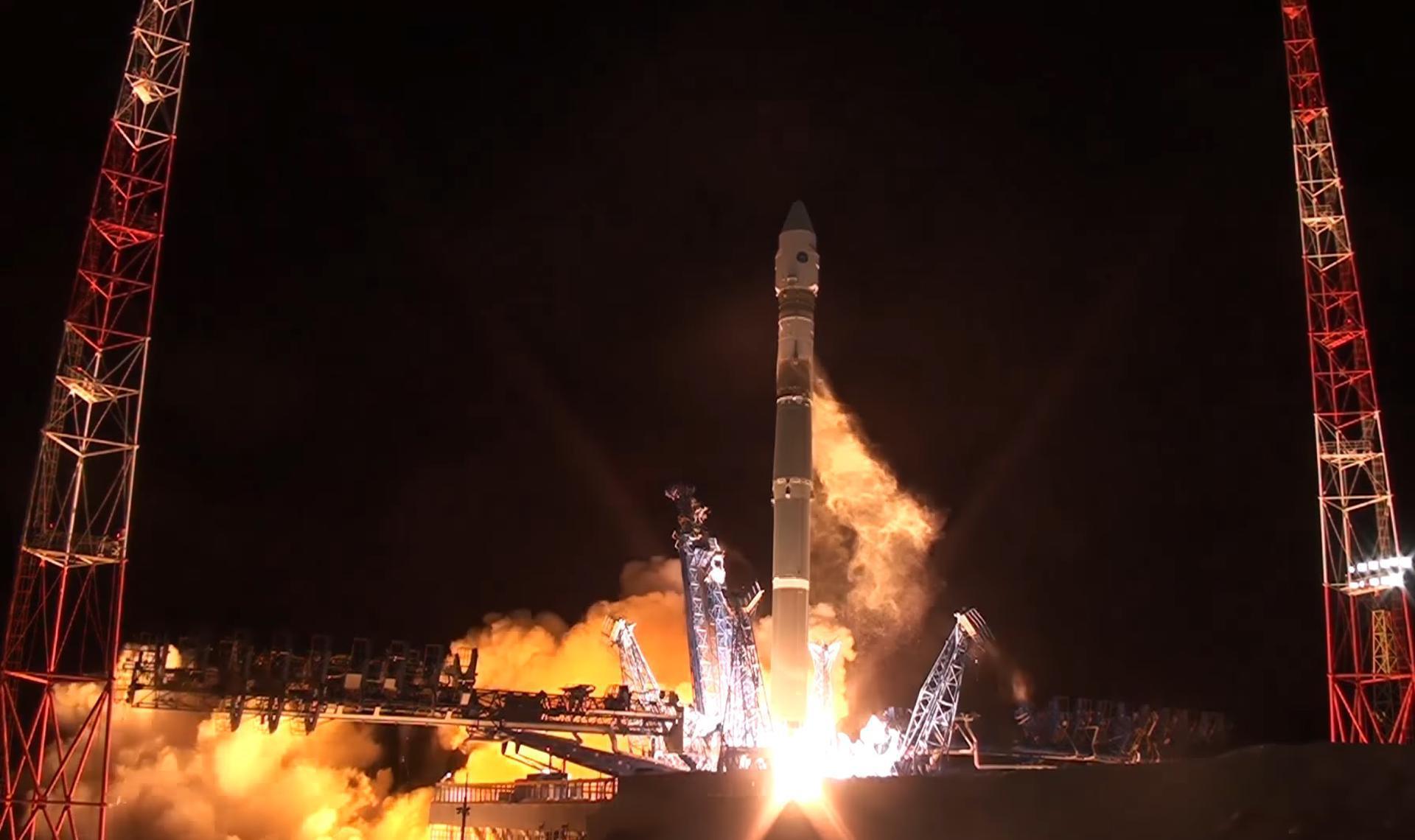
About the Soyuz FG
Soyuz FG
The Soyuz FG is a Russian medium-lift orbital launch vehicle operated primarily by Roscosmos (the Russian Federal Space Agency) and its predecessors, including the Soviet Space Program and the Russian Space Forces. Manufactured by the Samara-based Progress Rocket Space Centre, it represents one of the most refined variants of the legendary Soyuz rocket family — a lineage stretching back to the R-7 intercontinental ballistic missile of the 1950s and widely regarded as the most flown rocket family in spaceflight history.
Design and Capabilities
Standing 49.5 metres tall with a core diameter of 3 metres, the Soyuz FG follows the classic Soyuz architecture: a central core stage flanked by four tapered strap-on boosters, topped by an upper stage and payload fairing. Its most significant technical distinction from earlier Soyuz variants is the use of upgraded fuel injectors on the first and second stage engines, which improve combustion efficiency and increase reliability compared to the Soyuz U it largely succeeded in crewed flight roles. The vehicle is capable of delivering up to 6,450 kg to low Earth orbit, placing it firmly in the medium-lift category.
Launches are conducted from the Baikonur Cosmodrome in Kazakhstan, the historic facility from which Sputnik and Yuri Gagarin's flight both departed. Baikonur remains closely associated with the Soyuz family and with Russian human spaceflight operations more broadly.
Operational History
Our flight record tracks 96 flights attributed to this vehicle across a remarkably long operational span running from 1966 through 2024 — a figure that reflects the continuity of the broader Soyuz family, of which the FG variant represents a key chapter in the modern era. Of those 96 tracked missions, 93 were successful, with 3 resulting in failure or partial failure, yielding a strong overall reliability record consistent with the Soyuz family's reputation for robustness.
The Soyuz FG became best known for its role as the dedicated launcher of Soyuz crewed spacecraft to the International Space Station. For a period following the retirement of the NASA Space Shuttle in 2011, it served as the sole means of transporting astronauts to and from the ISS, making it an indispensable vehicle in global human spaceflight operations. Recent crewed missions in our record include Soyuz MS-12, Soyuz MS-13, and Soyuz MS-15, all of which carried international crews to the station.
Customers and Recent Missions
The vehicle's top customers — Roscosmos, the Soviet Space Program, and the Russian Space Forces — reflect its dual identity as both a crewed transport workhorse and a government satellite launcher. More recent missions in the tracked data include several Soyuz 2.1v flights carrying Kosmos-series payloads, such as Kosmos 2574, Kosmos 2575, and the Razbeg 1 spacecraft designated Kosmos 2551, indicating the family's continued relevance for Russian military and reconnaissance satellite programs even as the Soyuz FG's crewed role has been transitioned to the newer Soyuz 2.1a variant.
The Soyuz FG's combination of proven heritage, strong reliability, and operational versatility across crewed and uncrewed missions cements its place as one of the most consequential orbital launch vehicles of the modern spaceflight era.
- Feb 09, 2024Soyuz 2.1v | Kosmos 2575Success
- Dec 27, 2023Soyuz 2.1v | Kosmos 2574Success
- Sep 09, 2021Soyuz 2.1v | Razbeg 1 (Kosmos 2551)Success
- Sep 25, 2019Soyuz-FG | Soyuz MS-15Success
- Jul 20, 2019Soyuz-FG | Soyuz MS-13Success
- Mar 14, 2019Soyuz-FG | Soyuz MS-12Success
- Dec 03, 2018Soyuz-FG | Soyuz MS-11Success
- Nov 16, 2018Soyuz-FG | Progress MS-10 (71P)Success
- Oct 11, 2018Soyuz-FG | Soyuz MS-10Failure
- Jun 06, 2018Soyuz-FG | Soyuz MS-09Success
- Mar 29, 2018Soyuz 2.1v | VNIIEM EMKA (Kosmos 2525)Success
- Mar 21, 2018Soyuz-FG | Soyuz MS-08Success
- Dec 17, 2017Soyuz-FG | Soyuz MS-07Success
- Sep 12, 2017Soyuz-FG | Soyuz MS-06Success
- Jul 28, 2017Soyuz-FG | Soyuz MS-05Success
- Apr 20, 2017Soyuz-FG | Soyuz MS-04Success
- Nov 17, 2016Soyuz-FG | Soyuz MS-03Success
- Oct 19, 2016Soyuz-FG | Soyuz MS-02Success
- Jul 07, 2016Soyuz-FG | Soyuz MS (MS-01)Success
- Mar 18, 2016Soyuz FG | Soyuz TMA-20MSuccess
- Dec 15, 2015Soyuz FG | Soyuz TMA-19MSuccess
- Sep 02, 2015Soyuz FG | Soyuz TMA-18MSuccess
- Jul 22, 2015Soyuz-FG | Soyuz TMA-17MSuccess
- Mar 27, 2015Soyuz FG | Soyuz TMA-16MSuccess
- Nov 23, 2014Soyuz FG | Soyuz TMA-15MSuccess
- Sep 25, 2014Soyuz FG | Soyuz TMA-14MSuccess
- May 28, 2014Soyuz FG | Soyuz TMA-13MSuccess
- Mar 25, 2014Soyuz FG | Soyuz TMA-12MSuccess
- Nov 07, 2013Soyuz FG | Soyuz TMA-11MSuccess
- Sep 25, 2013Soyuz FG | Soyuz TMA-10MSuccess
- May 28, 2013Soyuz FG | Soyuz TMA-09MSuccess
- Mar 28, 2013Soyuz FG | Soyuz TMA-08MSuccess
- Dec 19, 2012Soyuz FG | Soyuz TMA-07MSuccess
- Oct 23, 2012Soyuz FG | Soyuz TMA-06MSuccess
- Jul 15, 2012Soyuz FG | Soyuz TMA-05MSuccess
- May 15, 2012Soyuz FG | Soyuz TMA-04MSuccess
- Dec 21, 2011Soyuz FG | Soyuz TMA-03MSuccess
- Nov 14, 2011Soyuz-FG | Soyuz TMA-22Success
- Jun 07, 2011Soyuz FG | Soyuz TMA-02MSuccess
- Apr 04, 2011Soyuz FG | Soyuz TMA-21Success
- Dec 15, 2010Soyuz FG | Soyuz TMA-20Success
- Oct 07, 2010Soyuz-FG | Soyuz TMA-01MSuccess
- Jun 15, 2010Soyuz FG | Soyuz TMA-19Success
- Apr 02, 2010Soyuz FG | Soyuz TMA-18Success
- Dec 20, 2009Soyuz-FG | Soyuz TMA-17Success
- Sep 30, 2009Soyuz-FG | Soyuz TMA-16Success
- May 27, 2009Soyuz-FG | Soyuz TMA-15Success
- Mar 26, 2009Soyuz-FG | Soyuz TMA-14Success
- Oct 12, 2008Soyuz-FG | Soyuz TMA-13Success
- Apr 08, 2008Soyuz-FG | Soyuz TMA-12Success
- Oct 10, 2007Soyuz-FG | Soyuz TMA-11Success
- Apr 07, 2007Soyuz-FG | Soyuz TMA-10Success
- Sep 18, 2006Soyuz-FG | Soyuz TMA-9Success
- Mar 30, 2006Soyuz-FG | Soyuz TMA-8Success
- Oct 01, 2005Soyuz-FG | Soyuz TMA-7Success
- Apr 15, 2005Soyuz-FG | Soyuz TMA-6Success
- Oct 14, 2004Soyuz-FG | Soyuz TMA-5Success
- Apr 19, 2004Soyuz-FG | Soyuz TMA-4Success
- Oct 18, 2003Soyuz-FG | Soyuz TMA-3Success
- Apr 26, 2003Soyuz-FG | Soyuz TMA-2Success
- Oct 30, 2002Soyuz-FG | Soyuz TMA-1Success
- Sep 25, 2002Soyuz-FG | Progress M1-9Success
- Nov 26, 2001Soyuz-FG | Progress M1-7Success
- May 20, 2001Soyuz-FG | Progress M1-6Success
- Oct 14, 1976Soyuz | Soyuz 23Success
- Jul 06, 1976Soyuz | Soyuz 21Success
- May 24, 1975Soyuz | Soyuz 18Success
- Apr 05, 1975Soyuz | Soyuz 7K-T No.39 (Soyuz 18a / Soyuz 18-1)Failure
- Jan 10, 1975Soyuz | Soyuz 17Success
- Aug 26, 1974Soyuz | Soyuz 15Success
- Jul 03, 1974Soyuz | Soyuz 14Success
- May 27, 1974Soyuz | Kosmos 656Success
- Dec 18, 1973Soyuz | Soyuz 13Success
- Nov 30, 1973Soyuz | Kosmos 613Success
- Sep 27, 1973Soyuz | Soyuz 12Success
- Jun 15, 1973Soyuz | Kosmos 573Success
- Jun 26, 1972Soyuz | Kosmos 496Success
- Jun 06, 1971Soyuz | Soyuz 11Success
- Apr 22, 1971Soyuz | Soyuz 10Success
- Jun 01, 1970Soyuz | Soyuz 9Success
- Oct 13, 1969Soyuz | Soyuz 8Success
- Oct 12, 1969Soyuz | Soyuz 7Success
- Oct 11, 1969Soyuz | Soyuz 6Success
- Jan 15, 1969Soyuz | Soyuz 5Success
- Jan 14, 1969Soyuz | Soyuz 4Success
- Oct 26, 1968Soyuz | Soyuz 3Success
- Oct 25, 1968Soyuz | Soyuz 2Success
- Aug 28, 1968Soyuz | Kosmos 238Success
- Apr 15, 1968Soyuz | Kosmos 213Success
- Apr 14, 1968Soyuz | Kosmos 212Success
- Oct 30, 1967Soyuz | Kosmos 188Success
- Oct 27, 1967Soyuz | Kosmos 186Success
- Apr 23, 1967Soyuz | Soyuz 1Success
- Feb 07, 1967Soyuz | Kosmos 140Success
- Dec 14, 1966Soyuz | Soyuz 7K-OK No.1Failure
- Nov 28, 1966Soyuz | Kosmos 133Success