SLV-3
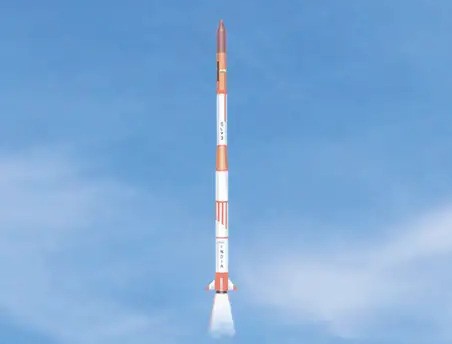
About the SLV-3
SLV-3
The SLV-3 (Satellite Launch Vehicle 3) is an Indian orbital launch vehicle developed and operated by the Indian Space Research Organisation (ISRO). A four-stage, solid-fueled rocket standing 22 metres tall with a diameter of 1 metre, it holds a significant place in spaceflight history as India's first rocket to successfully deliver a satellite to orbit. The vehicle was capable of lifting approximately 40 kilograms to low Earth orbit.
Development and Background
The SLV-3 was conceived in the early 1970s as a technology demonstrator, intended to give India indigenous capability in orbital rocketry. The programme was led by A. P. J. Abdul Kalam, who later became one of India's most celebrated scientists and a former President of the country. Development of the vehicle required ISRO to master guidance systems, solid propulsion, and vehicle integration largely through domestic research and engineering. Launches were conducted from the Satish Dhawan Space Centre (then known as the Sriharikota Range) on the southeastern coast of India.
Flight History
Our records capture four flights of the SLV-3 between 1979 and 1983, of which three were successful and one was a failure or partial failure. The vehicle's payloads were exclusively members of the Rohini satellite series, all operated by ISRO.
The first tracked mission, SLV-3 | Rohini 1A, is associated with the programme's initial orbital attempt in 1979, which ended in failure when the payload did not reach a stable orbit. The subsequent flight, SLV-3 | Rohini 1B, achieved orbit successfully in 1980, making India only the seventh country in the world to independently launch a satellite. This milestone was followed by two further successful missions carrying Rohini RS-D-1 and Rohini RS-D-2, which were more capable remote-sensing variants of the Rohini spacecraft. The most recent mission in our records is SLV-3 | Rohini RS-D-2, flown in 1983.
Role and Legacy
Although modest by global standards — its 40 kg payload capacity placed it firmly in the small-lift category — the SLV-3 was never designed for commercial competitiveness. Its true purpose was to establish the foundational knowledge and industrial base that India would need for far more ambitious launch vehicles. The programme directly informed the development of the Augmented Satellite Launch Vehicle (ASLV) and, ultimately, the Polar Satellite Launch Vehicle (PSLV), which became one of the world's most reliable orbital rockets.
The SLV-3's operational life was brief but consequential. Over its four tracked flights, it demonstrated that ISRO could develop, manufacture, and launch an orbital vehicle entirely within India, a capability that has since grown into one of the most active and respected space programmes in the world. The vehicle remains a foundational chapter in the history of Indian spaceflight and a testament to what a determined national space agency can accomplish with limited but focused resources.