Shavit-2
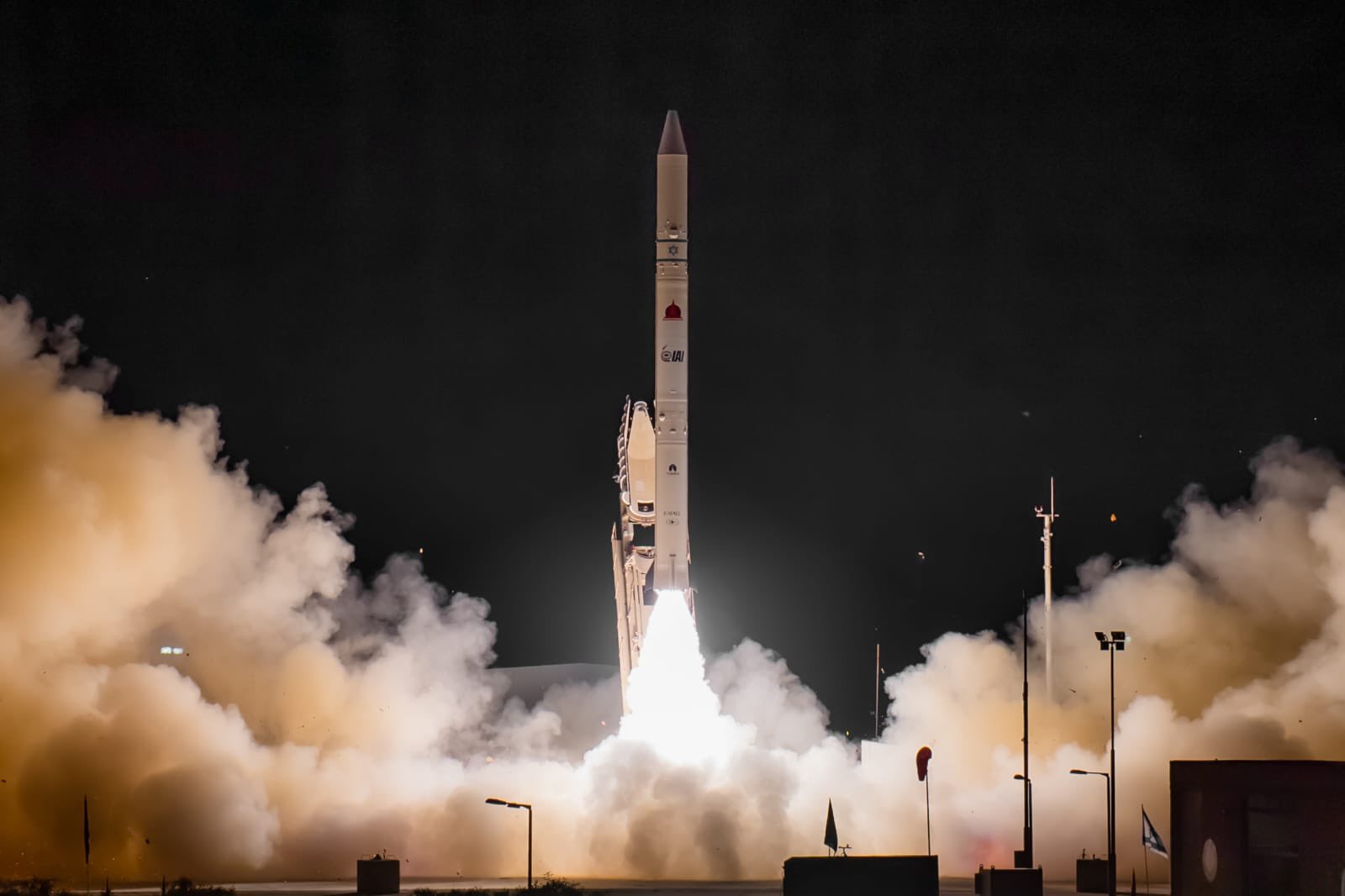
About the Shavit-2
Shavit-2
The Shavit-2 is an Israeli orbital launch vehicle operated by Israel Aerospace Industries (IAI) on behalf of the Israeli Space Agency and Israeli defense establishment. A member of the broader Shavit rocket family, it represents Israel's primary means of placing reconnaissance and Earth-observation satellites into orbit, making Israel one of a small number of nations capable of conducting independent orbital launches.
Background and Development
The Shavit family traces its origins to Israeli ballistic missile technology developed during the 1980s. The Shavit-2 designation reflects an evolved configuration within that lineage, refined to improve reliability and payload performance compared to earlier variants. All known launches take place from Palmachim Airbase on Israel's Mediterranean coast. Because Israel cannot safely fly eastward over neighboring countries, Shavit-2 launches westward — against Earth's rotation — into a retrograde orbit, a trajectory that imposes a significant performance penalty but is a well-established feature of all Israeli orbital missions.
Flight Record
According to tracked flight data, the Shavit-2 has conducted 11 flights spanning 1995 to 2025, recording 9 successes and 2 failures or partial failures. This places its overall success rate in a range broadly comparable to other small, infrequently-flown national launch vehicles, though the relatively low launch cadence means each mission carries considerable strategic weight for Israel's space program.
The vehicle's manifest is dominated by the Ofeq/Ofek series of satellites — compact, high-resolution optical reconnaissance spacecraft operated by the Israeli military and intelligence community. Recent missions documented in the flight record include Ofek-19, Ofek-13, Ofek-16, Ofeq-11, Ofeq-10, and Ofek-9, illustrating a sustained pattern of roughly one launch every few years as successive generations of imagery satellites are replenished or upgraded. The spelling variation between "Ofeq" and "Ofek" (both transliterations of the Hebrew word for "horizon") appears across different missions without reflecting any change in the program itself.
Role and Significance
The Shavit-2 occupies a strategically important but operationally narrow niche in the global launch market. Its customer base is essentially limited to Israeli government and defense clients — chiefly IAI itself as the satellite manufacturer, alongside the Israeli Space Agency — and there is no documented history of commercial third-party payloads. This distinguishes it sharply from most other active launch vehicles, which pursue broader commercial markets.
For Israel, however, the vehicle's value is primarily sovereign and strategic rather than commercial. The ability to independently place reconnaissance satellites into orbit without reliance on foreign launch providers has long been a stated priority of Israeli defense policy, and the Shavit-2's continued operation through 2025 underscores the enduring importance of that capability.
Operator
Israel Aerospace Industries, the country's largest defense contractor and aerospace manufacturer, serves as both the developer of the Shavit-2 and the primary builder of the Ofeq/Ofek satellite series it carries. The Israeli Space Agency, operating under the Ministry of Innovation, Science and Technology, provides institutional oversight of Israel's civil and national space activities, including participation in Shavit-2 missions.
- Sep 02, 2025Shavit-2 | Ofek-19Success
- Mar 28, 2023Shavit-2 | Ofek-13Success
- Jul 06, 2020Shavit-2 | Ofek-16Success
- Sep 13, 2016Shavit-2 | Ofeq-11Success
- Apr 09, 2014Shavit-2 | Ofeq-10Success
- Jun 22, 2010Shavit-2 | Ofek-9Success
- Jun 10, 2007Shavit-2 | Ofeq-7Success
- Sep 06, 2004Shavit-2 | Ofeq-6Failure
- May 28, 2002Shavit-2 | Ofeq-5Success
- Jan 22, 1998Shavit-2 | Ofeq-4Failure
- Apr 05, 1995Shavit-2 | Ofeq-3Success