Qased
About the Qased
Qased
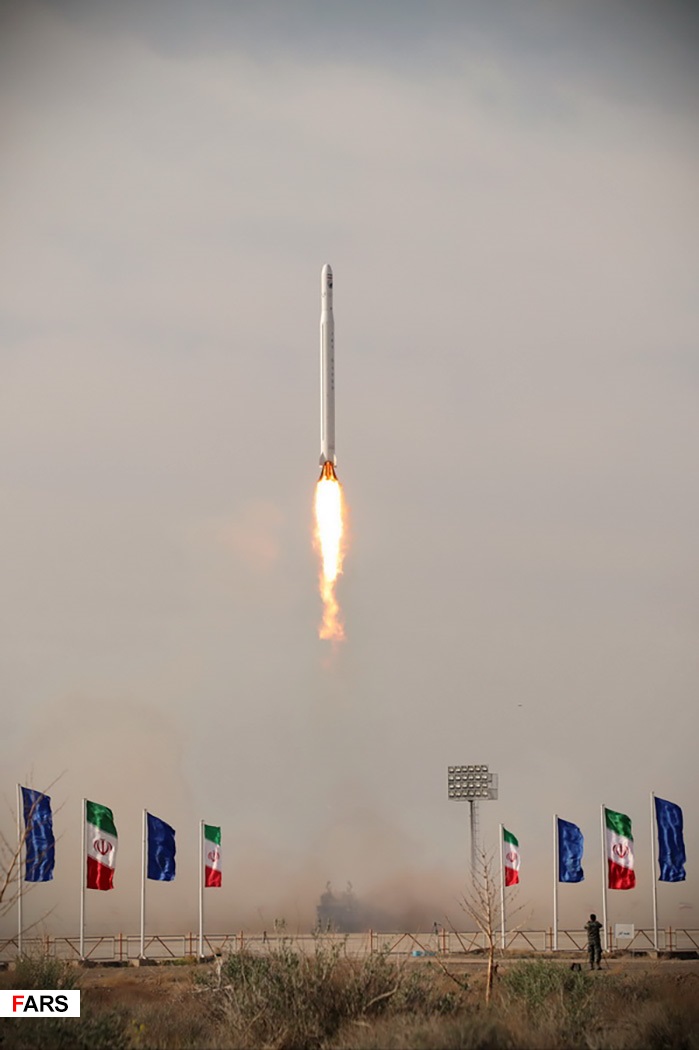
The Qased (meaning "Messenger" in Persian) is an Iranian small orbital launch vehicle operated by the Islamic Revolutionary Guard Corps (IRGC) Aerospace Force. It represents Iran's first domestically developed rocket to place a military reconnaissance satellite into orbit, and its debut in 2020 marked a significant milestone in the country's space launch history.
Development and Design
Qased is understood to be a two-stage vehicle, combining a liquid-fueled first stage derived from Iranian ballistic missile technology with a solid-fueled upper stage known as Salman. The rocket has a diameter of 1.25 meters, making it a relatively compact launcher suited to the niche of very small payloads. With a payload capacity of approximately 50 kg to low Earth orbit (LEO), Qased is firmly in the category of light microsatellite launchers, designed to deliver small intelligence-gathering satellites rather than heavier commercial or scientific payloads.
The vehicle is launched from the Shahroud Space Center in northeastern Iran, a facility operated by the IRGC rather than the civilian Iranian Space Agency. This operational separation underscores the distinctly military character of the Qased program.
Flight History
Our tracking data records three flights of the Qased, all conducted successfully, spanning the years 2020 through 2023. All three missions were dedicated to the Noor ("Light") series of military imaging satellites for the IRGC, making that organization the vehicle's sole confirmed customer.
The inaugural flight, Qased | Noor, in 2020, attracted significant international attention as it confirmed Iran's capability to independently orbit a military satellite using a purpose-built launcher. Subsequent missions, Qased | Noor-2 and Qased | Noor-3, demonstrated a measured cadence of operations and an unbroken record of mission success, consolidating the program's reliability across its early operational life.
Role and Significance
The Qased program occupies a unique and politically sensitive position in spaceflight history. Its missions have drawn scrutiny from Western governments and international observers who have raised concerns about the overlap between the rocket's underlying technology and Iran's ballistic missile development programs. The United Nations and several nations have questioned whether such launches are consistent with international resolutions governing Iranian missile activity.
From a purely technical standpoint, however, Qased fills a well-defined operational role: providing the IRGC with an indigenous, on-demand pathway to orbit for small reconnaissance satellites. The Noor satellites it has delivered are believed to operate in low Earth orbit and provide the IRGC with independent space-based surveillance capabilities that do not rely on foreign launch services.
Outlook
With a perfect success record across its first three tracked flights and a clear institutional patron in the IRGC Aerospace Force, the Qased appears to be an operationally stable platform for Iran's near-term military small-satellite requirements. Whether the vehicle will evolve toward greater payload capacity or be supplemented by more capable launchers remains to be seen, but its place as the vehicle that inaugurated Iran's military orbital launch capability is already firmly established.