PSLV XL
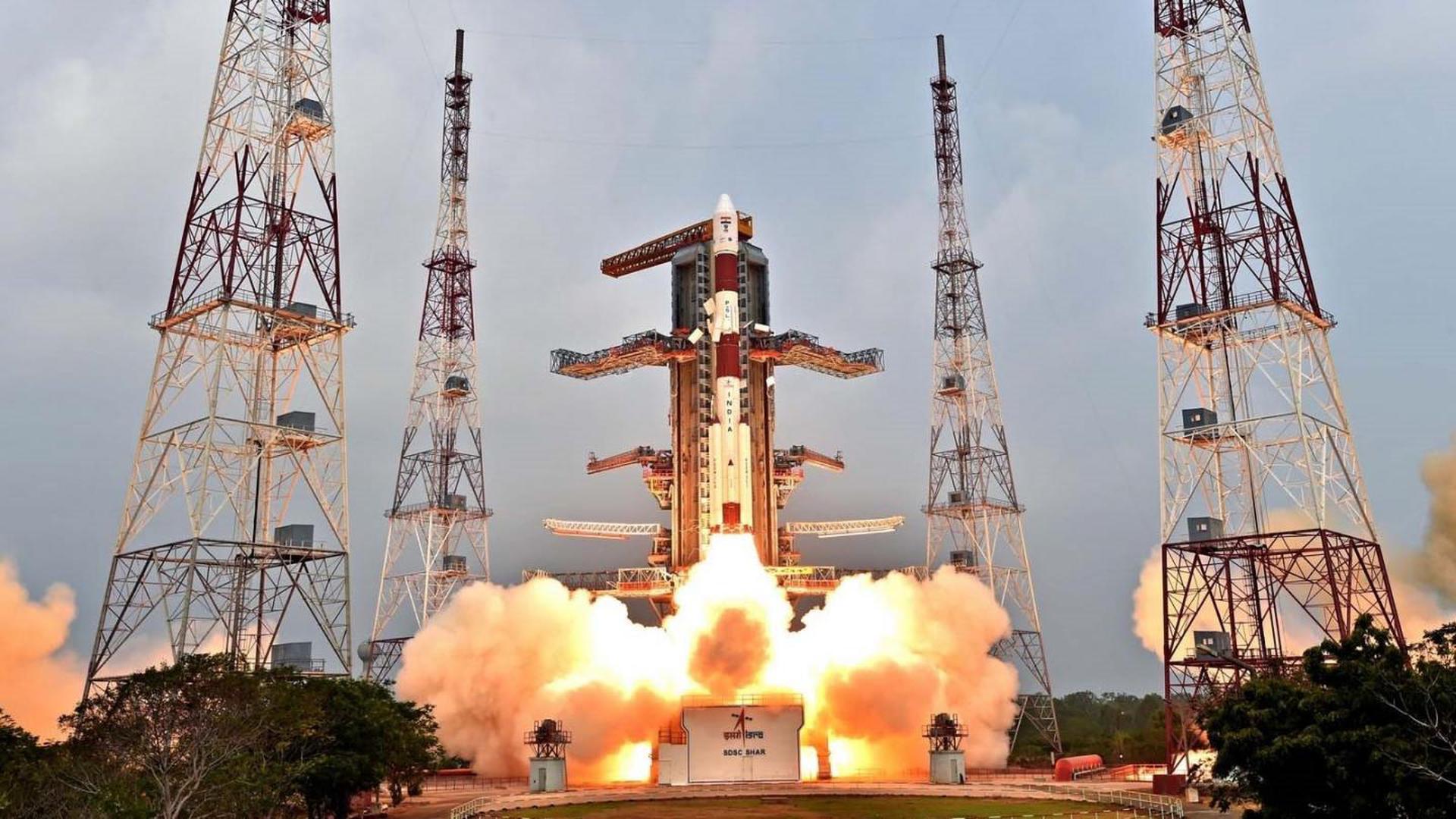
About the PSLV XL
PSLV XL
The PSLV XL is an enhanced variant of India's Polar Satellite Launch Vehicle (PSLV), operated by the Indian Space Research Organisation (ISRO). Standing 44 metres tall with a diameter of 2.8 metres, it represents the most capable configuration of the PSLV family, distinguished by the use of six enlarged strap-on solid rocket boosters that provide significantly greater lift performance than the standard PSLV variant.
Development and Design
The PSLV XL emerged from ISRO's need to deliver heavier payloads—particularly to geosynchronous transfer orbit and high-energy trajectories—without moving to an entirely new vehicle. The "XL" designation refers to its extra-large strap-on boosters, which augment the rocket's four-stage, alternating solid-liquid propulsion architecture. This configuration places it at the top of the PSLV performance ladder, above both the core-alone (PSLV-CA) and standard (PSLV-G) variants. The vehicle launches from the Satish Dhawan Space Centre on Sriharikota Island, off the southeastern coast of India.
Operational History
According to tracked flight data, the PSLV XL has completed 28 flights between 2008 and 2026, achieving 25 successes alongside 2 failures or partial failures — a strong reliability record that reflects the broader maturity of the PSLV programme. Its primary customers have been ISRO itself and Antrix Corporation Limited, the commercial arm of ISRO, underscoring the vehicle's dual role as both a national workhorse and a platform for commercial launch services.
The PSLV XL made its debut with India's first lunar mission and has since been chosen repeatedly for the country's most scientifically significant payloads. Recent missions in the tracked record illustrate the vehicle's versatility: it launched the Aditya-L1 solar observatory toward the Sun-Earth Lagrange point L1, the Proba-3 formation-flying mission for the European Space Agency, and multiple Earth Observation Satellites including EOS-4 (RISAT-1A), EOS-6 (Oceansat-3), and EOS-09 (RISAT-1B), as well as EOS-10 (Oceansat-3A). Several of these missions also carried international rideshare payloads, demonstrating the platform's commercial flexibility.
Role and Significance
The PSLV XL occupies a central place in India's space programme as the vehicle of choice for flagship science and Earth observation missions. Its consistent selection for high-profile payloads — planetary probes, solar science spacecraft, and synthetic aperture radar satellites — reflects the confidence ISRO has built in the platform over nearly two decades of operation. The vehicle has also contributed to India's growing presence in the commercial launch market, offering international customers a reliable and cost-competitive option through Antrix Corporation.
Within the broader history of spaceflight, the PSLV XL stands as a demonstration of how an incremental, evolutionary approach to launch vehicle development can produce a highly dependable system. With flights continuing into 2026, the vehicle remains operationally active and central to ISRO's near-term launch manifest, even as India develops next-generation systems such as the Launch Vehicle Mark-3 (LVM3) for heavier payloads.
- Dec 31, 2026PSLV-XL | EOS-10 (Oceansat-3A)TBD
- Nov 30, 2026PSLV-XL | TDS-01TBD
- May 18, 2025PSLV-XL | EOS-09 (RISAT-1B)Failure
- Dec 05, 2024PSLV-XL | Proba-3Success
- Sep 02, 2023PSLV-XL | Aditya-L1Success
- Nov 26, 2022PSLV-XL | EOS-6 (Oceansat-3) & rideshareSuccess
- Feb 14, 2022PSLV-XL | EOS-4 (RISAT-1A)Success
- Dec 17, 2020PSLV-XL | CMS-01 (GSAT-12R)Success
- Nov 27, 2019PSLV-XL | Cartosat-3 & othersSuccess
- Apr 11, 2018PSLV XL | IRNSS-1ISuccess
- Jan 12, 2018PSLV XL | Cartosat-2F (Cartosat-2S4)Success
- Aug 31, 2017PSLV XL | IRNSS-1HFailure
- Jun 23, 2017PSLV XL | Cartosat-2ESuccess
- Feb 15, 2017PSLV XL | Cartosat-2D & 103 othersSuccess
- Dec 07, 2016PSLV XL | Resourcesat-2ASuccess
- Jun 22, 2016PSLV XL | Cartosat-2C & 19 small satellitesSuccess
- Apr 28, 2016PSLV XL | IRNSS-1GSuccess
- Mar 10, 2016PSLV XL | IRNSS-1FSuccess
- Jan 20, 2016PSLV XL | IRNSS-1ESuccess
- Sep 28, 2015PSLV XL | AstrosatSuccess
- Jul 10, 2015PSLV XL | DMC-3A, DMC-3B, DMC-3C, CBNT-1 & DeOrbitSAILSuccess
- Mar 28, 2015PSLV XL | IRNSS-1DSuccess
- Oct 15, 2014PSLV XL | IRNSS-1CSuccess
- Apr 04, 2014PSLV XL | IRNSS-1BSuccess
- Nov 05, 2013PSLV XL | Mars Orbiter Mission (MOM)Success
- Jul 01, 2013PSLV XL | IRNSS-1ASuccess
- Apr 26, 2012PSLV XL | RISAT-1Success
- Jul 15, 2011PSLV XL | GSAT-12Success
- Oct 22, 2008PSLV XL | Chandrayaan-1Success