PSLV-QL
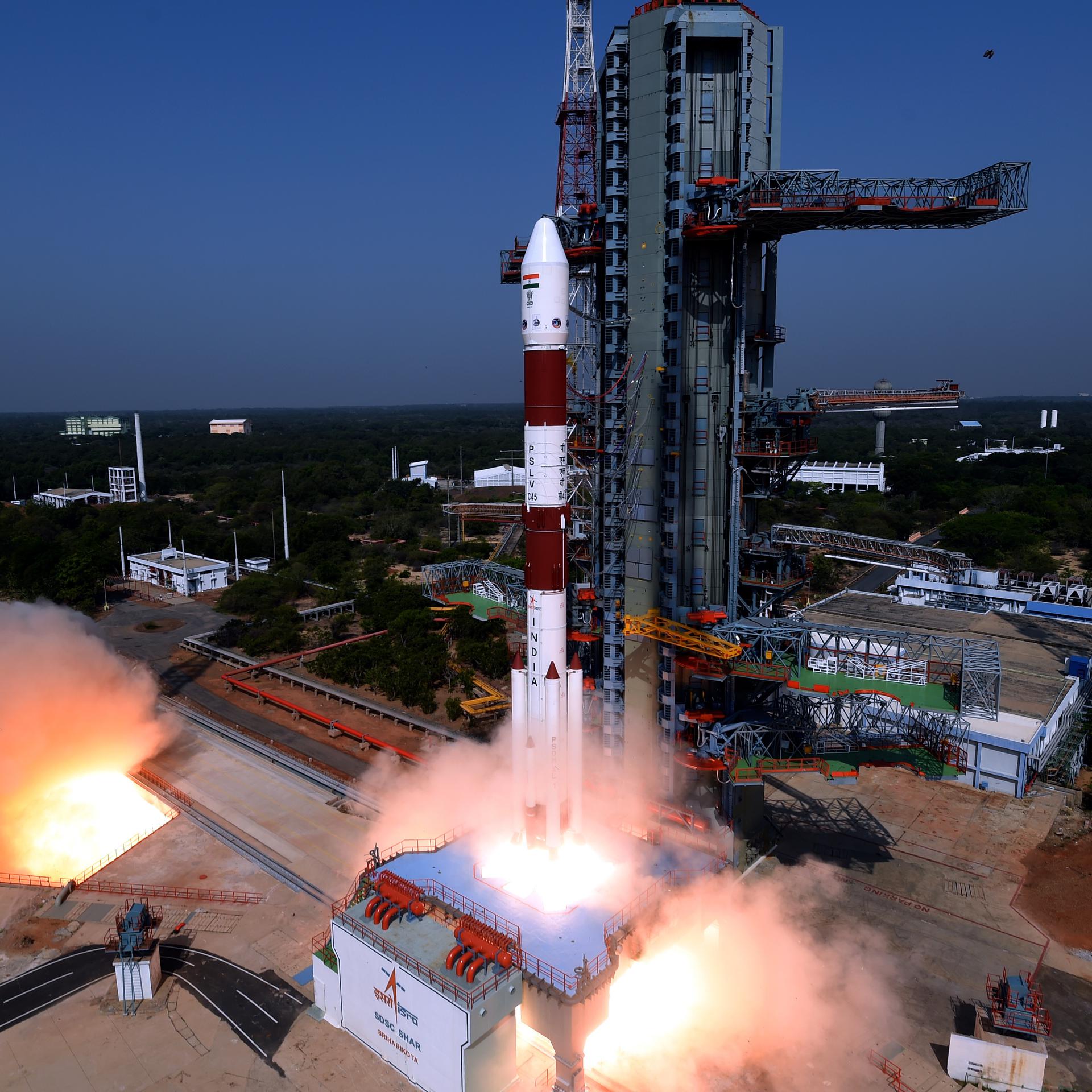
About the PSLV-QL
PSLV-QL
The PSLV-QL is a variant of the Polar Satellite Launch Vehicle (PSLV), operated and manufactured by the Indian Space Research Organisation (ISRO). It represents one of several configurations within the long-established PSLV family, distinguished by the addition of four strap-on solid rocket boosters attached to the first stage — the "QL" designation referring to this quad-booster arrangement. Standing 44 metres tall with a core diameter of 2.8 metres, the vehicle is capable of delivering up to 1,500 kg to low Earth orbit.
Background and Family
The PSLV has been India's workhorse launch vehicle since the 1990s, accumulating one of the strongest reliability records among operational orbital rockets worldwide. ISRO developed the PSLV family to serve a wide range of mission profiles, and over the decades introduced several sub-variants — including the core-alone (PSLV-CA), the standard four-booster (PSLV), the six-booster (PSLV-XL), and the PSLV-QL — to offer flexibility in payload capacity and mission requirements. Launches take place from the Satish Dhawan Space Centre on Sriharikash Island, off the southeastern coast of India.
Configuration
The PSLV-QL sits between the standard and XL variants in terms of lift capability. Its four strap-on boosters provide additional thrust at liftoff compared to the core-alone and standard configurations, making it well suited for heavier payloads or missions requiring a more energetic ascent profile. Like all PSLV variants, it employs an alternating solid-liquid propulsion scheme across four stages, a design philosophy that has proven highly dependable across the broader vehicle family.
Flight Record
The PSLV-QL flew twice, both times successfully, and both missions took place in 2019 — making it a short-lived but fully reliable configuration within the PSLV lineage.
Its first recorded mission, EMISAT & 28 others, demonstrated the variant's ability to serve a multi-satellite deployment role, placing India's EMISAT electronic intelligence satellite alongside a large cluster of international rideshare payloads into orbit. This mission highlighted ISRO's growing commercial launch services capability and the PSLV platform's well-proven multi-payload deployment technology.
The second and final flight, RISAT-2BR1 & others, carried India's RISAT-2BR1 radar imaging satellite — a key national Earth observation asset — along with additional co-passengers. The mission reinforced the PSLV-QL's utility for heavier primary payloads combined with secondary rideshare customers.
Customers and Role
The Indian Space Research Organisation was the top customer for PSLV-QL missions, reflecting the variant's primary role in supporting India's national space programme. However, the rideshare nature of both flights also brought international commercial payloads aboard, consistent with ISRO's commercial launch arm, Antrix Corporation, actively marketing PSLV capacity to global operators during this period.
Legacy
With a perfect two-for-two success rate, the PSLV-QL validated its configuration in both of its flights and contributed to the broader PSLV family's outstanding overall reliability record. Though the variant was only flown in 2019, its missions served strategically significant payloads and demonstrated ISRO's continued competence in multi-satellite deployment — a cornerstone of the agency's commercial and national launch strategy.