PSLV-DL
About the PSLV-DL
PSLV-DL
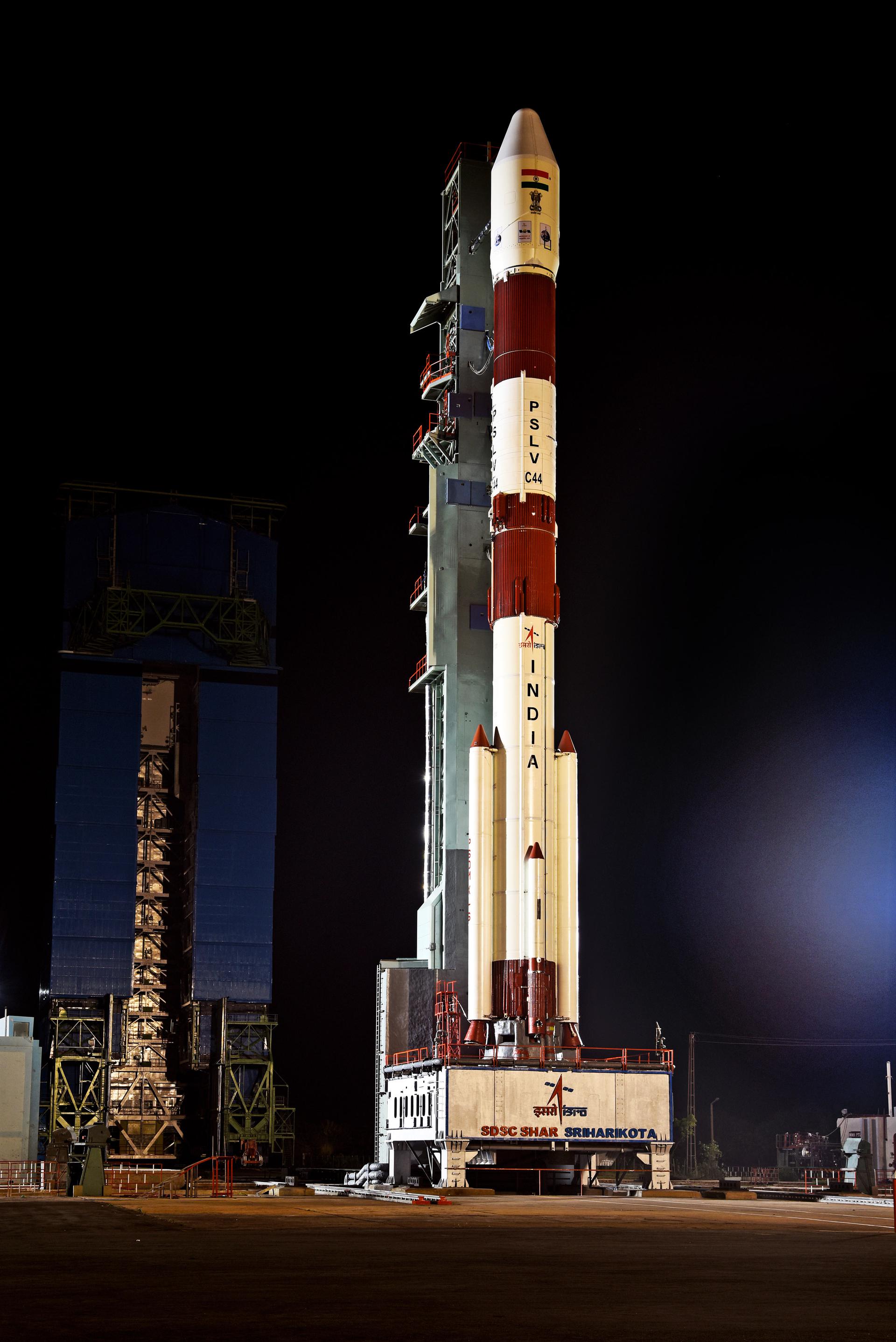
The PSLV-DL is a variant of the Polar Satellite Launch Vehicle (PSLV), operated by the Indian Space Research Organisation (ISRO). It is one of several configurations derived from India's workhorse orbital launch vehicle family, which has served as the backbone of the country's space programme since the 1990s. PSLV rockets are manufactured and launched by ISRO, typically lifting off from the Satish Dhawan Space Centre on Sriharikota Island, off the eastern coast of India.
Configuration and Capability
The PSLV-DL is distinguished by its use of two strap-on solid rocket boosters, placing it between the stripped-down PSLV-CA (Core Alone) and the more powerful PSLV-XL, which carries six boosters. This intermediate configuration allows the DL variant to balance payload performance with mass-to-orbit flexibility. Standing 44 metres tall with a diameter of 2.8 metres, the vehicle follows the classic four-stage PSLV architecture, alternating between solid and liquid propulsion stages. It is capable of delivering up to 3,800 kg to low Earth orbit and up to 1,200 kg to geostationary transfer orbit, making it well suited to a broad range of government and institutional missions.
Flight History
According to tracked flight records, the PSLV-DL has conducted five flights between 2019 and 2026, recording four successes and one failure or partial failure. This reliability profile is broadly consistent with the wider PSLV family's reputation as one of the world's more dependable small-to-medium launch vehicles.
The variant made its debut with the Microsat-R mission, a dedicated defence technology demonstration flight. It subsequently launched the EOS-01 (RISAT-2BR2) Earth observation satellite, followed by the multi-satellite Amazonia 1 & 18 others mission, which included a Brazilian primary payload alongside a cluster of co-manifested smallsats. The XPoSat mission, India's first dedicated X-ray polarimetry observatory, flew on the PSLV-DL as well, underscoring the variant's use for high-profile scientific payloads. The most recent tracked mission, EOS-N1, continues the vehicle's role supporting ISRO's Earth observation programme.
Role and Customers
The Indian Space Research Organisation is the dominant — and by tracked record, essentially the sole — customer for the PSLV-DL, consistent with its design as a national-capability vehicle serving India's strategic, scientific, and Earth observation needs. The missions flown span defence reconnaissance, environmental monitoring, astrophysics, and international cooperation, reflecting the breadth of ISRO's mandate.
Context Within the PSLV Family
The PSLV family as a whole is regarded as one of the most successful launch vehicle lineages in Asian spaceflight history, with a strong cumulative launch record spanning several decades. The DL variant occupies a focused niche within that family, offering more lift than the Core Alone version without the full complexity of the XL configuration. Its continued use into the mid-2020s demonstrates ISRO's confidence in the platform as a reliable medium for missions that fall within its performance envelope.