PSLV-CA
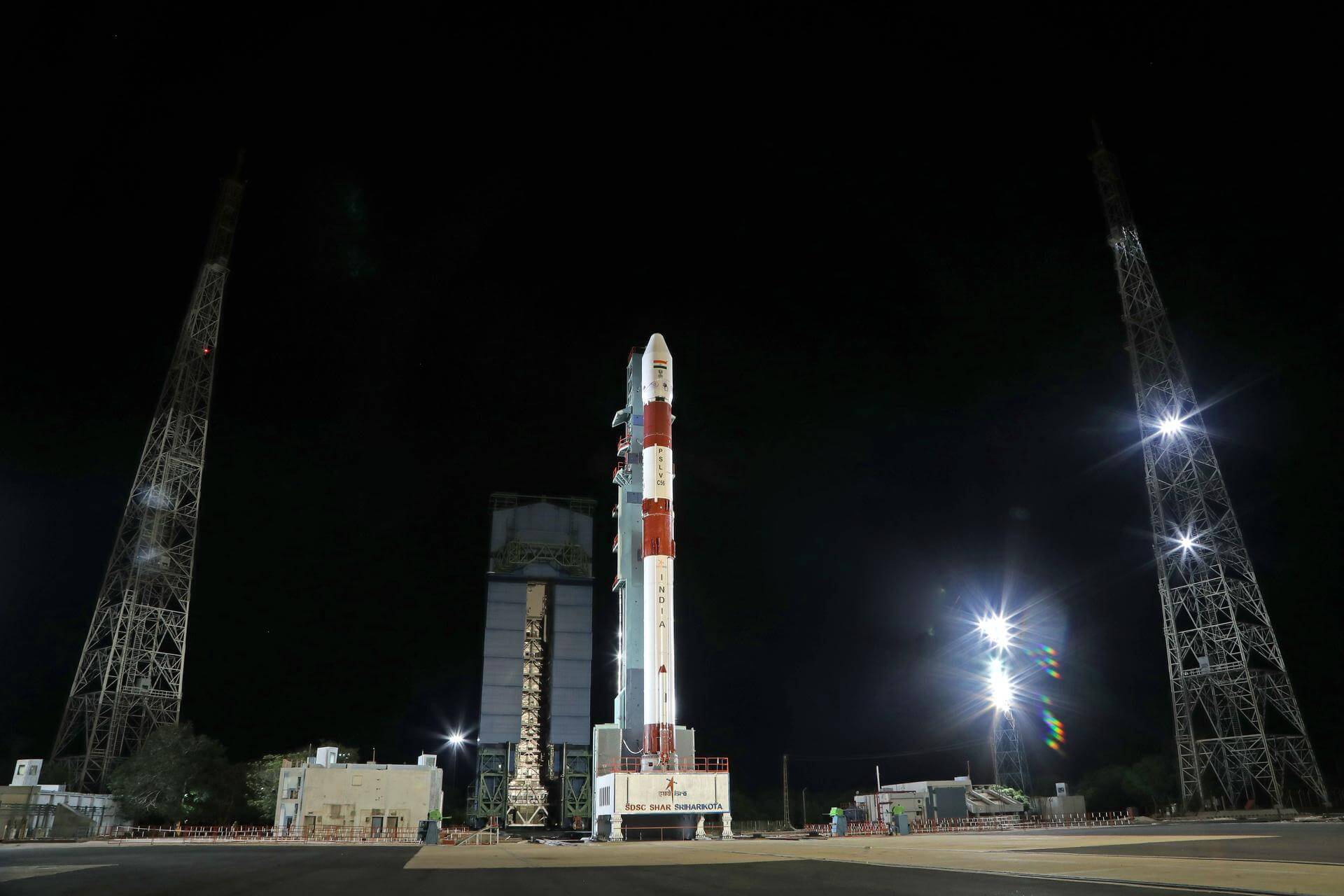
About the PSLV-CA
PSLV-CA
The PSLV-CA (Polar Satellite Launch Vehicle – Core Alone) is an Indian orbital launch vehicle operated by the Indian Space Research Organisation (ISRO) and marketed commercially through Antrix Corporation Limited. It is a streamlined variant of the workhorse PSLV family, distinguished by the removal of the six strap-on solid rocket boosters used on the standard PSLV configuration, resulting in a lighter and more cost-efficient vehicle suited to smaller payloads and dedicated commercial missions.
Overview
Standing 44 metres tall with a diameter of 2.8 metres, the PSLV-CA shares the same four-stage, alternating solid-liquid propulsion architecture as the broader PSLV family. It is capable of delivering up to 3,800 kg to low Earth orbit (LEO) and 1,200 kg to geostationary transfer orbit (GTO). Launches take place from the Satish Dhawan Space Centre on Sriharikota Island, off India's southeastern coast.
The PSLV family as a whole is one of the most reliable and historically significant launch vehicle lineages in Asia, having enabled India's planetary missions, Earth observation programs, and a thriving commercial small-satellite launch business. The Core Alone variant carved out a particular niche as a lean, flexible option for missions that do not require the full performance of the boosted PSLV-XL configuration.
Flight History
Our records show 33 tracked flights of the PSLV-CA spanning an active period from 1993 to 2027, with 28 successes and 2 failures or partial failures — a strong reliability record consistent with the broader PSLV family's reputation. The vehicle has served both national and international customers across its operational lifetime.
ISRO has used the PSLV-CA extensively for strategic national missions, including Earth observation and technology demonstration programs. Antrix Corporation, ISRO's commercial arm, has leveraged the vehicle to attract international payloads, making the PSLV-CA a familiar presence in the global smallsat launch market.
Notable Missions
Recent missions in our records highlight the vehicle's continued relevance. The SPADEX (Space Docking Experiment) mission demonstrated advanced rendezvous and docking technology, marking a significant milestone in India's human spaceflight and on-orbit servicing ambitions. The DS-SAR and TeLEOS-2 missions, operated for Singaporean customers, reflect the vehicle's sustained commercial appeal. RISAT-2A represents its role in supporting Indian radar Earth observation capabilities, while TDS-01 served as a technology demonstration flight. The ISSA-J1 mission further illustrates the diversity of payloads the vehicle has accommodated.
Significance
The PSLV-CA occupies an important place in the story of India's rise as a spacefaring nation. Its combination of reliability, adaptability, and competitive pricing made it a preferred choice for international commercial rideshare customers at a time when the smallsat market was expanding rapidly. By offering a stripped-down configuration without sacrificing core performance, ISRO demonstrated a pragmatic approach to launch vehicle design — maximizing utility while managing cost. The vehicle's long operational lifespan and consistent track record cement its status as one of the defining workhorses of early 21st-century commercial spaceflight in Asia.
- Jun 30, 2027PSLV-CA | ISSA-J1TBD
- Dec 31, 2026PSLV | RISAT-2ATBD
- Dec 31, 2026PSLV | ConnectedCosmosTBD
- Dec 30, 2024PSLV-CA | SPADEX (Space Docking Experiment)Success
- Jul 30, 2023PSLV-CA | DS-SARSuccess
- Apr 22, 2023PSLV-CA | TeLEOS-2Success
- Jun 30, 2022PSLV-CA | DS-EO & othersSuccess
- May 22, 2019PSLV-CA | RISAT-2BSuccess
- Nov 29, 2018PSLV-CA | HysISSuccess
- Sep 16, 2018PSLV-CA | SSTL-S1 & NovaSAR-SSuccess
- Sep 26, 2016PSLV | SCATSat-1Success
- Dec 16, 2015PSLV-CA | TeLEOS-1Success
- Jun 30, 2014PSLV-CA | SPOT-7, CanX-4, CanX-5, AISat, VELOX-ISuccess
- Feb 25, 2013PSLV-CA | SARALSuccess
- Sep 09, 2012PSLV-CA | SPOT 6 & PROITERESSuccess
- Oct 12, 2011PSLV-CA | Megha-TropiquesSuccess
- Apr 20, 2011PSLV | Resourcesat-2Success
- Jul 12, 2010PSLV-CA | Cartosat-2B, AlSat-2A, StudSat, AISSat-1, TIsat-1Success
- Sep 23, 2009PSLV | Oceansat-2Success
- Apr 20, 2009PSLV | RISAT-2Success
- Apr 28, 2008PSLV | Cartosat 2ASuccess
- Jan 21, 2008PSLV | TECSAR 1Success
- Apr 23, 2007PSLV | AGILESuccess
- Jan 10, 2007PSLV | Cartosat 2 & SRE 1Success
- May 05, 2005PSLV | Cartosat-1Success
- Oct 17, 2003PSLV | ResourcesatSuccess
- Sep 12, 2002PSLV | KALPANA-1Success
- Oct 22, 2001PSLV | TESSuccess
- May 26, 1999PSLV | IRS-P4 & Uribyol-3Success
- Sep 29, 1997PSLV | IRS-1DFailure
- Mar 21, 1996PSLV | IRS-P3Success
- Oct 15, 1994PSLV | IRS-P2Success
- Sep 20, 1993PSLV | IRS-P1Failure