Pegasus XL HAPS
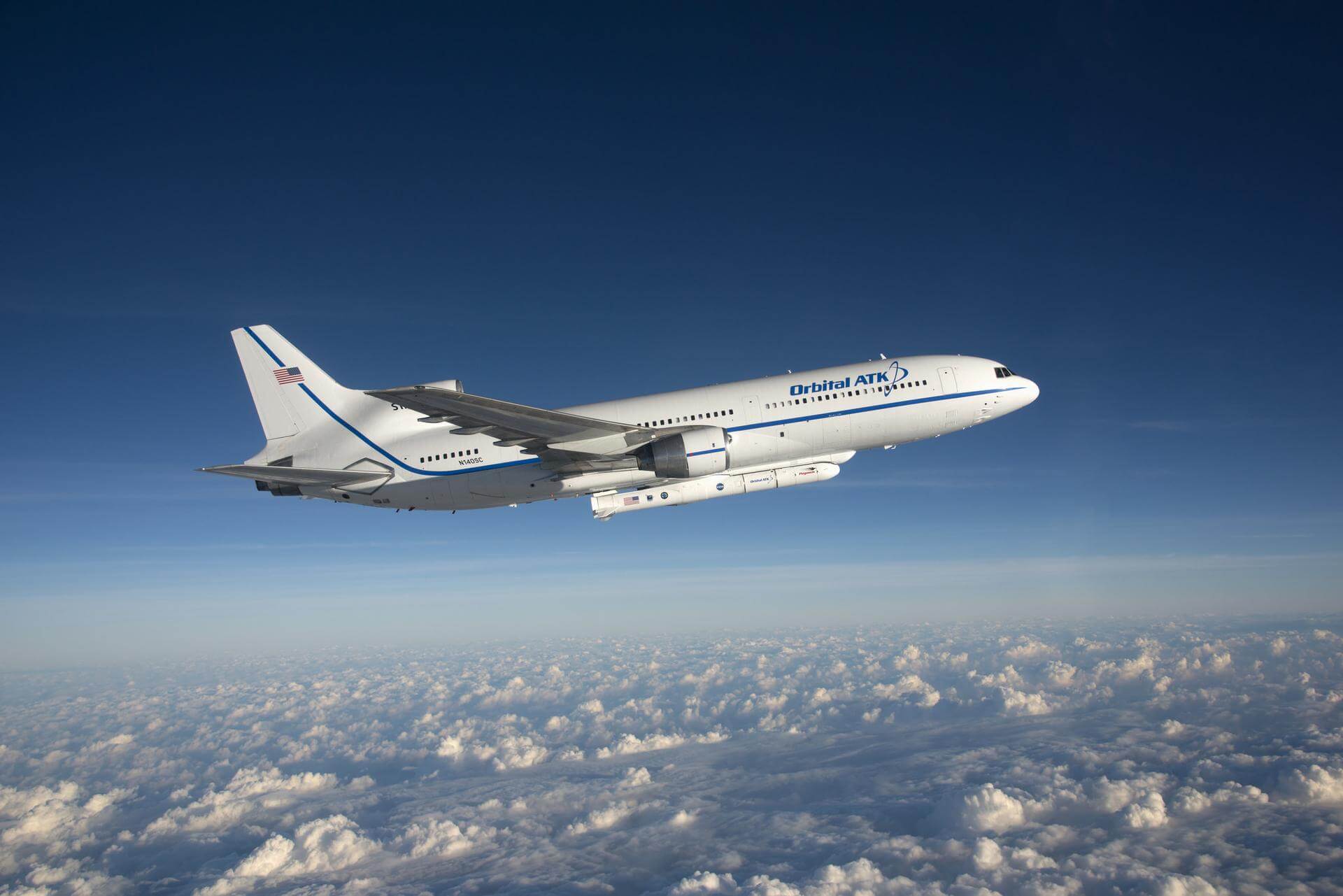
About the Pegasus XL HAPS
Pegasus XL HAPS
The Pegasus XL HAPS is a variant of the air-launched Pegasus XL orbital rocket, developed and operated by Orbital Sciences Corporation (now part of Northrop Grumman). It is a small, winged, solid-fueled launch vehicle designed to deploy lightweight payloads into low Earth orbit, with a rated capacity of 443 kg to LEO. Standing 17.6 meters tall with a diameter of 1.27 meters, the vehicle is carried aloft beneath a modified carrier aircraft before being released at high altitude to begin its powered ascent — a profile that provides flexibility in launch site and orbital inclination.
The "HAPS" designation refers to the Hydrazine Auxiliary Propulsion System, an optional upper stage added to the standard Pegasus XL configuration. HAPS allows for more precise orbital insertion and the ability to perform multiple burns after the main solid-rocket stages have burned out, making it particularly well-suited for deploying payloads into specific circular or fine-tuned orbits. This capability proved especially valuable for constellation deployment missions, where uniform orbital spacing across many satellites is critical.
Role and Operations
The Pegasus XL HAPS was active from 1997 to 1999, during which it compiled a perfect record of five successful flights with no failures or partial failures recorded. All five missions were flown on behalf of Orbital Sciences Corporation itself, reflecting the company's dual role as both the rocket's manufacturer and a major satellite operator during this period.
The vehicle's mission manifest was dominated by the deployment of Orbcomm constellation satellites — a pioneering low Earth orbit communications network designed to provide global data and messaging services. The Pegasus XL HAPS carried batches of eight Orbcomm satellites on three consecutive missions: the Orbcomm-A1 through A8, Orbcomm-B1 through B8, and Orbcomm-C1 through C8 flights, followed by the Orbcomm-D2 through D8 mission. The ability to deploy multiple small satellites in a single launch, precisely spaced across their intended orbits, was a defining application for the HAPS upper stage.
The fifth and final tracked mission, MUBLCOM & TERRIERS, demonstrated the vehicle's versatility by carrying a pair of scientific and experimental satellites rather than commercial constellation hardware. TERRIERS was a NASA-funded ionospheric research satellite, while MUBLCOM was a military communications technology demonstrator, illustrating the Pegasus XL HAPS's appeal across government and commercial customers alike.
Heritage and Significance
The Pegasus family, first flown in 1990, was among the earliest commercially developed orbital launch vehicles and a forerunner of the modern small-launch industry. The XL variant extended the capabilities of the original Pegasus with a lengthened first stage for improved performance. The addition of HAPS elevated that further, enabling the precise multi-satellite deployments that constellation operators of the late 1990s required.
The five-for-five success rate of the Pegasus XL HAPS reflects the maturity the Pegasus program had achieved by the time this variant entered service. Its concentrated burst of operational activity between 1997 and 1999 coincided with the early commercial satellite constellation boom, making it a notable participant in that formative era of commercial spaceflight.