North American X-15
About the North American X-15
North American X-15
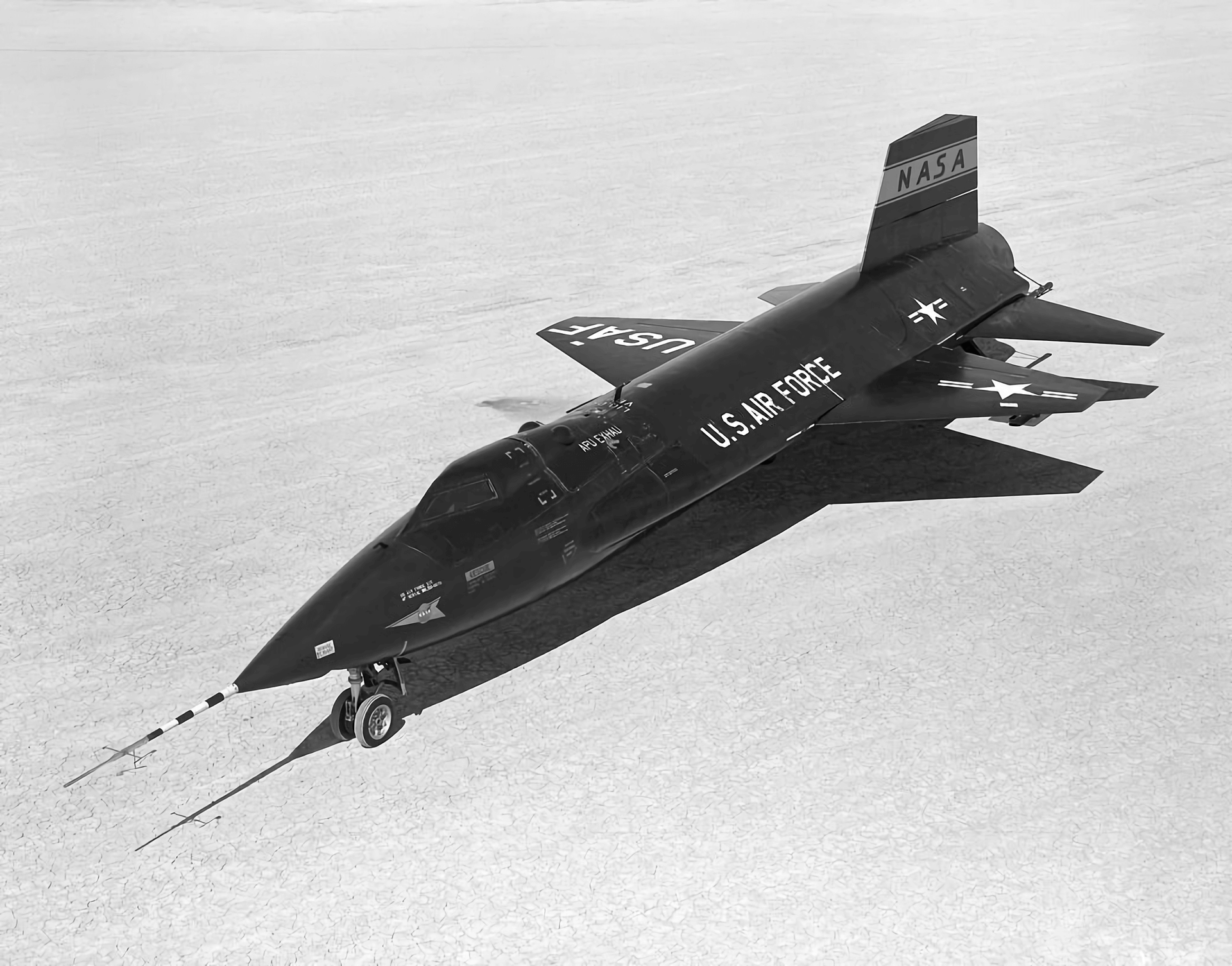
The North American X-15 is a rocket-powered hypersonic research aircraft operated by the United States Air Force in partnership with NASA and the U.S. Navy. Designed and built by North American Aviation, the X-15 occupies a unique place in aerospace history as a crewed, air-launched vehicle that pushed the boundaries of both aviation and spaceflight, reaching the edges of Earth's atmosphere on repeated missions throughout the 1960s.
Design and Configuration
Unlike conventional orbital launch vehicles, the X-15 is a reusable, winged aircraft rather than an expendable rocket stack. It measures 15.47 meters in length with a wingspan of 6.61 meters, giving it a compact, needle-nosed profile optimized for hypersonic flight. The vehicle is carried aloft by a B-52 mothership and released at high altitude before its rocket engine ignites, a launch profile that distinguishes it entirely from ground-launched boosters. Its airframe is constructed largely from a nickel-chromium alloy called Inconel X, chosen to withstand the extreme aerodynamic heating generated at hypersonic speeds.
Role and Mission Profile
The X-15 was conceived as a research platform to gather flight data at speeds and altitudes unreachable by conventional aircraft. Several of its flights exceeded an altitude of 50 miles — the threshold recognized by the U.S. Air Force as the boundary of space — qualifying a number of its pilots for astronaut wings. The vehicle contributed enormous quantities of data on hypersonic aerodynamics, thermal protection, and pilot physiological response, findings that directly informed the development of subsequent crewed spacecraft and the Space Shuttle program.
Flight History
Our tracking records document 13 flights conducted between 1962 and 1968, of which 12 were successful and 1 resulted in a failure or partial success. Recent missions recorded in our database include Flight 197, Flight 191, Flight 190, Flight 174, Flight 153, and Flight 150, reflecting the sustained operational tempo the program maintained across the mid-to-late 1960s. The X-15's total flight program, which began earlier in 1959, ultimately encompassed nearly 200 flights across all program phases, with the records here representing the vehicle's mature operational period.
The United States Air Force stands as the top customer reflected in our data, consistent with the program's primary sponsorship throughout its operational life. Flights were conducted from Edwards Air Force Base in California, using the dry lakebeds of the Mojave Desert as both a launch corridor and a landing strip — the vehicle gliding unpowered to a skid landing after each mission.
Legacy
The X-15 program closed in 1968 following the completion of its research objectives and the shifting of national priorities toward the Apollo program. Its contributions to high-speed flight research remain foundational, and it is widely regarded as one of the most productive experimental aircraft programs in history. The vehicle's combination of reusability, extreme performance, and direct pilot involvement made it a conceptual predecessor to later crewed reusable spacecraft, and its data continues to be referenced in hypersonic research to this day.
- Aug 21, 1968X-15 | Flight 197Success
- Nov 15, 1967X-15 | Flight 191Failure
- Oct 17, 1967X-15 | Flight 190Success
- Nov 01, 1966X-15 | Flight 174Success
- Oct 14, 1965X-15 | Flight 153Success
- Sep 28, 1965X-15 | Flight 150Success
- Aug 10, 1965X-15 | Flight 143Success
- Jun 29, 1965X-15 | Flight 138Success
- Aug 22, 1963X-15 | Flight 91Success
- Jul 19, 1963X-15 | Flight 90Success
- Jun 27, 1963X-15 | Flight 87Success
- Jan 17, 1963X-15 | Flight 77Success
- Jul 17, 1962X-15 | Flight 62Success