New Shepard
About the New Shepard
New Shepard
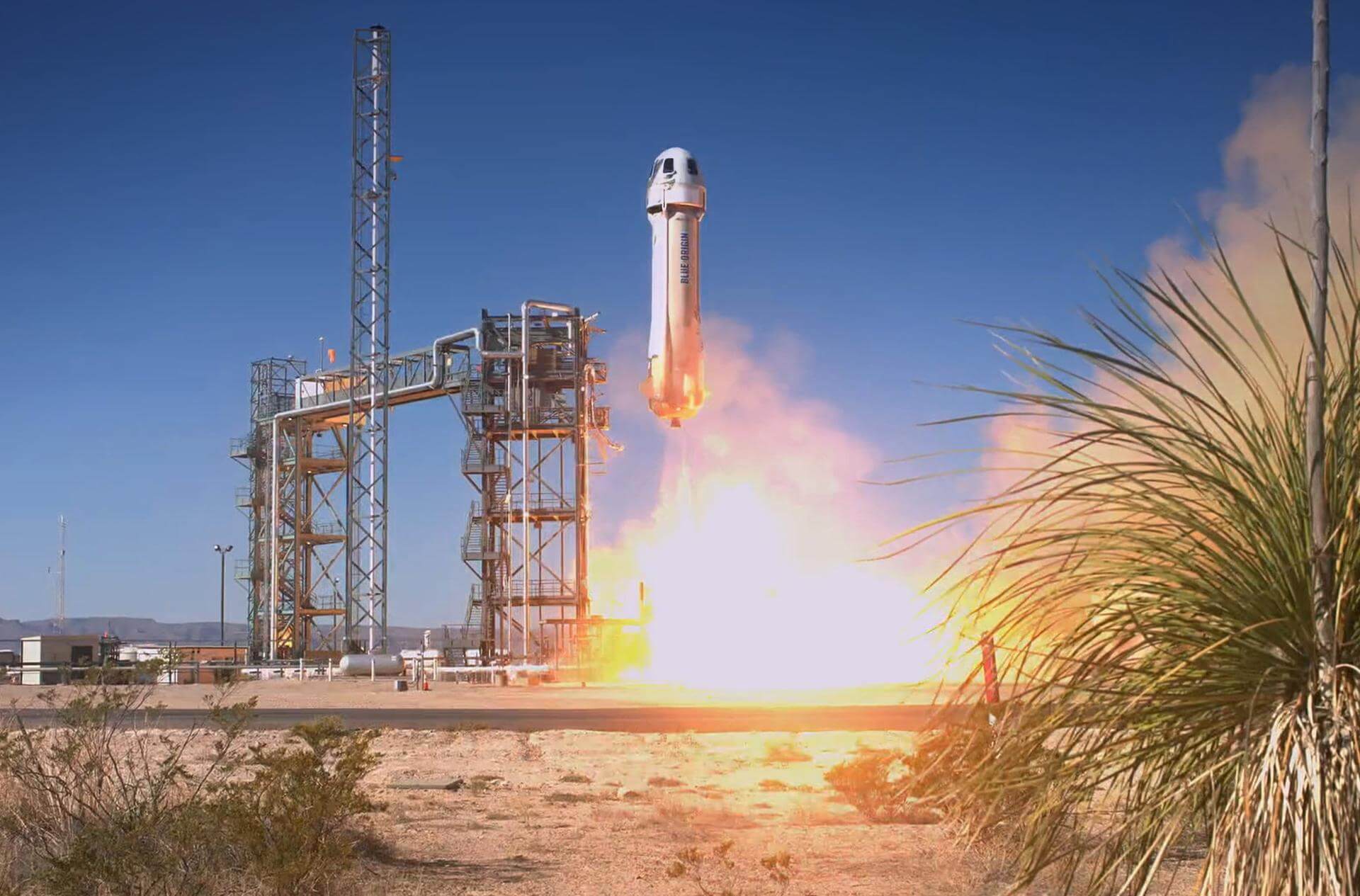
New Shepard is a reusable suborbital launch vehicle designed, built, and operated by Blue Origin, the American aerospace company founded by Jeff Bezos. Named after astronaut Alan Shepard — the first American to fly in space — the vehicle is intended primarily for crewed tourism flights and microgravity research missions, carrying passengers and payloads to altitudes above the Kármán line before returning to Earth.
Design and Configuration
New Shepard follows a vertically integrated, two-element architecture: a reusable booster rocket paired with a pressurized crew capsule. Standing 15 meters tall with a diameter of 3.7 meters, the vehicle is relatively compact by orbital launch standards, a reflection of its suborbital mission profile. Both the booster and the capsule are designed for recovery and reuse — the booster performs a powered vertical landing near its launch site, while the capsule descends under parachutes. This emphasis on reusability is central to Blue Origin's operational philosophy and business model.
Launches take place from Launch Site One in the West Texas desert near Van Horn, a privately owned and operated facility purpose-built by Blue Origin for New Shepard operations.
Role and Significance
New Shepard occupies a distinct niche in the modern launch landscape. Rather than delivering satellites to orbit, it provides brief but genuine spaceflight experiences — passengers experience several minutes of weightlessness and views of Earth against the blackness of space before the capsule returns to the ground. This positions the vehicle at the forefront of the commercial human spaceflight industry, alongside contemporaries such as Virgin Galactic's SpaceShipTwo.
Beyond tourism, the vehicle has carried a wide range of scientific and research payloads for academic institutions, NASA, and other customers, taking advantage of the microgravity environment available during each flight's coast phase.
Flight Record
Our database records 38 New Shepard flights spanning 2015 through 2026, of which 37 are catalogued as successful and one as a failure or partial failure. This reflects a strong overall reliability record across a sustained operational period of more than a decade.
The vehicle's top customer in our records is Blue Origin itself, consistent with the company's practice of using New Shepard for both internal development flights and its own crewed tourism manifest. Recent missions in our database include NS-33, NS-34, NS-35, NS-36, NS-37, and NS-38, indicating a steady operational cadence in the program's mature phase.
Development History
New Shepard's first flight took place in 2015, making it one of the earliest vehicles to demonstrate propulsive vertical booster landing — a milestone Blue Origin achieved ahead of broader industry adoption of the technique. The program progressed through uncrewed test flights before inaugurating crewed commercial operations, with the capsule configured to carry multiple passengers in large observation windows widely described as among the largest ever flown on a spacecraft.
Over its operational life, individual New Shepard boosters have flown multiple times, demonstrating the practical viability of booster reuse in a commercial context and helping to establish operational norms that have informed the broader reusable launch vehicle industry.
- Jan 22, 2026New Shepard | NS-38Success
- Dec 20, 2025New Shepard | NS-37Success
- Oct 08, 2025New Shepard | NS-36Success
- Sep 18, 2025New Shepard | NS-35Success
- Aug 03, 2025New Shepard | NS-34Success
- Jun 29, 2025New Shepard | NS-33Success
- May 31, 2025New Shepard | NS-32Success
- Apr 14, 2025New Shepard | NS-31Success
- Feb 25, 2025New Shepard | NS-30Success
- Feb 04, 2025New Shepard | NS-29Success
- Nov 22, 2024New Shepard | NS-28Success
- Oct 23, 2024New Shepard | NS-27Success
- Aug 29, 2024New Shepard | NS-26Success
- May 19, 2024New Shepard | NS-25Success
- Dec 19, 2023New Shepard | NS-24Success
- Sep 12, 2022New Shepard | NS-23Failure
- Aug 04, 2022New Shepard | NS-22Success
- Jun 04, 2022New Shepard | NS-21Success
- Mar 31, 2022New Shepard | NS-20Success
- Dec 11, 2021New Shepard | NS-19Success
- Oct 13, 2021New Shepard | NS-18Success
- Aug 26, 2021New Shepard | NS-17Success
- Jul 20, 2021New Shepard | NS-16Success
- Apr 14, 2021New Shepard | NS-15Success
- Jan 14, 2021New Shepard | NS-14Success
- Oct 13, 2020New Shepard | NS-13Success
- Dec 11, 2019New Shepard | NS-12Success
- May 02, 2019New Shepard | NS-11Success
- Jan 23, 2019New Shepard | NS-10Success
- Jul 18, 2018New Shepard | NS-9Success
- Apr 29, 2018New Shepard | NS-8Success
- Dec 12, 2017New Shepard | NS-7Success
- Oct 05, 2016New Shepard | NS-6Success
- Jun 19, 2016New Shepard | NS-5Success
- Apr 02, 2016New Shepard | NS-4Success
- Jan 22, 2016New Shepard | NS-3Success
- Nov 23, 2015New Shepard | NS-2Success
- Apr 29, 2015New Shepard | NS-1Success