MOMO v0
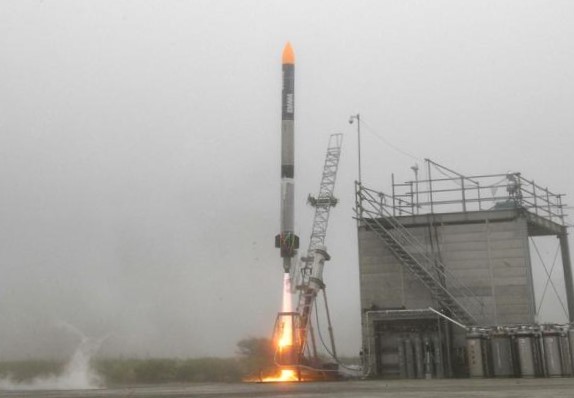
About the MOMO v0
MOMO v0
MOMO v0 is a small experimental sounding rocket developed and operated by Interstellar Technologies, a Japanese private aerospace company headquartered in Taiki, Hokkaido. Designed as a suborbital technology demonstrator, MOMO v0 represents one of the earliest efforts by a Japanese commercial startup to independently develop, test, and launch a liquid-fueled rocket — placing Interstellar Technologies among a pioneering group of private spaceflight companies to emerge outside the United States in the 2010s.
Development and Purpose
MOMO v0 was conceived as a stepping stone toward more capable orbital launch systems. Rather than targeting orbital insertion, the vehicle was intended to reach suborbital altitudes, serving primarily as a platform for testing propulsion systems, flight software, and structural design under real flight conditions. Standing 9.9 meters tall with a diameter of 0.5 meters, the rocket is a slender, single-stage vehicle — compact even by small-launcher standards — reflecting the relatively modest resources of an early-stage commercial operator.
Interstellar Technologies conducted all flights from their private launch facility near Taiki, Hokkaido, making MOMO one of the few rockets in the world to lift off from a privately owned and operated launch site outside of a national range.
Flight History
MOMO v0 flew five times between 2017 and 2020, a campaign that proved both ambitious and demanding. Of those five attempts, only one flight was fully successful, with the remaining four resulting in failures or partial successes. This ratio is not atypical for an early-stage vehicle undergoing iterative development, and each flight yielded engineering data that informed subsequent improvements.
The five missions tracked — the 1st Test Flight, Launch 2, Flight 3, Flight 4, and Flight 5 — trace a progression from initial proof-of-concept attempts through increasingly refined vehicles. Early flights encountered significant anomalies shortly after liftoff or during ascent, while later attempts demonstrated growing reliability. The single successful flight, achieved during this period, marked a historic moment as it represented the first rocket launched to space by a Japanese private company, a milestone widely reported in the aerospace community.
Significance
MOMO v0 occupies a meaningful place in the broader history of commercial spaceflight. Its development unfolded largely in parallel with, and independent of, better-funded Western private launch ventures, demonstrating that small national markets could support homegrown commercial rocketry. For Japan specifically, a country with a well-established government space program under JAXA, the emergence of a private launch operator added a new dimension to the nation's spaceflight ecosystem.
The iterative, flight-test-heavy approach taken by Interstellar Technologies with MOMO v0 — accepting early failures as part of the learning process — mirrors strategies employed by other commercial pioneers worldwide. Though the vehicle's suborbital profile limits its direct commercial utility compared to orbital-class rockets, it served its intended role as a foundation for more advanced systems.
Interstellar Technologies remains the sole customer and operator of all recorded MOMO v0 flights, reflecting the vehicle's status as an internal development program rather than a commercial launch service in the traditional sense.