Molniya-M 2BL
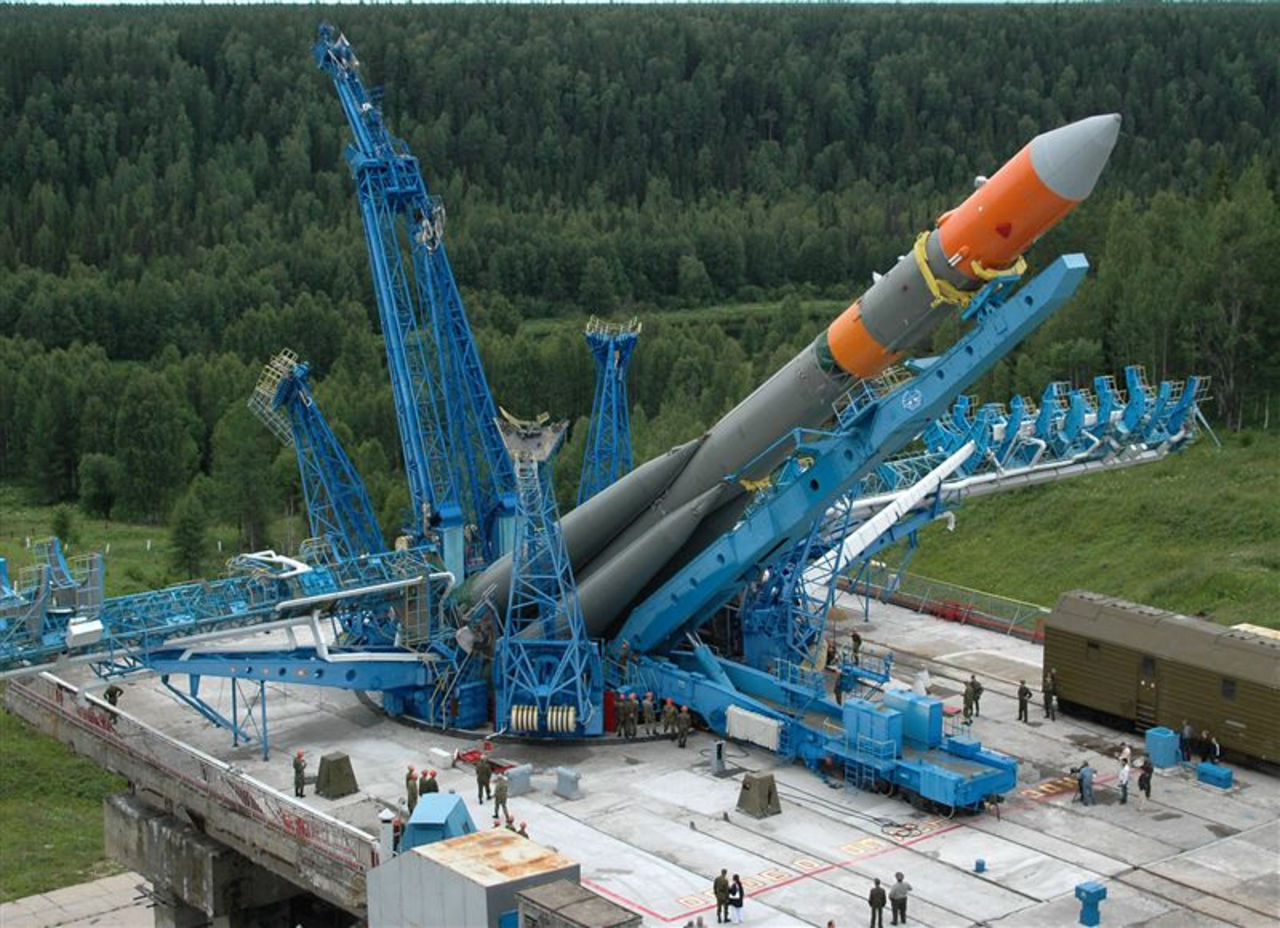
About the Molniya-M 2BL
Molniya-M 2BL
The Molniya-M 2BL is a Soviet and Russian orbital launch vehicle derived from the venerable Molniya rocket family, operated primarily by the Soviet Space Program and, following the dissolution of the USSR, by the Russian Space Forces and associated entities including the Progress Rocket Space Center. It represents a specialized upper-stage configuration of the Molniya-M booster, designed principally to place payloads into the highly elliptical Molniya orbit — a trajectory particularly well-suited to communications and early-warning satellites serving high-latitude regions such as Russia's northern territories.
Origins and Design
The Molniya rocket family traces its lineage to the R-7 intercontinental ballistic missile, the same foundational design that produced the Sputnik and Vostok launch vehicles. The 2BL upper stage configuration distinguishes this variant from other members of the Molniya-M family, equipping it with an additional propulsive stage that enables the energy demands of reaching Molniya and related high-apogee orbits. Launches took place from Plesetsk Cosmodrome in northern Russia, the primary site for military and strategic space launches during the Soviet era and into the post-Soviet period.
Flight Record
Our tracking data records 272 flights of the Molniya-M 2BL between 1965 and 2010, spanning four and a half decades of continuous service — a testament to the fundamental robustness of the R-7-derived architecture. Of those flights, 259 were fully successful, with 13 resulting in failure or partial failure, yielding a success rate comfortably above 95 percent. This long and largely reliable operational history made the vehicle a cornerstone of Soviet and Russian strategic space infrastructure.
Payloads and Customers
The vehicle's most prominent customers were the Soviet Space Program, the Progress Rocket Space Center, and the Russian Space Forces. The payloads it carried reflect its strategic importance: the US-K series of early-warning satellites, designed to detect ballistic missile launches via infrared sensors, featured heavily among its missions. Among the most recent flights tracked in our data are missions carrying US-K 83, 84, 85, and 86, as well as the Molniya-3K and Molniya-1T 93 communications satellites — the latter representing the civilian communications role the Molniya orbit was originally designed to serve.
Legacy
The Molniya-M 2BL occupies a significant place in spaceflight history as one of the most-flown dedicated high-elliptical-orbit launch systems ever operated. Its sustained service from 1965 through 2010 bridged the height of the Cold War space race, the collapse of the Soviet Union, and the consolidation of post-Soviet Russian space capabilities. The Molniya orbit itself — named after this rocket family — became an internationally recognized orbital regime, underscoring how deeply this vehicle shaped the architecture of satellite communications and strategic surveillance. By the time operations concluded, the Molniya-M 2BL had established itself as one of the quiet workhorses of Russian space history, accumulating a flight record exceeded by only a handful of launch systems worldwide.
- Sep 30, 2010Molniya-M/2BL | US-K 86Success
- Dec 02, 2008Molniya-M | US-K 85Success
- Oct 23, 2007Molniya-M | US-K 84Success
- Jul 21, 2006Molniya-M | US-K 83Success
- Jun 21, 2005Molniya-M | Molniya-3KFailure
- Feb 18, 2004Molniya-M | Molniya-1T 93Success
- Jun 19, 2003Molniya-M | Molniya-3 65LSuccess
- Apr 02, 2003Molniya-M | Molniya-1T 92Success
- Dec 24, 2002Molniya-M | US-K 82Success
- Apr 01, 2002Molniya-M | US-K 81Success
- Oct 25, 2001Molniya-M | Molniya-3 64LSuccess
- Jul 20, 2001Molniya-M | Molniya-3Success
- Dec 27, 1999Molniya-M | US-K 80Success
- Jul 08, 1999Molniya-M | Molniya-3 63LSuccess
- Sep 28, 1998Molniya-M | Molniya-1T 91Success
- Jul 01, 1998Molniya-M | Molniya-3 61LSuccess
- May 07, 1998Molniya-M | US-K 79Success
- Sep 24, 1997Molniya-M | Molniya-1T 90Success
- May 14, 1997Molniya-M | US-K 78Success
- Apr 09, 1997Molniya-M | US-K 77Success
- Oct 24, 1996Molniya-M | Molniya-3 62LSuccess
- Aug 29, 1996Molniya-M | Interbol 2, Magin 5 & MuSat 1Success
- Aug 14, 1996Molniya-M | Molniya-1T 89Success
- Dec 28, 1995Molniya-M | IRS-1C & SkipperSuccess
- Aug 09, 1995Molniya-M | Molniya-3 59LSuccess
- Aug 02, 1995Molniya-M | Interbol-1Success
- May 24, 1995Molniya-M | US-K 76Success
- Dec 14, 1994Molniya-M | Molniya-1T 88Success
- Aug 23, 1994Molniya-M | Molniya-3 60LSuccess
- Aug 05, 1994Molniya-M | US-K 75Success
- Dec 22, 1993Molniya-M | Molniya-1T 87Success
- Aug 10, 1993Molniya-M | US-K 74Success
- Aug 04, 1993Molniya-M | Molniya-3 58LSuccess
- May 26, 1993Molniya-M | Molniya-1T 86Success
- Apr 21, 1993Molniya-M | Molniya-3 57LSuccess
- Apr 06, 1993Molniya-M | US-K 73Success
- Jan 26, 1993Molniya-M | US-K 72Success
- Jan 13, 1993Molniya-M | Molniya-1T 85Success
- Aug 06, 1992Molniya-M | Molniya-1T 84Success
- Mar 04, 1992Molniya-M | Molniya-1T 83Success
- Jan 24, 1992Molniya-M | US-K 68Success
- Sep 17, 1991Molniya-M | Molniya-3 48LSuccess
- Aug 01, 1991Molniya-M | Molniya-1T 82Success
- Jun 18, 1991Molniya-M | Molniya-1T 81Success
- Mar 22, 1991Molniya-M | Molniya-3 55LSuccess
- Feb 15, 1991Molniya-M | Molniya-1T 80Success
- Nov 23, 1990Molniya-M | Molniya-1T 79Success
- Sep 20, 1990Molniya-M | Molniya-3 54LSuccess
- Aug 10, 1990Molniya-M | Molniya-1T 78Success
- Jun 21, 1990Molniya-M | US-K 64Failure
- Jun 13, 1990Molniya-M | Molniya-3 47LSuccess
- Apr 28, 1990Molniya-M | US-K 63Success
- Apr 26, 1990Molniya-M | Molniya-1T 77Success
- Mar 27, 1990Molniya-M | US-K 62Success
- Jan 23, 1990Molniya-M | Molniya-3 53LSuccess
- Nov 28, 1989Molniya-M | Molniya-3 46LSuccess
- Nov 23, 1989Molniya-M | US-K 61Success
- Sep 27, 1989Molniya-M | Molniya-1T 76Success
- Jun 08, 1989Molniya-M | Molniya-3 45LSuccess
- Feb 15, 1989Molniya-M | Molniya-1T 75Success
- Feb 14, 1989Molniya-M | US-K 60 (Kosmos 2001)Success
- Dec 28, 1988Molniya-M | Molniya-1T 74Success
- Dec 22, 1988Molniya-M | Molniya-3 52LSuccess
- Oct 25, 1988Molniya-M | US-K 59Success
- Oct 03, 1988Molniya-M | US-K 58Success
- Sep 29, 1988Molniya-M | Molniya-3 51LSuccess
- Aug 30, 1988Molniya-M | US-K 57Success
- Aug 12, 1988Molniya-M | Molniya-1T 73Success
- May 26, 1988Molniya-M | Molniya-3 49LSuccess
- Mar 17, 1988Molniya-M | Molniya-1T 72Success
- Mar 11, 1988Molniya-M | Molniya-1T 71Success
- Feb 26, 1988Molniya-M | US-K 56Success
- Dec 21, 1987Molniya-M | US-K 55Success
- Jun 12, 1987Molniya-M | US-K 54Success
- Jun 04, 1987Molniya-M | US-K 53Success
- Jan 22, 1987Molniya-M | Molniya-3 42LSuccess
- Dec 26, 1986Molniya-M | Molniya-1T 70Success
- Dec 12, 1986Molniya-M | US-K 52Success
- Nov 20, 1986Molniya-M | US-K 51Success
- Nov 15, 1986Molniya-M | Molniya-1T 69Success
- Oct 20, 1986Molniya-M | Molniya-3 41LSuccess
- Oct 15, 1986Molniya-M | US-K 50 (Kosmos 1785)Success
- Oct 03, 1986Molniya-M | US-K 49Failure
- Sep 05, 1986Molniya-M | Molniya-1T 68Success
- Aug 28, 1986Molniya-M | US-K 48Success
- Jul 30, 1986Molniya-M | Molniya-1T 67Success
- Jul 05, 1986Molniya-M | US-K 47Success
- Jun 19, 1986Molniya-M | Molniya-3 44LSuccess
- Apr 18, 1986Molniya-M | Molniya-3 43LSuccess
- Feb 01, 1986Molniya-M | US-K 46Success
- Dec 24, 1985Molniya-M | Molniya-3 40LSuccess
- Nov 09, 1985Molniya-M | US-K 45Success
- Oct 28, 1985Molniya-M | Molniya-1T 66Success
- Oct 23, 1985Molniya-M | Molniya-1T 65Success
- Oct 22, 1985Molniya-M | US-K 44Success
- Oct 03, 1985Molniya-M | Molniya-3 38LSuccess
- Sep 30, 1985Molniya-M | US-K 43Success
- Sep 24, 1985Molniya-M | US-K 42Success
- Aug 22, 1985Molniya-M | Molniya-1T 64Success
- Aug 12, 1985Molniya-M | US-K 41Success
- Jul 17, 1985Molniya-M | Molniya-3 37LSuccess
- Jun 18, 1985Molniya-M | US-K 40Success
- Jun 11, 1985Molniya-M | US-K 39Success
- May 29, 1985Molniya-M | Molniya-3 39LSuccess
- Apr 26, 1985Molniya-M | Prognoz-10-IKSuccess
- Jan 16, 1985Molniya-M | Molniya-3 36LSuccess
- Dec 14, 1984Molniya-M | Molniya-1T 63Success
- Oct 04, 1984Molniya-M | US-K 38Success
- Sep 07, 1984Molniya-M | US-K 37Success
- Aug 24, 1984Molniya-M | Molniya-1K 62Success
- Aug 10, 1984Molniya-M | Molniya-1T 61Success
- Aug 02, 1984Molniya-M | US-K 36Success
- Jul 03, 1984Molniya-M | US-K 35Success
- Jun 06, 1984Molniya-M | US-K 34Success
- Apr 04, 1984Molniya-M | US-K 33Success
- Mar 16, 1984Molniya-M | Molniya-1T 60Success
- Mar 06, 1984Molniya-M | US-K 32Success
- Dec 28, 1983Molniya-M | US-K 31Success
- Dec 21, 1983Molniya-M | Molniya-3 35LSuccess
- Nov 23, 1983Molniya-M | Molniya-1K 59Success
- Aug 30, 1983Molniya-M | Molniya-3 32LSuccess
- Jul 19, 1983Molniya-M | Molniya-1K 58Success
- Jul 08, 1983Molniya-M | US-K 30Success
- Jul 01, 1983Molniya-M | Prognoz-9Success
- Apr 25, 1983Molniya-M | US-K 29Success
- Apr 02, 1983Molniya-M | Molniya-1T 57Success
- Mar 16, 1983Molniya-M | Molniya-1K 56Success
- Mar 11, 1983Molniya-M | Molniya-3 34LSuccess
- Dec 08, 1982Molniya-M | Molniya-1K 60LFailure
- Sep 22, 1982Molniya-M | US-K 28Success
- Aug 27, 1982Molniya-M | Molniya-3 33LSuccess
- Jul 21, 1982Molniya-M | Molniya-1K 55Success
- Jun 25, 1982Molniya-M | US-K 27Success
- May 28, 1982Molniya-M | Molniya-1K 54Success
- May 20, 1982Molniya-M | US-K 26Success
- Apr 07, 1982Molniya-M | US-K 25Success
- Mar 24, 1982Molniya-M | Molniya-3 29LSuccess
- Mar 03, 1982Molniya-M | US-K 24Success
- Feb 26, 1982Molniya-M | Molniya-1K 53Success
- Dec 23, 1981Molniya-M | Molniya-1K 52Success
- Nov 17, 1981Molniya-M | Molniya-1K 51Success
- Oct 31, 1981Molniya-M | US-K 23Success
- Oct 17, 1981Molniya-M | Molniya-3 31LSuccess
- Sep 11, 1981Molniya-M | Molniya-3 28LSuccess
- Aug 04, 1981Molniya-M | US-K 22Success
- Jun 24, 1981Molniya-M | Molniya-1K 50Success
- Jun 19, 1981Molniya-M | US-K 21Success
- Jun 09, 1981Molniya-M | Molniya-3 30LSuccess
- Mar 31, 1981Molniya-M | US-K 20Success
- Mar 24, 1981Molniya-M | Molniya-3 24LSuccess
- Feb 19, 1981Molniya-M | US-K 19Success
- Jan 30, 1981Molniya-M | Molniya-1K 49Success
- Jan 09, 1981Molniya-M | Molniya-3 25LSuccess
- Dec 25, 1980Molniya-M | Prognoz-8Success
- Nov 27, 1980Molniya-M | US-K 18Success
- Nov 16, 1980Molniya-M | Molniya-1K 48Success
- Oct 24, 1980Molniya-M | US-K 17Success
- Jul 18, 1980Molniya-M | Molniya-3 27LSuccess
- Jul 02, 1980Molniya-M | US-K 16Success
- Jun 21, 1980Molniya-M | Molniya-1K 47Success
- Jun 14, 1980Molniya-M | US-K 15Success
- Apr 18, 1980Molniya-M | Molniya-3 26LFailure
- Apr 12, 1980Molniya-M | US-K 14Success
- Feb 12, 1980Molniya-M | US-K 13Failure
- Jan 11, 1980Molniya-M | Molniya-1K 46Success
- Oct 20, 1979Molniya-M | Molniya-1K 45Success
- Aug 28, 1979Molniya-M | US-K 12Success
- Jul 31, 1979Molniya-M | Molniya-1K 44Success
- Jun 27, 1979Molniya-M | US-K 11Success
- Jun 05, 1979Molniya-M | Molniya-3 21LSuccess
- Apr 12, 1979Molniya-M | Molniya-1K 43Success
- Jan 18, 1979Molniya-M | Molniya-3 23LSuccess
- Oct 30, 1978Molniya-M | Prognoz-7Success
- Oct 13, 1978Molniya-M | Molniya-3 22LSuccess
- Sep 06, 1978Molniya-M | US-K 10Success
- Aug 22, 1978Molniya-M | Molniya-1K 42Success
- Jul 14, 1978Molniya-M | Molniya-1K 41Success
- Jun 28, 1978Molniya-M | US-K 9Success
- Jun 02, 1978Molniya-M | Molniya-1K 40Success
- Mar 02, 1978Molniya-M | Molniya-1K 39Success
- Jan 24, 1978Molniya-M | Molniya-3 20LSuccess
- Oct 28, 1977Molniya-M | Molniya-3 18LSuccess
- Sep 22, 1977Molniya-M | Prognoz-6Success
- Aug 30, 1977Molniya-M | Molniya-1K 38Success
- Jul 20, 1977Molniya-M | US-K 8Success
- Jun 24, 1977Molniya-M | Molniya-1K 37Success
- Jun 16, 1977Molniya-M | US-K 7Success
- Apr 28, 1977Molniya-M | Molniya-3 19LSuccess
- Apr 11, 1977Molniya-M | US-K 6Success
- Mar 24, 1977Molniya-M | Molniya-1K 36Success
- Feb 11, 1977Molniya-M | Molniya-2 17Success
- Dec 28, 1976Molniya-M | Molniya-3 17LSuccess
- Dec 02, 1976Molniya-M | Molniya-2 16Success
- Nov 25, 1976Molniya-M | Prognoz-5Success
- Oct 22, 1976Molniya-M | US-K 5Success
- Sep 01, 1976Molniya-M | Molniya-2Failure
- Jul 23, 1976Molniya-M | Molniya-1K 35Success
- Jul 01, 1976Molniya-M | Molniya-2Failure
- May 12, 1976Molniya-M | Molniya-3 16LSuccess
- Mar 19, 1976Molniya-M | Molniya-1K 34Success