Molniya 8K78
About the Molniya 8K78
Molniya 8K78
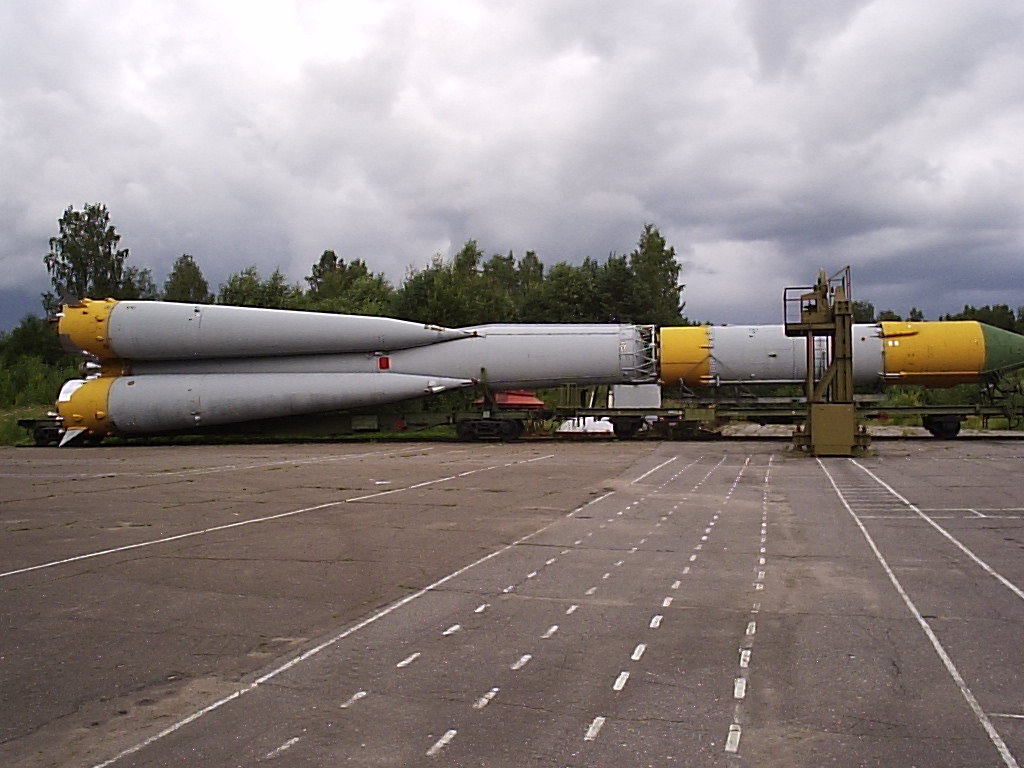
The Molniya 8K78 was a Soviet expendable launch vehicle developed and operated by the Soviet Space Program during the early years of the Space Race. A member of the R-7 rocket family — the lineage that traces back to Sergei Korolev's pioneering intercontinental ballistic missile — the 8K78 was purpose-built to place payloads into highly elliptical Molniya orbits, enabling early Soviet communications and reconnaissance satellites to provide coverage over high-latitude regions of the USSR.
Standing 43.44 meters tall with a core diameter of 3 meters, the Molniya 8K78 followed the distinctive clustered-booster architecture characteristic of all R-7 derivatives. It added a third stage and a purpose-designed fourth stage — the Block L upper stage — to the proven two-stage R-7 baseline, giving it the energy needed to reach the demanding Molniya transfer orbit. The vehicle was capable of delivering up to 1,900 kg to low Earth orbit, though its primary mission profile targeted the namesake highly elliptical orbit rather than LEO. Launches were conducted from Baikonur Cosmodrome in what is now Kazakhstan.
Operational History
The 8K78 flew throughout a focused operational window spanning 1960 to 1967, a period of intense activity in the Soviet space program. Our flight record documents 40 tracked flights across those years, reflecting an ambitious and rapid launch cadence consistent with Cold War priorities. Of those 40 missions, 20 were fully successful while 20 resulted in failure or partial failure — a reliability profile that illustrates the significant engineering challenges inherent in developing a four-stage vehicle during this early era of spaceflight. A 50% success rate was not unusual for pioneering rocket programs of the period, and the lessons learned directly informed the development of improved variants.
The vehicle's primary payload was the Molniya series of satellites, which gave both the rocket and the distinctive orbit type their name. These satellites were designed to provide communications links across the vast Soviet territory, particularly at northern latitudes where geostationary satellites are poorly suited. Among the most recent missions tracked in our records are flights supporting Molniya-1 spacecraft, including Molniya-1 3 through Molniya-1 7 and the Molniya-1Yu 11L mission, underscoring the vehicle's sustained focus on building out the Soviet communications satellite constellation in its final operational years.
Legacy
The Molniya 8K78 occupies a significant place in the history of launch vehicles as one of the first rockets specifically engineered to serve a communications satellite infrastructure. Its operational career was relatively brief, but it established both the technical foundation and the orbital architecture — the Molniya orbit itself — that would remain in use by Soviet and Russian spacecraft for decades. Improved successors, including the Molniya-M, refined and extended the design's capabilities well beyond the 8K78's own service life. The vehicle stands as an important early example of mission-specific launch vehicle design, tailored not merely to reach orbit but to deliver payloads precisely where they were needed most.
- Oct 22, 1967Molniya 8K78 | Molniya-1 7Success
- Oct 03, 1967Molniya 8K78 | Molniya-1 6Success
- Aug 31, 1967Molniya 8K78 | Molniya-1Yu 11LSuccess
- May 24, 1967Molniya 8K78 | Molniya-1 5Success
- Oct 20, 1966Molniya 8K78 | Molniya-1 4Success
- Apr 25, 1966Molniya 8K78 | Molniya-1 3Success
- Mar 27, 1966Molniya 8K78 | Molniya-1 3aFailure
- Dec 03, 1965Molniya 8K78 | Luna-8Success
- Nov 23, 1965Molniya 8K78 | Venera-4aFailure
- Nov 16, 1965Molniya 8K78 | Venera-3Success
- Nov 12, 1965Molniya 8K78 | Venera-2Success
- Oct 14, 1965Molniya 8K78 | Molniya-1 2Success
- Jul 18, 1965Molniya 8K78 | Zond-3Success
- Jun 08, 1965Molniya 8K78 | Luna-6Success
- May 09, 1965Molniya 8K78 | Luna-5Success
- Apr 23, 1965Molniya 8K78 | Molniya-1 1Success
- Apr 10, 1965Molniya 8K78 | Luna-5dFailure
- Mar 12, 1965Molniya 8K78 | Luna-5cFailure
- Nov 30, 1964Molniya 8K78 | Zond-2Success
- Aug 22, 1964Molniya 8K78 | Molniya-1 1bSuccess
- Jun 04, 1964Molniya 8K78 | Molniya-1 1aFailure
- Apr 20, 1964Molniya 8K78 | Luna-5bFailure
- Apr 02, 1964Molniya 8K78 | Zond 1Success
- Mar 27, 1964Molniya 8K78 | Zond 1cFailure
- Mar 21, 1964Molniya 8K78 | Luna-5aFailure
- Feb 19, 1964Molniya 8K78 | Zond-1bFailure
- Nov 11, 1963Molniya 8K78 | Zond-1aFailure
- Apr 02, 1963Molniya 8K78 | Luna-4Success
- Feb 03, 1963Molniya 8K78 | Luna-4dFailure
- Jan 04, 1963Molniya 8K78 | Luna-4cFailure
- Nov 04, 1962Molniya 8K78 | Mars 2aFailure
- Nov 01, 1962Molniya 8K78 | Mars 1Success
- Oct 24, 1962Molniya 8K78 | Mars 1cFailure
- Sep 12, 1962Molniya 8K78 | Venera 2cFailure
- Sep 01, 1962Molniya 8K78 | Venera 2bFailure
- Aug 25, 1962Molniya 8K78 | Venera 2aFailure
- Feb 12, 1961Molniya 8K78 | Venera-1VA 2Success
- Feb 04, 1961Molniya 8K78 | Venera-1VA 1Failure
- Oct 14, 1960Molniya 8K78 | Mars-1bFailure
- Oct 10, 1960Molniya 8K78 | Mars-1aFailure