Minotaur I
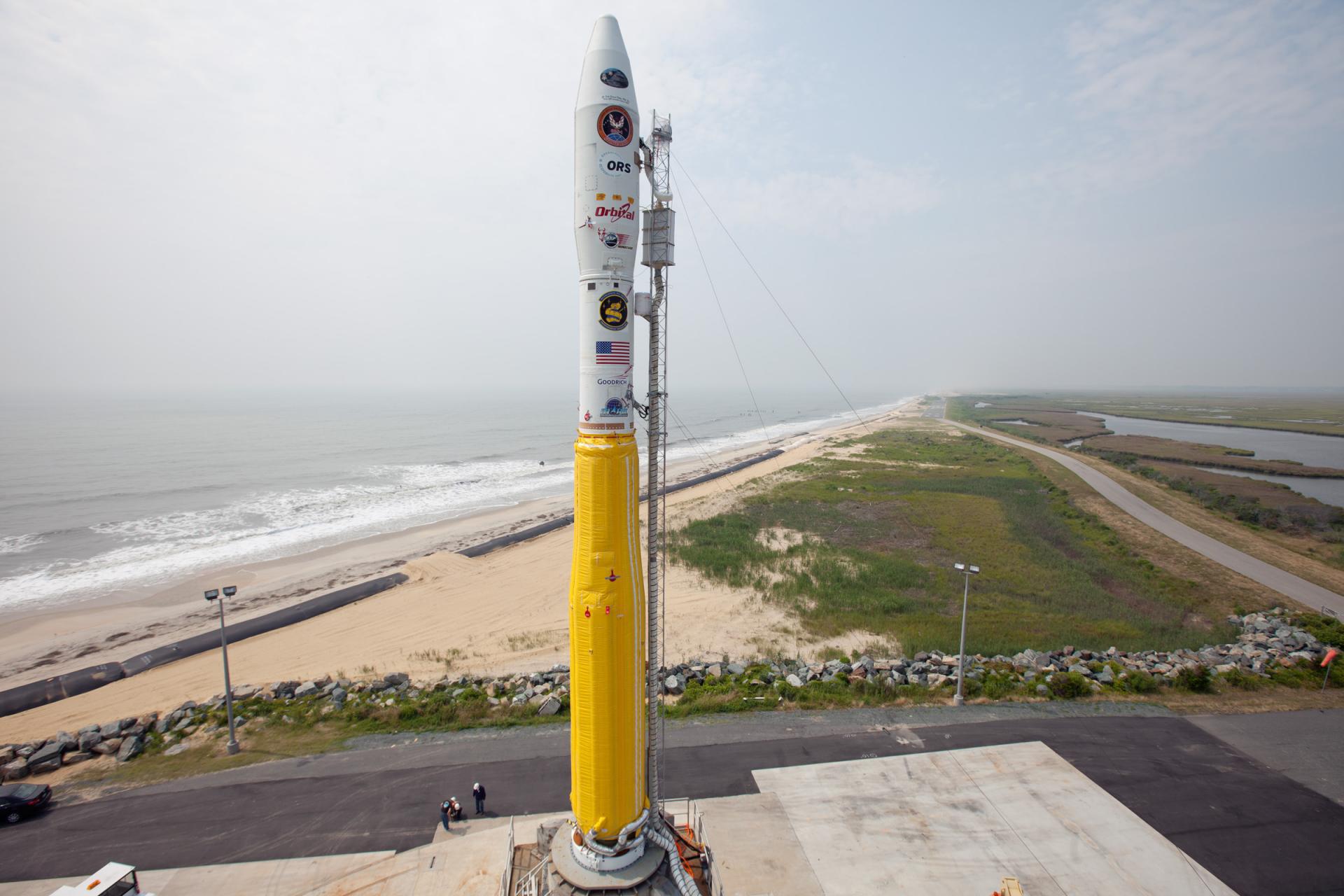
About the Minotaur I
Minotaur I
The Minotaur I is an American small orbital launch vehicle developed and operated by Orbital Sciences Corporation (later acquired by Northrop Grumman, which continues to operate the system). Derived from surplus U.S. Air Force ballistic missile hardware, it occupies a distinctive niche in the American launch market as a government-focused rocket purpose-built to lift small payloads to low Earth orbit on behalf of defense and civil space customers.
Origins and Design
The Minotaur I was created under the U.S. government's Orbital/Suborbital Program, which sought to convert decommissioned Minuteman II intercontinental ballistic missile motors into affordable space launch vehicles. The first two stages are drawn directly from the Minuteman II, while the upper stages are derived from Orbital Sciences' own Pegasus rocket heritage. This combination of proven military hardware and commercial upper-stage technology gave the vehicle a reliable foundation from the outset.
Standing 19.21 meters tall with a diameter of 1.67 meters, the Minotaur I is a compact, four-stage solid-fueled rocket. It is capable of delivering up to 580 kilograms to low Earth orbit, placing it firmly in the small-lift category. Because it is assembled from surplus missile components, U.S. law restricts its use to government-sponsored payloads, which has shaped its customer base throughout its operational life.
Flight History
In the flight record maintained on this site, the Minotaur I has accumulated 12 launches spanning 2000 to 2021, all of which were successful — a remarkable record that reflects both the maturity of its heritage hardware and the rigor of its launch cadence. Its operational debut came in 2000, and it has since served as a dependable workhorse for U.S. defense and intelligence missions.
The vehicle's top customers — Orbital Sciences Corporation and Northrop Grumman Space Systems — reflect its close ties to government-contracted programs. Notable recent missions include NROL-111, supporting the National Reconnaissance Office, as well as ORS-3 and ORS-1 (USA-231), flown under the Operationally Responsive Space program, which sought rapid and flexible access to orbit for tactical military satellites. Earlier missions such as NROL-66 (RPP), Tacsat 3, and NFIRE further illustrate the vehicle's consistent role in supporting defense technology demonstration and intelligence-gathering efforts.
Launch Sites and Role
The Minotaur I has launched from multiple U.S. government ranges, most notably Vandenberg Space Force Base in California and the Mid-Atlantic Regional Spaceport (MARS) at Wallops Island, Virginia, giving it flexibility to reach a range of orbital inclinations suited to its predominantly defense-oriented payloads.
Legacy
With a perfect success rate across all tracked launches, the Minotaur I stands as one of the more reliable small-lift vehicles in American spaceflight history. Its deliberate focus on government customers, combined with its heritage in Cold War-era missile technology, makes it an unusual and historically significant member of the U.S. launch vehicle family — a practical demonstration of how surplus military hardware can be repurposed to extend a nation's access to space.
- Jun 15, 2021Minotaur I | NROL-111Success
- Nov 20, 2013Minotaur I | ORS-3Success
- Jun 30, 2011Minotaur I | ORS-1 (USA-231)Success
- Feb 06, 2011Minotaur I | NROL-66 (RPP) (USA-225)Success
- May 19, 2009Minotaur I | Tacsat 3Success
- Apr 24, 2007Minotaur I | NFIRESuccess
- Dec 16, 2006Minotaur I | Tacsat 2Success
- Apr 15, 2006Minotaur I | COSMIC 1-6Success
- Sep 23, 2005Minotaur I | STP-R1Success
- Apr 11, 2005Minotaur I | XSS-11Success
- Jul 19, 2000Minotaur I | SindriSuccess
- Jan 27, 2000Minotaur I | JAWSAT & FalconSat 1Success