Luna Ascent Stage
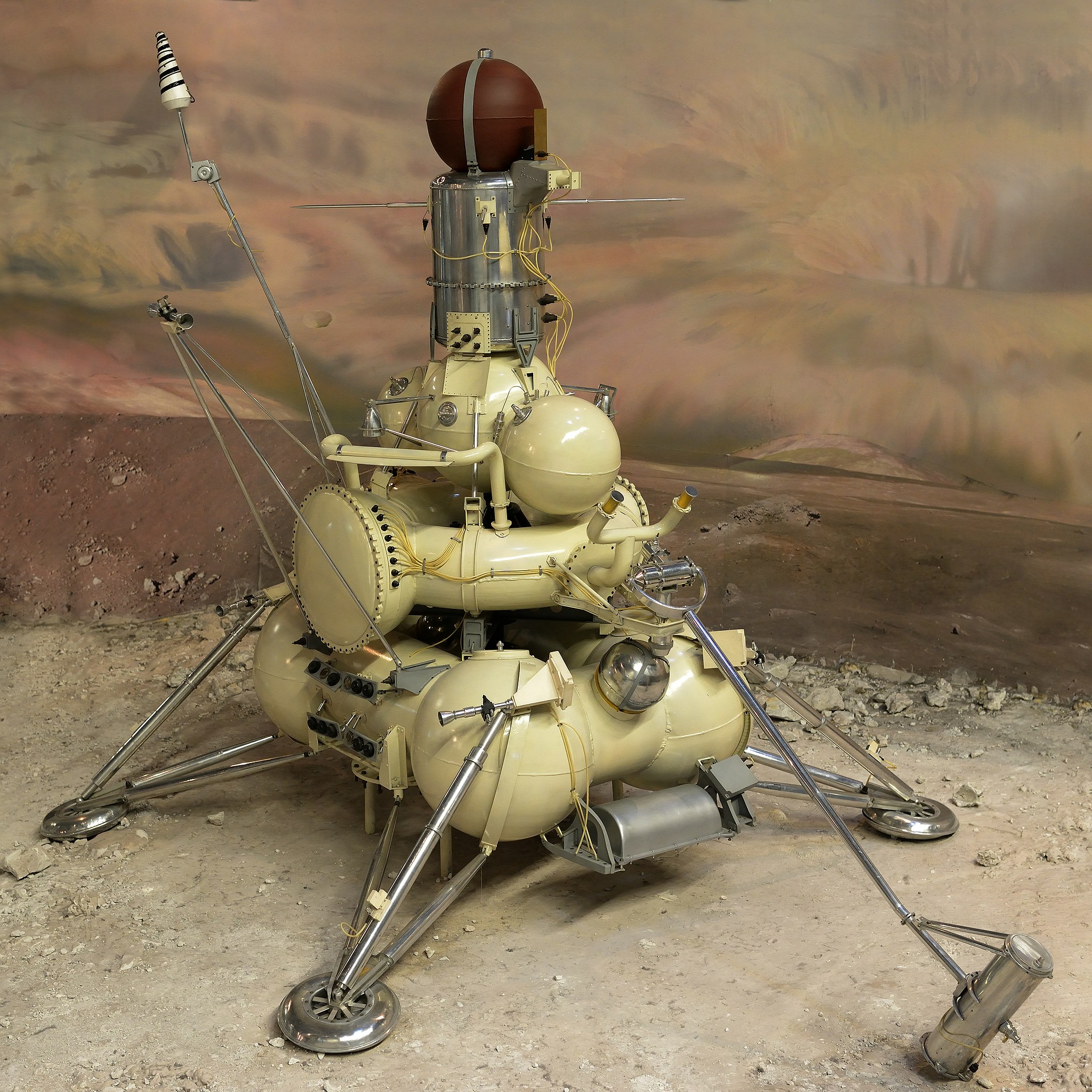
About the Luna Ascent Stage
Luna Ascent Stage
The Luna Ascent Stage is a Soviet upper-stage vehicle designed specifically to lift lunar soil samples from the surface of the Moon and place them on a trajectory back toward Earth. Developed and operated by the Soviet Space Program, it represents one of the most specialized and demanding propulsion challenges of the Space Age: achieving orbital velocity from the lunar surface with no ground support, no crew, and no margin for error.
Role and Design Context
Unlike conventional launch vehicles that lift off from Earth under controlled conditions, the Luna Ascent Stage was required to ignite autonomously on the Moon, where there is no atmosphere and gravity is roughly one-sixth that of Earth. The stage formed the upper portion of the landed spacecraft, sitting atop a descent stage that served as its launch platform. Once a sample had been collected and sealed into the return capsule, the ascent stage fired its engine to depart the lunar surface and begin the long journey home. Its entire purpose was singular and unforgiving: a single engine burn that either succeeded completely or failed catastrophically.
This architecture — a stationary lower stage acting as a launch pad for a rising upper stage — was a defining feature of Soviet robotic sample-return philosophy, paralleling in some respects the crewed Lunar Module approach taken by NASA's Apollo program, though executed entirely without human occupants.
Flight History
Our tracking data records three flights of the Luna Ascent Stage, spanning the years 1970 to 1976, all of which were successful. This perfect reliability record is a testament to the engineering rigour applied to a vehicle that could never be tested in its full operational environment before its first real mission.
The three missions associated with this stage — Luna-16, Luna-20, and Luna-24 — were landmark achievements in planetary science. Luna-16, flown in 1970, became the first robotic spacecraft to return samples from another world. Luna-20 followed in 1972, retrieving material from the lunar highlands. Luna-24, the final flight recorded in our data, took place in 1976 and returned a core sample from the Mare Crisium region, bringing the programme to a close on another note of success.
All flights were conducted exclusively for the Soviet Space Program, with no commercial or international customers recorded in this period.
Historical Significance
The Luna Ascent Stage occupies a unique place in launch vehicle history. It was never intended to be reusable, never launched more than once per mission, and was designed around the strict mass constraints of a deep-space robotic system. Yet across its three operational flights, it performed flawlessly, enabling the Soviet Union to recover approximately 300 grams of lunar material in total across the programme.
Its active period of 1970 to 1976 coincided with the final years of competitive superpower lunar exploration, and the Luna-24 mission marked the last time, to date, that any spacecraft has returned samples directly from the Moon's surface. For that reason alone, the Luna Ascent Stage remains one of the most consequential — if least celebrated — rocket stages in the history of spaceflight.