Long March 8A
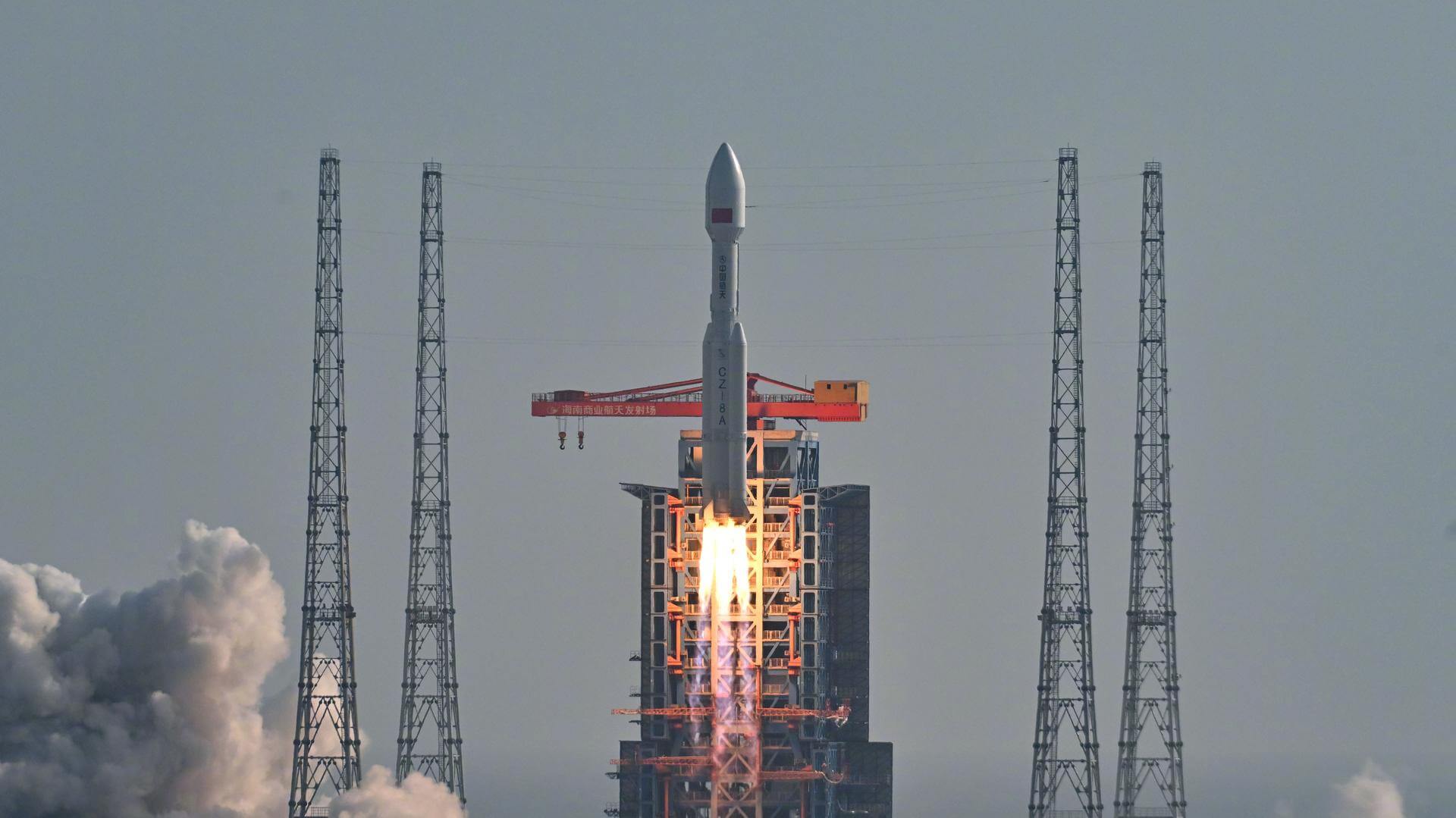
About the Long March 8A
Long March 8A
The Long March 8A is a Chinese medium-lift orbital launch vehicle operated by the China Aerospace Science and Technology Corporation (CASC), developed as a streamlined variant within the Long March 8 rocket family. Manufactured under CASC's China Academy of Launch Vehicle Technology (CALT), it represents a continuing evolution of China's state-developed launch vehicle lineage, optimized for efficient deployment of multi-satellite constellations into low Earth orbit.
Design and Capabilities
Standing 50.5 meters tall with a core diameter of 3.35 meters, the Long March 8A shares its fundamental dimensions with the broader Long March 8 family. It is capable of delivering up to 9,800 kg to low Earth orbit (LEO) and 3,500 kg to geostationary transfer orbit (GTO), placing it firmly in the medium-lift category. The vehicle is designed to support high-cadence launch operations, a priority driven by China's ambitious broadband constellation programs that require rapid orbital buildup with large numbers of satellites per mission.
Role and Operational History
The Long March 8A entered active service in 2025 and quickly established a strong flight record. According to tracked flight data, the vehicle has completed 8 launches, all of which were successful, with operations spanning 2025 to 2026. This unblemished record reflects both the maturity of the underlying Long March 8 platform and the reliability demands placed on rockets supporting national infrastructure programs.
The vehicle's mission manifest has been dominated by deployments for SatNet, China's national low Earth orbit broadband constellation initiative. Tracked missions include multiple SatNet LEO Group flights — among them Groups 10, 12, 14, 17, 18, and 20 — underscoring the rocket's central role in building out this strategic communications network. The cadence and sequential nature of these missions highlight how the Long March 8A has been purpose-fitted to serve as a workhorse for large-scale, repeating constellation deployment campaigns.
Context Within the Long March Family
The Long March 8 family was originally introduced to bridge the gap between smaller and heavier vehicles in China's launch portfolio, offering a cost-competitive medium-lift option capable of flying from the Wenchang Space Launch Center on Hainan Island. The 8A designation reflects configuration refinements relative to the baseline Long March 8, though the precise architectural differences are oriented toward the operational goals of its target mission set. Like its predecessors, the Long March 8A continues China's decades-long reliance on the 3.35-meter core diameter that has been a hallmark of the Long March lineage since earlier generations.
Significance
With a 100% mission success rate across eight flights and a mission profile tightly coupled to one of China's most strategically significant space infrastructure programs, the Long March 8A has quickly become one of CASC's most consistently utilized vehicles in its current operational era. Its performance and reliability position it as an important asset in China's broader push to establish a competitive sovereign broadband satellite network, and its flight cadence suggests continued high demand well into the mid-2020s.
- Oct 25, 2026Long March 8A | Unknown PayloadGo
- Sep 23, 2026Long March 8A | SatNet LEO Group 26Success
- Aug 04, 2026Long March 8A | SatNet LEO Group 23Success
- Jul 05, 2026Long March 8A | SpaceSail Polar Group #14Success
- Mar 12, 2026Long March 8A | SatNet LEO Group 20Success
- Jan 13, 2026Long March 8A | SatNet LEO Group 18Success
- Dec 25, 2025Long March 8A | SatNet LEO Group 17Success
- Dec 06, 2025Long March 8A | SatNet LEO Group 14Success
- Oct 16, 2025Long March 8A | SatNet LEO Group 12Success
- Aug 25, 2025Long March 8A | SatNet LEO Group 10Success
- Jul 30, 2025Long March 8A | SatNet LEO Group 06Success
- Feb 11, 2025Long March 8A | SatNet LEO Group 02 (Demo Flight)Success