Long March 7A
About the Long March 7A
Long March 7A
The Long March 7A (CZ-7A) is a Chinese medium-to-heavy orbital launch vehicle operated by the China Aerospace Science and Technology Corporation (CASC), developed under the China National Space Administration's broader effort to modernize its launch fleet. It serves as a variant of the baseline Long March 7, optimized for missions to geosynchronous transfer orbit (GTO) and other high-energy trajectories through the addition of a cryogenic upper stage. The rocket launches from the Wenchang Space Launch Center on Hainan Island, China's newest and most southerly launch facility, whose low-latitude location provides a natural efficiency advantage for GTO-bound missions.
Design and Role
The Long March 7A builds on the kerosene/liquid-oxygen core of the Long March 7, augmenting it with a liquid hydrogen/liquid oxygen third stage derived from the Long March 3B's upper stage heritage. This configuration allows the vehicle to place significantly heavier payloads into high orbits compared to its predecessor, positioning it as a successor to the aging Long March 3B/E for commercial and government geostationary satellite delivery. Its propellant choices reflect China's push toward less toxic, more environmentally considerate propulsion compared to earlier hypergolic-fueled Long March variants.
Flight History
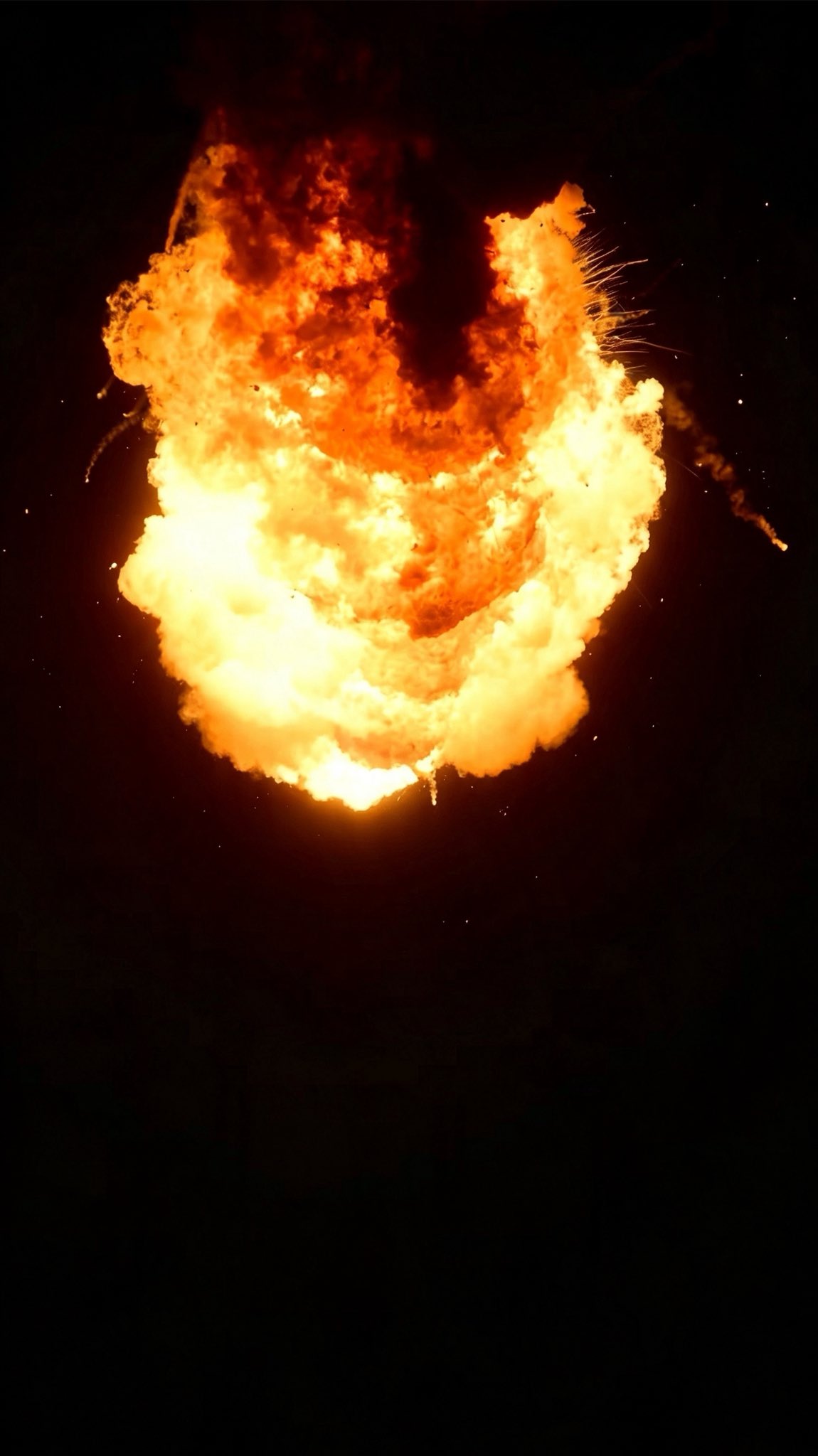
The Long March 7A made its debut in 2020, and as tracked in this database, the vehicle has accumulated 15 flights between 2020 and 2026, recording 14 successes and one failure or partial failure. That early loss — which occurred on the vehicle's first launch attempt — was a notable setback, but subsequent missions demonstrated a strong and consistent reliability record. The vehicle has since matured into one of CASC's primary workhorses for high-orbit government payloads.
Customers and Payloads
The dominant customer across all tracked missions is China Aerospace Science and Technology Corporation itself, reflecting the vehicle's primary role serving Chinese state programs rather than the commercial international launch market. Recent missions illustrate the breadth of that work: the Yaogan 45 and Yaogan 46 missions represent continued investment in China's remote sensing and reconnaissance satellite constellation, while Shijian 28 and Shijian 29 A-B belong to a long-running experimental and technology-demonstration series. The ChinaSat 3B mission highlights the vehicle's capacity for operational communications satellite delivery to geostationary orbit, and TJSW-24 continues a line of missions associated with Chinese telecommunications and experimental spacecraft programs.
Significance
Within China's launch vehicle family, the Long March 7A occupies a strategically important middle tier — capable enough for full-scale geostationary communications satellites and specialized high-orbit payloads, yet based on a relatively modern, non-hypergolic design. Its consistent cadence of missions in the mid-2020s underscores its growing centrality to CASC's operational planning. As China continues expanding its satellite infrastructure across communications, Earth observation, and experimental programs, the Long March 7A is positioned as a durable and reliable element of the national launch architecture for the foreseeable future.
- Aug 10, 2026Long March 7A | ChinaSat 4BFailure
- Jul 29, 2026Long March 7A | Tianlian 3-01Success
- Jun 23, 2026Long March 7A | TJSW-26ASuccess
- May 26, 2026Long March 7A | TJSW-24Success
- Dec 30, 2025Long March 7A | Shijian 29 A-BSuccess
- Nov 30, 2025Long March 7A | Shijian 28Success
- Nov 03, 2025Long March 7A | Yaogan 46Success
- Sep 09, 2025Long March 7A | Yaogan 45Success
- May 20, 2025Long March 7A | ChinaSat 3BSuccess
- Mar 29, 2025Long March 7A | TJSW-16Success
- Aug 22, 2024Long March 7A | ChinaSat 4ASuccess
- Jun 29, 2024Long March 7A | ChinaSat 3ASuccess
- Nov 03, 2023Long March 7A | TJSW-10Success
- Jan 08, 2023Long March 7A | Shijian 23Success
- Sep 13, 2022Long March 7A | ChinaSat 1ESuccess
- Dec 23, 2021Long March 7A | Shiyan 12-01 & 02Success
- Mar 11, 2021Long March 7A | Shiyan 9 (XJY-6-02)Success
- Mar 16, 2020Long March 7A | TJS-6 (Maiden Flight)Failure