Long March 6
About the Long March 6
Long March 6
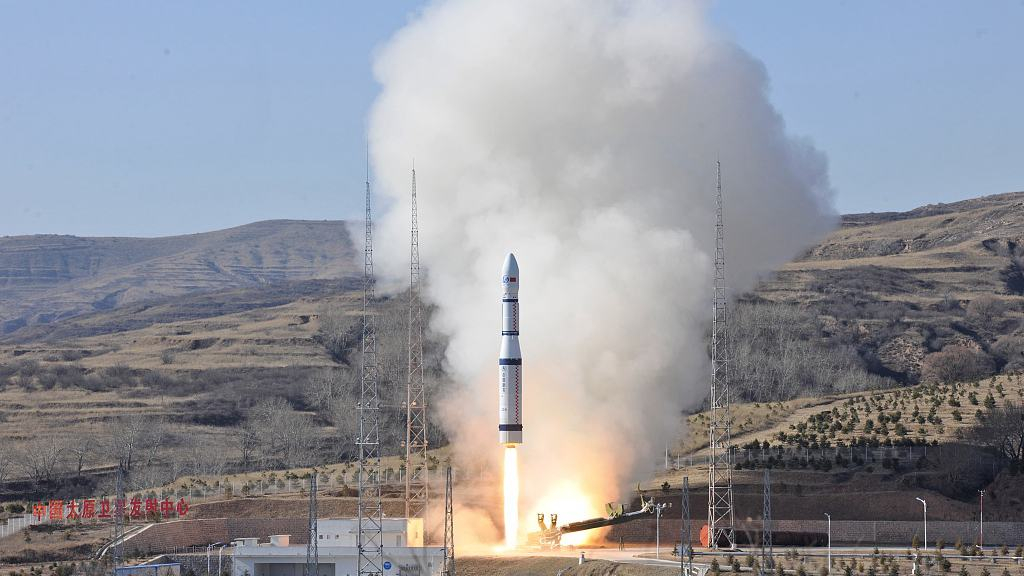
The Long March 6 (also written Chang Zheng 6, or CZ-6) is a Chinese orbital launch vehicle developed and operated by the Shanghai Academy of Spaceflight Technology (SAST), a subsidiary of the China Aerospace Science and Technology Corporation (CASC). Designed as a small-to-medium-class rocket, it serves as a dedicated launcher for light payloads and multi-satellite rideshare missions, complementing the broader Long March family within China's national space program.
Design and Configuration
Standing 29 meters tall with a core diameter of 3.35 meters, Long March 6 is a compact, three-stage rocket that makes use of liquid oxygen and kerosene propellants — a combination chosen for its performance characteristics and relative environmental cleanliness compared to the toxic propellants used in older Long March variants. This propellant choice aligned the vehicle with a broader generational shift in Chinese launch vehicle design toward higher-performance, lower-toxicity fuels. The rocket is optimized for sun-synchronous orbit (SSO) missions, making it well suited to Earth observation and remote sensing payloads.
Launch Site and Operations
Long March 6 launches from the Taiyuan Satellite Launch Center in Shanxi Province, a facility that has historically supported polar and sun-synchronous orbit missions. The rocket's configuration and launch site together make it a natural fit for the growing commercial and government demand for small satellite deployment into low Earth orbit.
Flight History
Long March 6 made its debut in September 2015, and our tracking data records 15 flights between 2015 and 2026, all of which were successful — reflecting a clean operational record with no failures or partial failures documented. This consistency has helped establish the vehicle as a reliable option for both government and commercial payloads.
Recent missions tracked in our data illustrate the vehicle's versatility. Launches have included the Geely Constellation Group 03 rideshare, supporting the commercial automotive-affiliated broadband constellation; the Tianping-3 and Tianping-3A-02 missions; Shiyan 25 and the paired Shiyan 16 A/B & Shiyan 17 experimental satellites; and the PRSC-EO3 Earth observation mission. This mix of commercial constellation, experimental, and remote sensing payloads reflects the broad demand Long March 6 serves within China's expanding space economy.
Role and Significance
Long March 6 occupies an important niche within China's launch vehicle portfolio as a dedicated small-satellite launcher capable of deploying multiple payloads on a single flight. Its development marked a meaningful step in CASC's effort to modernize its rocket lineup and respond to the growing global commercial small satellite market. By combining a clean propellant system, a purpose-built configuration for SSO missions, and a strong reliability record, Long March 6 has become a dependable workhorse for Chinese and commercial operators seeking efficient, cost-effective access to low Earth orbit.
With active operations continuing into 2026 and a record of 15 consecutive successful missions, Long March 6 remains an active and productive part of China's orbital launch infrastructure.
- Apr 25, 2026Long March 6 | PRSC-EO3Success
- Apr 03, 2025Long March 6 | Tianping-3A-02Success
- Oct 22, 2024Long March 6 | Tianping-3Success
- Sep 05, 2024Long March 6 | Geely Constellation Group 03Success
- Jun 20, 2023Long March 6 | Shiyan 25Success
- Sep 26, 2022Long March 6 | Shiyan 16 A/B & Shiyan 17Success
- Aug 10, 2022Long March 6 | Jilin-1 High Resolution 03D-09, 35 to 43 & Infrared A01 to 06Success
- Nov 05, 2021Long March 6 | SDGSAT-1Success
- Aug 04, 2021Long March 6 | KL-BetaSuccess
- Jul 09, 2021Long March 6 | Zhongzi Group 02 (Ningxia-1-02)Success
- Apr 27, 2021Long March 6 | Qilu-1, Qilu-4 & othersSuccess
- Nov 06, 2020Long March 6 | Satellogic x 10Success
- Nov 13, 2019Long March 6 | Ningxia 1 (x5)Success
- Nov 21, 2017Long March 6 | Jilin-1-04, Jilin-1-05 & Jilin-1-06Success
- Sep 19, 2015Long March 6 | 20 Amateur satellitesSuccess