Long March 5B/YZ-2
About the Long March 5B/YZ-2
Long March 5B/YZ-2
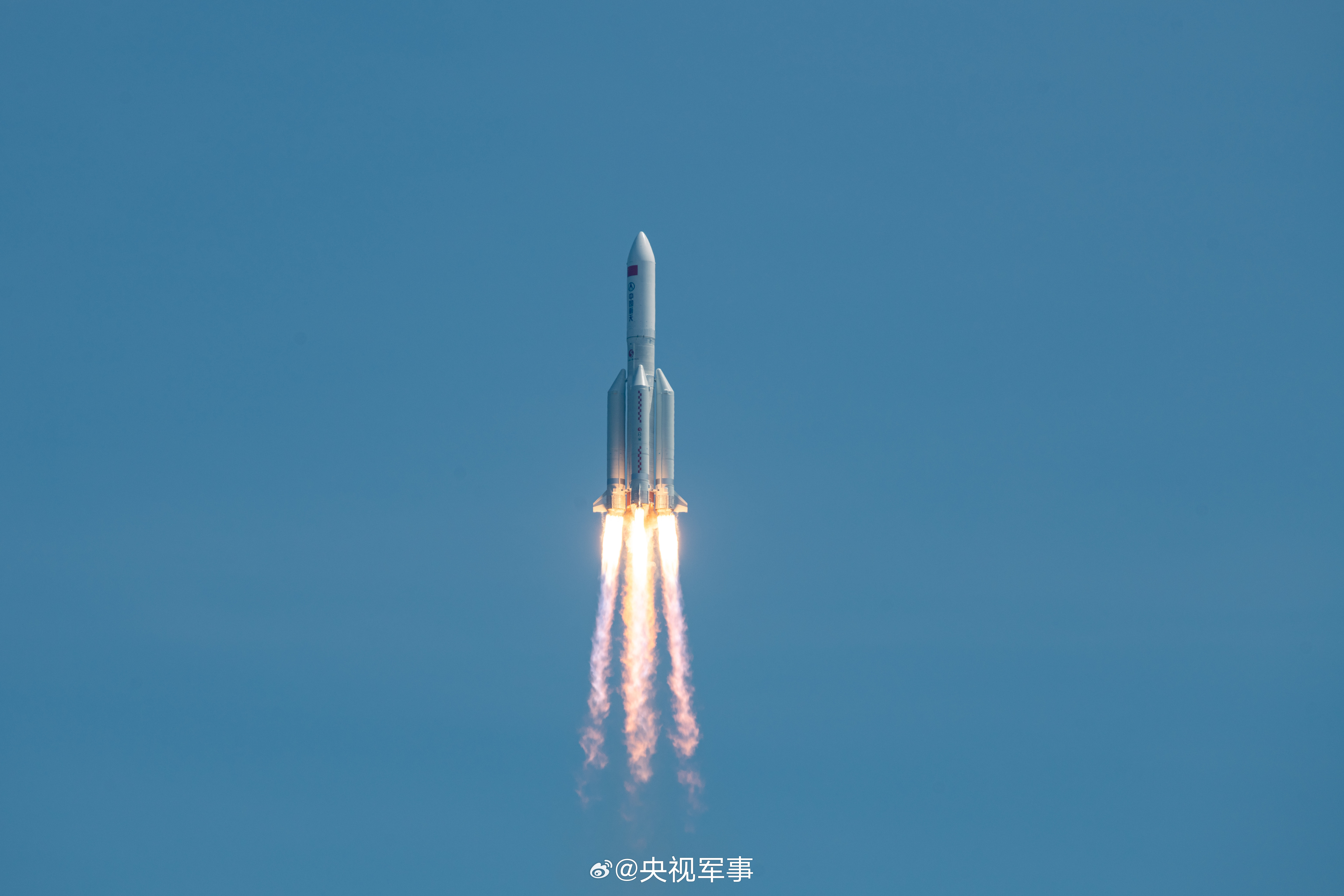
The Long March 5B/YZ-2 is a Chinese orbital launch vehicle operated by the China Aerospace Science and Technology Corporation (CASC), representing a specialized configuration of the Long March 5B heavy-lift rocket paired with a Yuanzheng-2 (YZ-2) upper stage. It is designed to deploy multiple satellites into low Earth orbit, and has emerged as a dedicated workhorse for China's large-scale commercial and state-directed constellation-building programs.
Vehicle Overview
Standing 53.66 meters tall with a core diameter of 5 meters, the Long March 5B/YZ-2 shares the broad physical profile of the Long March 5B family, which is among the largest rockets currently operated by China. The Long March 5 series is manufactured by the China Academy of Launch Vehicle Technology (CALT) and launches from the Wenchang Space Launch Center on Hainan Island, a modern coastal facility chosen in part to support the large rocket's assembly and transport requirements.
The addition of the Yuanzheng-2 upper stage distinguishes this configuration from the baseline Long March 5B. The YZ-2 is a restartable upper stage capable of maneuvering independently after separation from the core vehicle, allowing it to precisely place multiple payloads into different orbital slots in a single launch. This multi-burn capability makes the Long March 5B/YZ-2 particularly well-suited for deploying batches of satellites as part of large constellations.
Operational History
According to tracked flight data, the Long March 5B/YZ-2 has recorded 3 flights between 2024 and 2025, all of which were successful. This perfect launch record, while drawn from a still-limited number of missions, reflects the maturity of both the Long March 5B core stage and the Yuanzheng upper stage heritage.
All three tracked missions have been flown on behalf of CASC and have supported China's SatNet low Earth orbit broadband constellation program. The missions — SatNet LEO Group 01, SatNet LEO Group 03, and SatNet LEO Group 08 — indicate that the vehicle is playing a central role in the rapid buildout of that network, with each flight deploying a group of satellites into LEO. SatNet, sometimes associated with the "Qianfan" or "Thousand Sails" constellation initiative, is one of China's most ambitious satellite internet programs, intended to compete with large Western LEO broadband constellations.
Role and Significance
The Long March 5B/YZ-2 occupies an important niche in China's launch architecture. While the baseline Long March 5B was originally developed to support crewed space station module launches — and gained international attention for uncontrolled reentries of its large core stage — this YZ-2 variant pivots toward commercial-style high-cadence satellite deployment. Its combination of heavy-lift capacity and an agile upper stage makes it capable of delivering large batches of satellites per mission, reducing the number of launches required to populate a constellation.
As China accelerates its space-based internet ambitions, the Long March 5B/YZ-2 is positioned to be a high-throughput delivery vehicle for LEO infrastructure in the mid-2020s and beyond.