Long March 4C
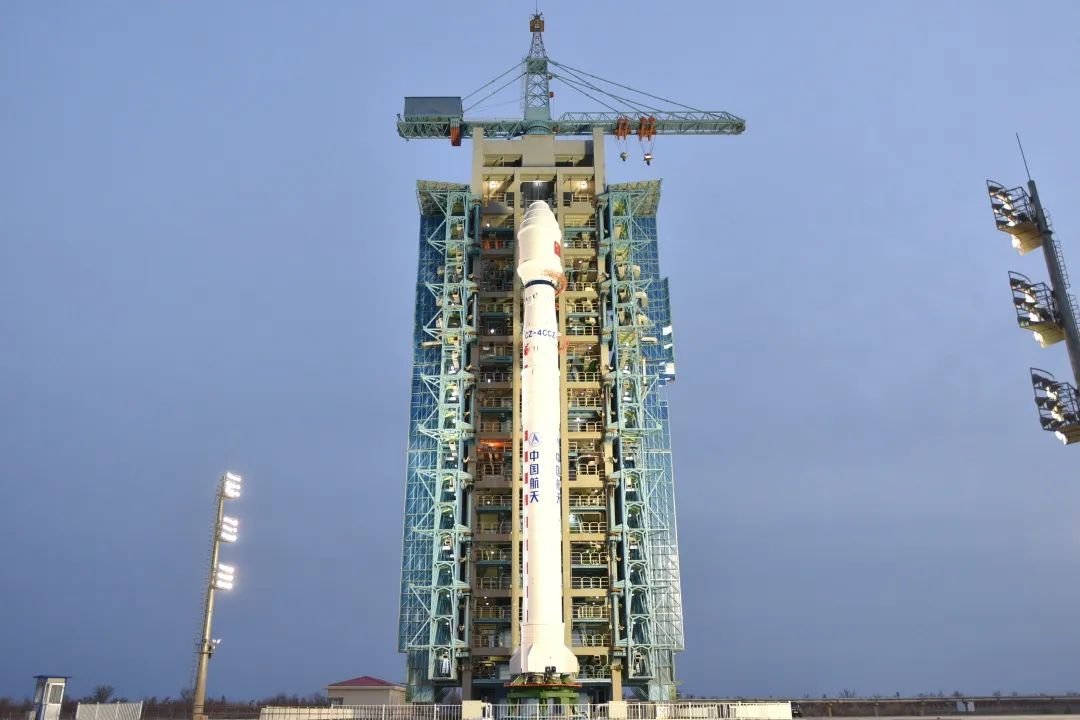
About the Long March 4C
Long March 4C
The Long March 4C (also written CZ-4C) is a Chinese orbital launch vehicle operated by the China Aerospace Science and Technology Corporation (CASC). Developed by the Shanghai Academy of Spaceflight Technology (SAST), it is a three-stage, liquid-propellant rocket and a member of the Long March 4 family — one of China's most enduring and versatile rocket lineages. The vehicle launches primarily from Taiyuan Satellite Launch Center and Jiuquan Satellite Launch Center, serving as a workhorse for Chinese government and institutional payloads.
Design and Capabilities
The Long March 4C is an evolution of the Long March 4B, distinguished by its restartable third stage, which allows it to deliver payloads into a wider variety of orbits. This capability makes it particularly well-suited for sun-synchronous orbit (SSO) and polar orbit missions, which demand precise orbital insertion. All three stages burn nitrogen tetroxide and unsymmetrical dimethylhydrazine (UDMH), a hypergolic propellant combination long established in Chinese launch vehicle design. The restartable upper stage gives mission planners the flexibility to target multiple orbital planes or achieve more demanding altitude profiles in a single flight.
Flight History
According to tracked flight records, the Long March 4C has conducted 60 flights between 2006 and 2026, recording 58 successes alongside 2 failures or partial failures — a strong reliability rate reflective of the vehicle's maturity. The rocket's primary customer has consistently been CASC itself, reflecting the vehicle's central role in China's national space program rather than the commercial launch market.
The Long March 4C's manifest has been dominated by Earth observation and meteorological satellites. Recent missions illustrate this focus clearly: the rocket has lofted Gaofen-12 05, part of China's high-resolution optical reconnaissance and remote sensing constellation, and Fengyun-3H, the latest generation of China's polar-orbiting meteorological satellites. The Daqi-2 (AEMS) mission furthered China's atmospheric environment monitoring capabilities, while the Shiyan 23 and Shiyan 28 series missions — designated as experimental satellites — reflect the vehicle's continued use for technology demonstration payloads.
Role and Significance
Within China's broader launch vehicle fleet, the Long March 4C occupies a well-defined niche. While larger vehicles such as the Long March 5 handle heavy payloads to high-energy orbits, and newer commercial rockets target cost-sensitive smallsat customers, the 4C reliably serves the medium-class government payload segment — particularly the nation's expanding suite of remote sensing, meteorological, and experimental satellites. Its two-decade operational span and consistent mission cadence underscore its importance to China's civil and strategic space infrastructure.
As China's Earth observation ambitions have grown through programs such as the Gaofen and Fengyun series, the Long March 4C has remained the preferred delivery vehicle, accumulating one of the more extensive track records of any rocket in the Long March family. Its combination of orbital flexibility, proven reliability, and institutional backing ensures it remains an active and relevant launch system well into the 2020s.
- Apr 17, 2026Long March 4C | Daqi-2 (AEMS)Success
- Sep 26, 2025Long March 4C | Fengyun-3HSuccess
- Aug 17, 2025Long March 4C | Shiyan 28 B-02Success
- Jul 03, 2025Long March 4C | Shiyan 28 B-01Success
- Oct 15, 2024Long March 4C | Gaofen-12 05Success
- May 11, 2024Long March 4C | Shiyan 23Success
- Sep 26, 2023Long March 4C | Yaogan 33-04Success
- Sep 06, 2023Long March 4C | Yaogan 33-03Success
- Aug 20, 2023Long March 4C | Gaofen-12 04Success
- Aug 03, 2023Long March 4C | Fengyun-3FSuccess
- Mar 31, 2023Long March 4C | Yaogan 34-04Success
- Mar 09, 2023Long March 4C | Tianhui-6 A/BSuccess
- Dec 12, 2022Long March 4C | Shiyan 20A & 20BSuccess
- Nov 15, 2022Long March 4C | Yaogan 34-03Success
- Oct 29, 2022Long March 2D | Shiyan 20CSuccess
- Sep 02, 2022Long March 4C | Yaogan 33-02Success
- Jun 27, 2022Long March 4C | Gaofen-12-03Success
- Apr 15, 2022Long March 4C | Daqi-1 (AEMS)Success
- Apr 06, 2022Long March 4C | Gaofen-3 03Success
- Mar 17, 2022Long March 4C | Yaogan 34-02Success
- Feb 26, 2022Long March 4C | L-SAR 01BSuccess
- Jan 25, 2022Long March 4C | L-SAR 01ASuccess
- Dec 26, 2021Long March 4C | Ziyuan 1-02E & CAS-9Success
- Nov 22, 2021Long March 4C | Gaofen-3 02Success
- Sep 07, 2021Long March 4C | Gaofen-5-02Success
- Jul 04, 2021Long March 4C | Fengyun-3ESuccess
- Apr 30, 2021Long March 4C | Yaogan 34Success
- Mar 30, 2021Long March 4C | Gaofen-12-02Success
- Mar 13, 2021Long March 4C | Yaogan-31-04Success
- Feb 24, 2021Long March 4C | Yaogan-31-03Success
- Jan 29, 2021Long March 4C | Yaogan-31-02Success
- Dec 27, 2020Long March 4C | Yaogan-33(R)Success
- Nov 27, 2019Long March 4C | Gaofen-12Success
- Oct 04, 2019Long March 4C | Gaofen-10RSuccess
- May 22, 2019Long March 4C | Yaogan-33Failure
- May 20, 2018Long March 4C | Queqiao (Chang'e 4 relay satellite)Success
- May 08, 2018Long March 4C | Gaofen 5Success
- Apr 10, 2018Long March 4C | 3 x Yaogan-31-01Success
- Mar 31, 2018Long March 4C | Gaofen 1-02, 1-03 & 1-04Success
- Nov 14, 2017Long March 4C | Fengyun-3DSuccess
- Aug 31, 2016Long March 4C | Gaofen 10Failure
- Aug 09, 2016Long March 4C | Gaofen 3Success
- Nov 26, 2015Long March 4C | Yaogan-29Success
- Aug 27, 2015Long March 4C | Yaogan-27Success
- Dec 10, 2014Long March 4C | Yaogan 25A, Yaogan 25B, Yaogan 25CSuccess
- Oct 20, 2014Long March 4C | Yaogan-22Success
- Aug 09, 2014Long March 4C | Yaogan 20A, Yaogan 20B, Yaogan 20CSuccess
- Nov 20, 2013Long March 4C | Yaogan 19Success
- Sep 23, 2013Long March 4C | Fengyun-3CSuccess
- Sep 01, 2013Long March 4C | Yaogan 17A, B & CSuccess
- Jul 19, 2013Long March 4C | Shijian 15, Shiyan 7 & ChuangXin 3Success
- Nov 25, 2012Long March 4C | Yaogan 16A, Yaogan 16B, Yaogan 16CSuccess
- May 29, 2012Long March 4C | Yaogan 15Success
- Nov 04, 2010Long March 4C | Feng Yun-3BSuccess
- Aug 09, 2010Long March 4C | Yaogan-10Success
- Mar 05, 2010Long March 4C | Yaogan-9Success
- Dec 15, 2009Long March 4C | Yaogan Weixing 8Success
- May 27, 2008Long March 4C | Feng Yun 3ASuccess
- Nov 11, 2007Long March 4C | Yaogan Weixing 3Success
- Apr 26, 2006Long March 4C | Yaogan Weixing 1Success